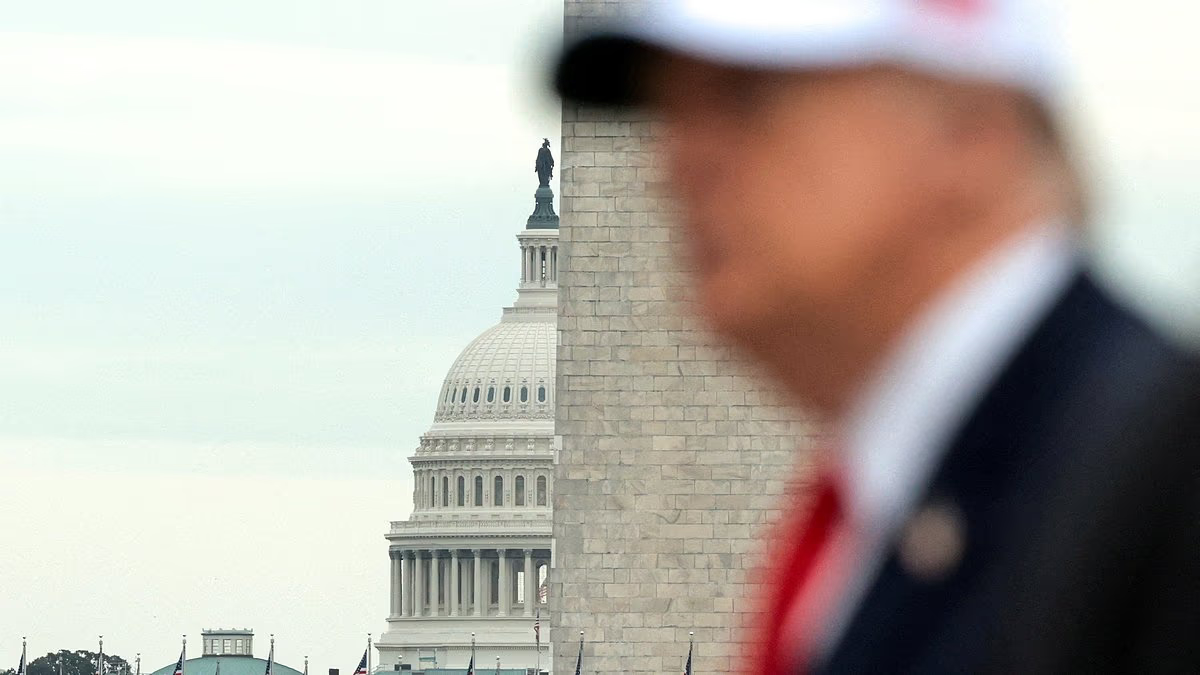

President Donald Trump’s administration has been quietly preparing a strategy to confront a potentially Democratic-controlled Congress if Republicans lose both chambers in Tuesday’s midterm elections.
Senior officials, including White House adviser Stephen Miller, Office of Management and Budget Director Russell Vought and White House Counsel Will Scharf, have been reviewing executive actions the president could pursue without approval from lawmakers.
The possible measures could cover immigration, federal spending, tariffs, housing and other major policy areas, according to three officials who spoke to Reuters on condition of anonymity.
Scharf, the administration’s top legal adviser, has been assessing “what Trump can legally do on his own, where he could push the limits of his authority and how to defend those decisions in court,” a White House official said.
Tuesday’s congressional and state-level contests will determine the balance of political power in Washington and across the country.
The results will show whether Trump can continue advancing his agenda with the support of Republican lawmakers or whether Democrats can break the GOP’s hold on Capitol Hill.
The political stakes are exceptionally high, with many of the most closely watched races effectively deadlocked.
Democrats need to gain only four seats across the House and Senate in Tuesday’s elections to seize control of both chambers.

White House officials have spent months preparing for the possibility of sharing power with Democrats if they win Tuesday’s midterm elections

Russ Vought, director of the Office of Management and Budget, has played a central role in reviewing the Trump administration’s spending plans, Reuters reports

Democrats appear positioned to capture the House and could also win the Senate, although several contests remain too close to call
Data from prediction market Kalshi showed Monday afternoon that Democrats had more than a 90 percent chance of taking the House and a 75 percent probability of winning the Senate.
Senate polling has offered a less decisive picture, however, with numerous surveys showing candidates within reach of one another and several races too close to predict.
Trump has frequently acted without Congress, issuing 292 executive orders during his second term—the largest number for any president since Franklin D. Roosevelt.
KEEP READING: Beauty Queen Kiara Bowling Returns to Oakland Crash Site After Kids Hit Her
Among other moves, he has tested the limits of presidential authority on tariffs, backing measures that the Supreme Court later found impermissible.
If Democrats win control of both chambers, nearly every bill reaching the president’s desk would be written by liberal lawmakers, with Republicans having little or no role in shaping the legislation.
One White House official said Trump could respond with a steady stream of vetoes for “a month or two” before eventually negotiating with Democratic lawmakers.
Trump has already indicated publicly that he may follow such a course.
“I guess I’ll become Mr. Veto,” Trump told the New York Post in a recent interview. “And then at some point, we’ll probably make deals.”

“I guess I’ll become Mr. Veto,” Trump told the New York Post in a recent interview. “And then at some point, we’ll probably make deals”

Kalshi data showed Monday afternoon that Democrats had more than a 90 percent chance of winning the House and a 75 percent chance of capturing the Senate. Polling has painted a more uncertain picture in the Senate, with many races remaining too close to call
The president has been briefed on the preparations and has participated in discussions about the plans, according to one White House official.
The expectation inside the administration is that Trump will be “very comfortable” operating alongside a Democratic-controlled Congress, one source said.
Federal agencies have already submitted proposals outlining steps they could take without seeking new authorization from lawmakers.
As OMB director, Vought has led a review of how the administration could use funds Congress has already approved for federal programs, two sources said.
He has also reportedly been developing plans to give political appointees greater influence over which government programs receive taxpayer money—a move that could expand White House control while limiting congressional oversight.
“This administration and commonsense Republicans will continue to secure our borders, restore law and order, putting more money back into the pockets of hard-working Americans, and deliver wins for the American people,” White House spokeswoman Lauren Bis said in a statement.


