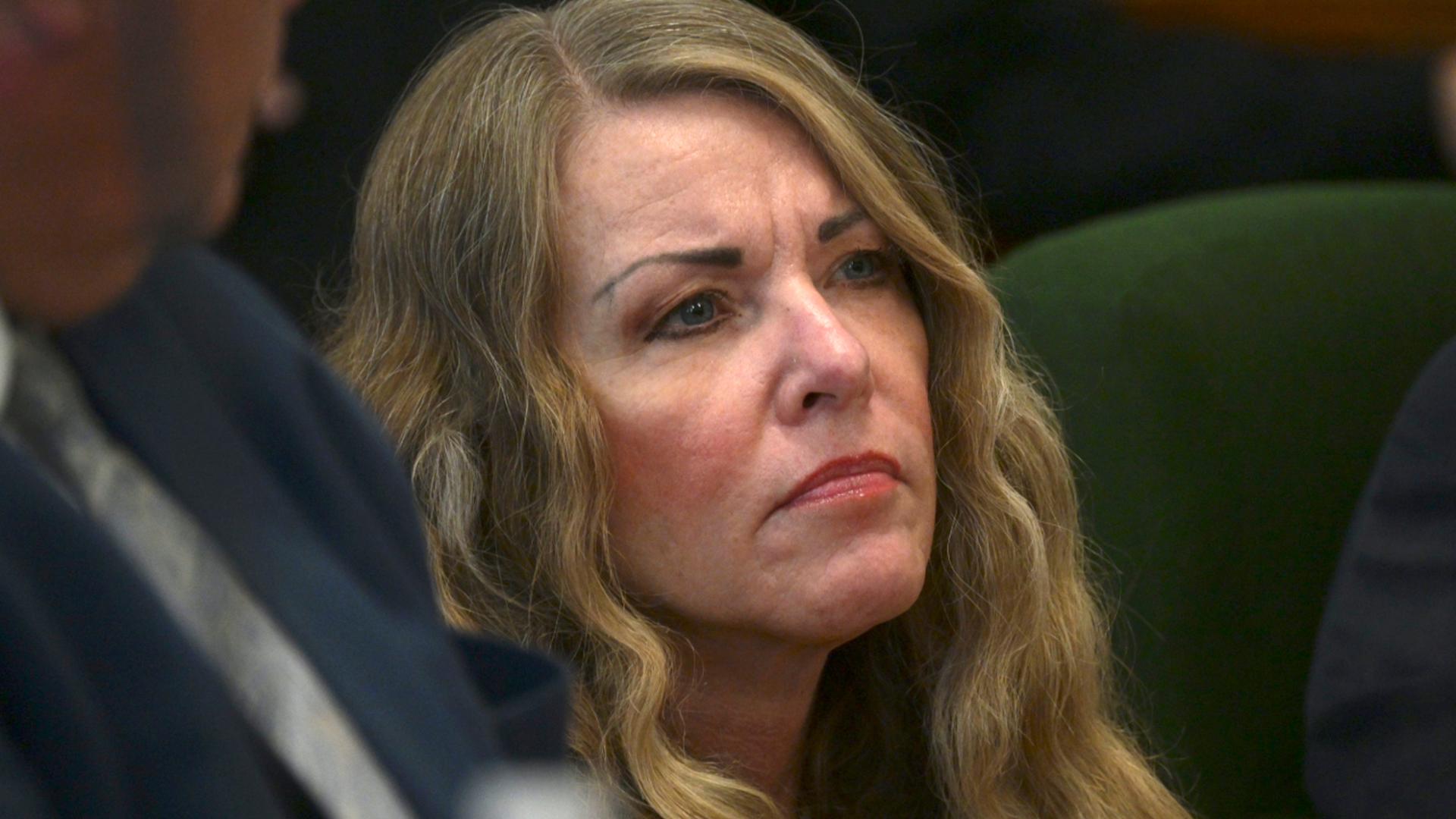

An Idaho appeals court is set to consider Lori Vallow Daybell’s challenge to convictions stemming from the deaths of two of her children and a plot to kill a romantic rival.
BOISE, Idaho — Lawyers sparred Monday before the Idaho Supreme Court over whether Lori Vallow Daybell’s convictions should be overturned because she was denied the attorney she wanted for her 2023 trial. The case involves the killings of her two youngest children and a conspiracy to murder a romantic rival.
Vallow Daybell is asking Idaho’s highest court to reverse her convictions in the deaths of Joshua “JJ” Vallow, Tylee Ryan and Tammy Daybell, who was married to Chad Daybell before he wed Vallow Daybell weeks later. JJ was 7 years old, and Tylee was 16.
The children disappeared in 2019. Their remains were later discovered buried on rural Idaho property belonging to Vallow Daybell’s new husband, Chad Daybell. Vallow Daybell received three life sentences in Idaho, while Chad Daybell was sentenced to death for the three killings.
Vallow Daybell was later convicted in Arizona of conspiring to kill her former husband and her niece’s former husband, who survived the attempted attack.
Vallow Daybell embraced doomsday religious beliefs and said some people in her life had been taken over by evil spirits. Chad Daybell authored multiple religious novels centered on prophecy and the end of the world.
Monday’s hourlong hearing in the Idaho case centered largely on Vallow Daybell’s argument that her rights were violated after a lawyer who had previously represented her was removed from the case. A lower-court judge found a conflict of interest because the attorney had represented both Vallow Daybell and Chad Daybell.

Craig Durham, who now represents Vallow Daybell, said the decision to disqualify her former lawyer came while she had been declared mentally unfit and the case was on hold. Durham argued that the attorney had no actual conflict of interest. “The district court equated prior joint representation with an actual conflict of interest without an evidentiary basis linking those two,” Durham told the justices.
Prosecutor Jeff Nye countered that the former attorney had submitted confidential information in the case, leaving the court with no choice but to remove him. “The district court faced a very unique situation, and it did everything it could to address that situation,” Nye said.
Idaho Supreme Court Justice Gregory Moeller suggested the lower-court judge acted to protect Vallow Daybell from being represented by a lawyer who could potentially harm her defense.
YOU MAY ALSO READ: Poland’s Constitutional Crisis Deepens as PM Donald Tusk Faces Power Grab Accusations
Had the lawyer remained on the case, Moeller said, the state Supreme Court might now be considering claims that Vallow Daybell received ineffective representation.
In court filings, Vallow Daybell’s attorneys also argued that jurors should not have heard evidence about the shootings involving Charles Vallow and Brandon Boudreaux in the Phoenix metropolitan area.
Charles Vallow was shot and killed in July 2019 in Chandler, Arizona, several months after filing for divorce from Vallow Daybell. Her brother, Alex Cox, said he acted in self-defense, though investigators later questioned that account.
Almost three months later, a person in a Jeep fired at Boudreaux, the former husband of Vallow Daybell’s niece, as he drove toward his home in Gilbert, another Phoenix suburb. The bullet narrowly missed him.
Prosecutors allege Vallow Daybell worked with Cox to kill Charles Vallow so she could collect proceeds from his life insurance policy and marry Chad Daybell, who was then her boyfriend. Cox was identified by prosecutors as the gunman in the attack on Boudreaux. He later died from a blood clot in his lungs.
Vallow Daybell was given two life sentences for her Arizona convictions and has appealed those rulings as well.
Just a few minutes of Monday’s hearing addressed the Arizona prosecutions.
When a justice asked why prosecutors introduced the Arizona evidence during the Idaho trial, Nye said they wanted to show jurors, “This is what these people do.”
Copyright 2026 Associated Press. All rights reserved. This material may not be published, broadcast, rewritten, or redistributed.