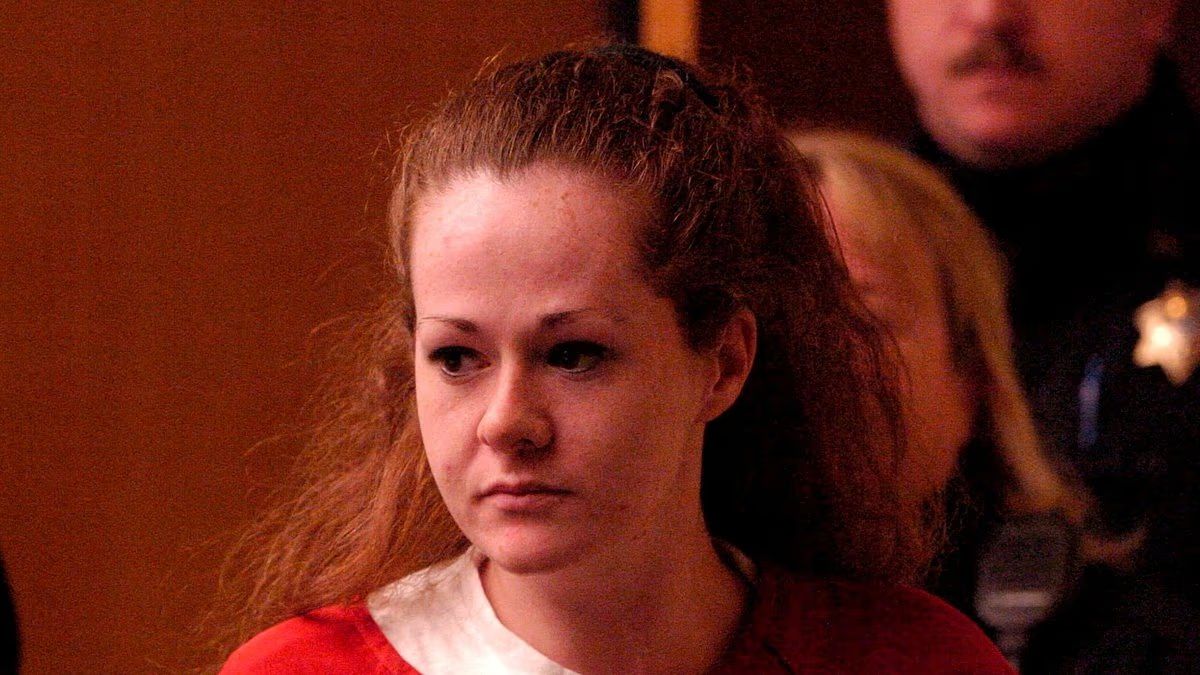

Christa Pike had been diagnosed with a rare blood disorder before Tennessee officials carried out her failed execution, despite warnings from her attorneys that the condition could make a lethal injection more dangerous and painful.
Pike, 50, was administered pentobarbital after spending decades on Tennessee’s death row. She survived the procedure, leading Governor Bill Lee to suspend all scheduled executions while the incident was reviewed.
She was taken to a hospital, where doctors initially believed she was brain dead. Pike later began speaking and was discharged to prison on October 9.
Documents from a January court filing have now resurfaced. In them, Pike’s lawyers said her unusually high platelet count was likely linked to a rare blood cancer known as myeloproliferative neoplasm, according to a complaint obtained by People.
Her attorneys argued that proceeding with an injection was “very likely to result in unnecessary and superadded pain and suffering, terror, and disgrace.”
Myeloproliferative neoplasm, or MPN, causes the body to produce excessive amounts of red blood cells, white blood cells or platelets. Pike was diagnosed with MPN-related thrombocytosis, a condition marked by an abnormally high platelet count.
According to her legal team, the disorder also raised Pike’s risk of developing pulmonary edema, in which fluid accumulates in the lungs.
Pike had previously asked to be executed by an all-female firing squad, saying she feared complications from lethal injection. Tennessee officials rejected the request because firing squads are not an authorized execution method under state law.

Christa Pike survived Tennessee’s failed execution on September 30 and remained hospitalized for 10 days before returning to prison

Pike’s execution went awry after she remained alive following two doses of pentobarbital

Pike received her death sentence in 1996
Her lawyers also pointed to a history of problems with blood draws and the insertion of needles.
Pike spent 10 days in the hospital after the botched execution. Both arms were reportedly swollen, blistered and burned following the administration of the drug.
Her attorneys believe defective IV lines caused the pentobarbital to leak into the tissue in her arms instead of entering her bloodstream properly.
During the execution, Pike reportedly said, “My arm feels like it’s about to burst open,” and later asked, “Does this happen like that?”
After leaving the hospital nearly a month ago, she was returned to the women’s prison where she has been held.
On Friday, Pike’s attorneys filed an emergency motion claiming that the conditions in which she was being held breached an earlier agreement with Tennessee.
Pike said she had spent 28 years in solitary confinement because she was the only woman on death row, an experience she described as having taken a “severe toll” on her physical and emotional well-being.
Her lawyers filed a lawsuit in 2022 challenging the conditions of her imprisonment, eventually reaching a settlement with the state.
Pike now claims that, after returning to the Debra K Johnson Rehabilitation Center, she has again been placed in isolation and has “no meaningful human contact apart from limited staff and medical personnel.”
READ MORE: UK House Prices Won’t Recover Until 2028, Savills Warns

Pike’s attorneys said in a January filing that her rare blood disorder could have complicated lethal injection. In a separate emergency motion, they argued that her prison conditions breach an earlier agreement
The emergency motion described a “roach-infested shower” that allegedly leaves Pike at “high risk of infection and further injury.”
Pike also said she could not safely return to her former prison unit because of inmates with “significant histories of assaults and disciplinary problems.”
She said she witnessed “multiple assaults” during the two years she lived in the unit after being released from solitary confinement. Given her current health, Pike fears she would be unable to protect herself if she were sent back.
She has asked to take part in communal meals, classes, recreation in the lobby, religious services and work assignments.
The day her attorneys submitted the emergency motion, Pike issued her first lengthy public statement since the failed execution.
“There hasn’t been a moment since that night when I haven’t been in pain,” she wrote.
“My body hurts. My arms hurt. My hands hurt. My throat hurts. I still struggle to speak. And the pain isn’t just physical. There is pain in my mind and in my soul.
“I had not contemplated life beyond that night, and I’m deeply hurt by the incompetence that has put so many people in this terrible position.
“I continue to think about my victim’s family and the terrible pain and loss they have endured.
“I am recovering, and I know that I am getting stronger. But healing is not the same as being OK.
“Since that night, I have been largely isolated in the prison’s medical ward, away from other people and the human connections that mean so much to me. That isolation brings its own kind of pain.”

Pike has been on Tennessee’s death row since her conviction in the 1995 beating and stabbing death of classmate Colleen Slemmer, pictured
Join the discussion
Should inmates with serious health issues face execution despite risks of added suffering?
Pike has been incarcerated since 1995 for the beating and stabbing death of her classmate, Colleen Slemmer.
She was 18 when she and her boyfriend at the time, Tadaryl Shipp, attacked and killed 19-year-old Slemmer at a job training camp.
Prosecutors said Pike believed Slemmer was trying to take her boyfriend and lured her to a wooded area, where she cut the teenager with a box cutter and beat her with a large piece of asphalt.
Shipp then carved a pentagram into Slemmer’s body. He was 17 at the time and received a life sentence with the possibility of parole. Pike was the only person involved to receive the death penalty.
Our News Outlet has contacted the Tennessee Department of Correction and Pike’s attorneys for comment.