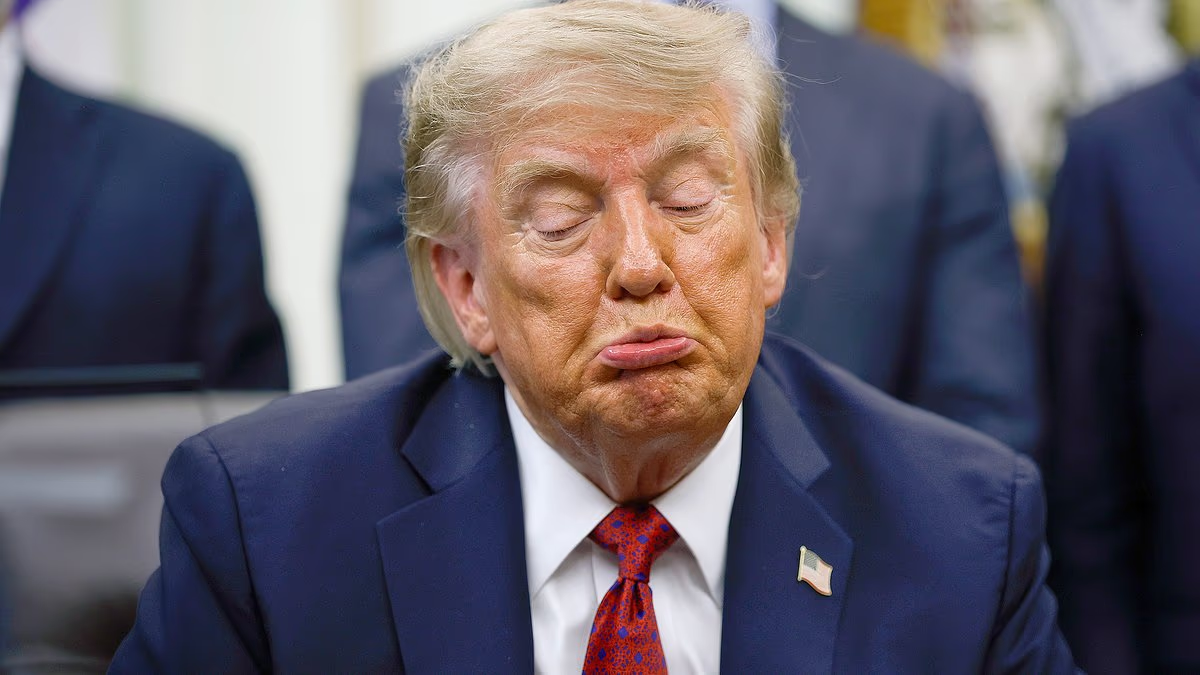

Two years after his decisive popular-vote victory, Donald Trump suffered a stinging defeat on Election Night.
The President himself was not on the ballot, of course. Other candidates lost their jobs in his place. But the result was unmistakably a rejection of Trump, and voter surveys conducted as Americans cast their ballots made that clear.
Trump urged voters to treat the election as a referendum on him. Yet according to CNN, just 16 percent said they voted to support the President, while 43 percent said they turned out to oppose him.
Sixty-five percent said Trump’s policies had made the economy worse—a formidable liability for Republican candidates to carry.
Sixty-two percent disapproved of Trump’s performance. Sixty-three percent said he had the wrong priorities, and 55 percent questioned whether he had the mental capacity for the job.
None of this had to happen.
Trump’s first term was largely a success story until the pandemic arrived, an event that was not his fault. He oversaw a booming economy with low inflation, reduced taxes and regulatory burdens, secured the border and avoided launching new foreign wars.
Once the pandemic receded from voters’ memories, Americans wanted those conditions back. Trump, however, failed to absorb that lesson. Rather than seeing wages rise faster than the cost of living, consumers, businesses and—most importantly—drivers at the gas pump faced higher prices as tariffs and the Iran war took their toll.

The result was a repudiation of the President. Two years after his decisive popular-vote victory, Donald Trump suffered a stinging Election Night defeat.
The President tested the patience of anti-war voters with brief military interventions in Iran and Venezuela, then overreached with a prolonged conflict involving Iran. Rather than simply closing the border to illegal immigrants and deporting criminals, he permitted ICE operations on city streets that resulted in the fatal shootings of American citizens.
Trump also failed to rebuild the working relationship he once had with congressional Republicans. During his first term, despite their disagreements, he allowed House Speaker Paul Ryan to shape much of the 2017 tax-cut bill and gave Senate Majority Leader Mitch McConnell the lead in confirming conservative judges.
That partnership produced results.
Congress can be frustratingly slow and contentious, but a president benefits from listening to the elected representatives who understand what their constituents want.
This time, Trump did not allow Congress to vote on tariffs. Lawmakers might have curbed some of his excesses.
He also declined to seek congressional approval for the war in Iran. Congress might have required him to make his case to the nation and explain his objectives.
Trump became, in George W. Bush’s old phrase, ‘the decider.’ He signed pardons and pushed for retaliatory prosecutions. He picked needless fights with Canada and Denmark over Greenland, while devoting energy to vanity projects including the Kennedy Center, the triumphal arch, the ballroom and the Gulf of America.
He gave ICE and DOGE permission to go too far, amassed billions through crooked crypto deals and clashed with Ukraine’s Volodymyr Zelenskyy.
Rather than reward Trump for bypassing Congress, 71 percent of voters told CNN that lawmakers were not doing enough to restrain him.
Trump’s intolerance of dissent also helped drive Republican senators such as Thom Tillis into retirement, allowing Democrats to take their seats.
He personally selected weak Republican candidates, including South Carolina’s Darline Graham, North Carolina’s Mike Whatley and Georgia’s Mike Collins.
The efforts to redraw House districts and combat illegal voting ultimately achieved little. The Republican defeat was too substantial for allegations of Democratic cheating to make a difference or for redistricting to rescue the party.
It was an almost perfect metaphor that Trump delivered the final speech of his 2026 midterm campaign at the Lincoln Memorial Reflecting Pool, staring at his renovation and becoming absorbed—like the mythical Narcissus—in his own reflection and creations.
So what happens now?
Republicans may need to spend time in the political wilderness. But who will lead them out?
Vice President JD Vance could still be the leading contender for Trump’s endorsement in 2028. Yet it is difficult to see how that association would not become a burden in a general election.
Secretary of State Marco Rubio has become the administration’s most respected figure, but he has indicated that he may not run if doing so means battling Vance for the nomination. Rubio is also closely linked to the Iran war.
One Republican who emerged from Tuesday’s results without the scars of defeat was Florida Governor Ron DeSantis.
Ashley Moody, the candidate DeSantis selected to replace Rubio in the Senate after Rubio joined the Trump administration, won re-election. DeSantis also left Florida in strong enough shape for Byron Donalds, despite not being his preferred successor, to preserve Republican control of the governor’s mansion.
Florida’s gerrymander was neither a major success nor a disaster. DeSantis’s signature proposal, a ballot initiative to cut property taxes, appears to have passed. In interviews, meanwhile, he sounds like a politician liberated to criticize Trump’s foreign and domestic policies.
DeSantis could not compete with Trump’s outsized personality in 2024. But conservative voters may now be ready for a different kind of Republican—more disciplined, more focused and more capable. A leader willing to learn from the past.


