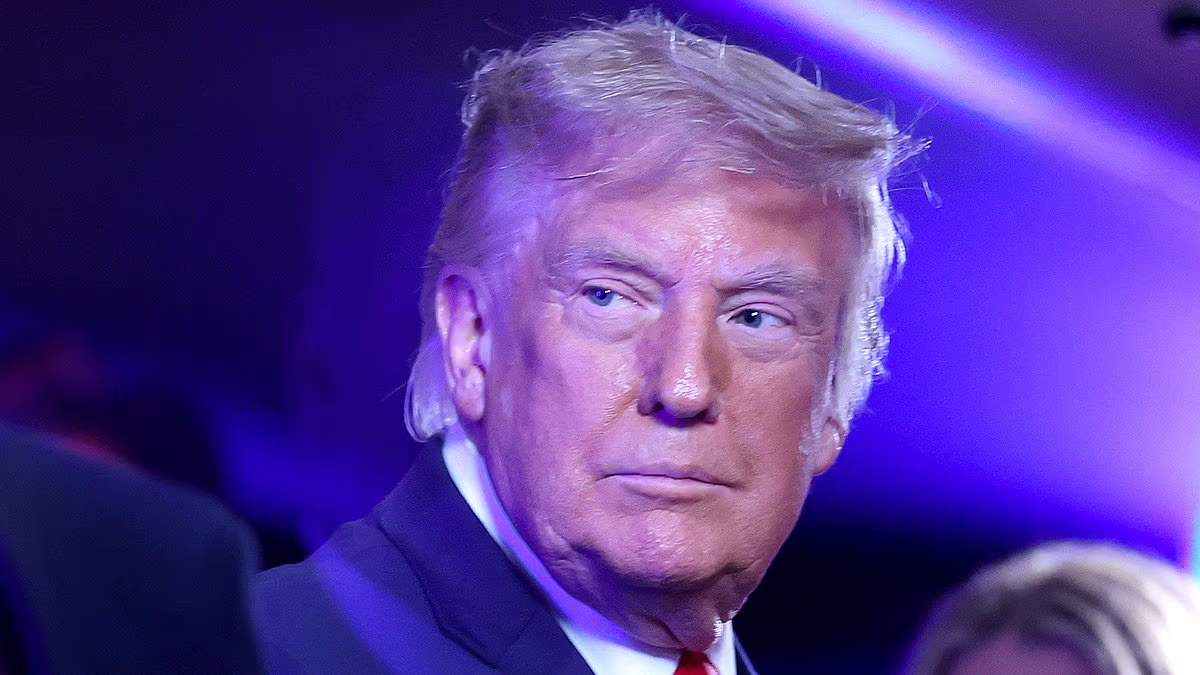

There is an academic phrase for what Republicans endured Tuesday night: a thorough political beating.
I am a Republican, and I wanted my party to prevail. But respecting voters means accepting their decision, even when it is painful. This result should focus the attention of every Republican in Washington, including President Donald Trump.
The next presidential race will be an open competition, and no one yet knows who will lead the Republican ticket.
Anyone seeking that nomination should be studying this defeat closely. The eventual nominee will need to explain what Republicans learned, how they responded and why Americans—particularly independents—should place their trust in the party again.
The starting point is the cost of living. CNN’s exit poll found that roughly three-quarters of voters viewed the economy negatively. Six in 10 said gasoline and diesel prices were a major concern, while similar shares worried about groceries and health care. Voters were more than twice as likely to say their household finances had deteriorated as to say they had improved.
That does not mean Republicans had no accomplishments to highlight. The U.S. economy grew at a 3.4 percent annualized pace in the third quarter, up from 2.2 percent in the second. Manufacturing expanded for the 10th straight month in October, with orders, output and employment all rising. Violent crime has declined, and provisional data indicate that overdose deaths are falling. Trump also fulfilled his promise to close the border, a development supporters say has made communities safer and spared families the grief of losing loved ones. Preserving those gains after the campaign ends will matter.
But voters can acknowledge improvement in one area of life while still demanding help in another. A safer neighborhood does not lower the cost of a tank of gas. Stronger manufacturing does not make a supermarket bill disappear.
For many Americans, the gas station is the country’s most visible economic scoreboard. People see prices on the way to work and feel them when driving their children to school. When the numbers climb, they conclude that something is going wrong—and positive news elsewhere often cannot overcome what is displayed on the sign.

Respecting voters means accepting their verdict, however painful it may be—a lesson that should command the attention of Republicans in Washington, including President Donald Trump

Gas prices are America’s most visible economic scoreboard, confronting drivers on the way to work and during the school run
The clearest explanation for Tuesday’s result is that the costs of the president’s biggest gambles arrived before the benefits he promised. It was a timing problem. Tariffs and the war with Iran brought immediate economic and political consequences, risks Trump understood and accepted because he believed a stronger industrial base and a more secure world would ultimately justify them. He may still be proven correct. But voters received the bill first.
Audi’s proposed $4 billion factory in Georgia, which is expected to generate about 4,500 jobs, represents the type of investment Trump said his trade policies would attract. Reported talks over tariff relief also illustrate how he hopes to use access to the U.S. market as leverage for domestic production. But manufacturing is not expected to begin until the early 2030s. A household facing higher prices today cannot spend wages from a plant that has not yet opened.
Iran presents an even more significant test. Its military has been devastated, its economy badly damaged and its currency weakened. Oil is leaving the Middle East at higher volumes than before the war, and the naval blockade of the Strait of Hormuz has held. By any reasonable standard, those developments amount to a victory. Yet many Americans still see the conflict as unresolved because no one has clearly told them that it is over. The White House has not publicly claimed the victory it believes it has earned.
The central question throughout the year was whether Trump could convert the sacrifices Americans made into benefits they could actually feel—and how long they would remain willing to wait. Tuesday’s answer was clear: patience has limits, even when voters believe the broader mission is justified.
The exit polls delivered another warning: about seven in 10 voters said Congress was not doing enough to check the president. Americans, it appears, still value checks and balances. Republican lawmakers cannot claim the credit for a Republican president’s achievements while insisting they are powerless when voters dislike the consequences. If policies require adjustment, Congress has both the authority and the responsibility to help make those changes.
Republicans should also examine the candidates who survived the night. Florida Governor-elect Byron Donalds is an obvious example. The state was not untouched by the Democratic surge, and Republican congressional hopes suffered setbacks despite favorable redistricting. Donalds nevertheless won the governor’s race and will become the first elected Black Republican governor in American history.
At a moment when the Republican label hurt candidates across much of the country, Donalds convinced Floridians to continue the party’s leadership in their state, building on the record left by Ron DeSantis. The lesson is that a sustained record of effective state governance can carry a candidate through an unfavorable national climate.
Kelly Ayotte’s re-election as governor of New Hampshire offers another governing model worth examining.
Arkansas also has two influential Republican figures: Governor Sarah Huckabee Sanders, who now has another term to strengthen her record, and Senator Tom Cotton, who remains a prominent voice on national security and the future of the party. Alongside better-known national leaders such as Vice President JD Vance and Secretary of State Marco Rubio, they are among the Republicans who retained the confidence of their constituents on an otherwise difficult night. The next presidential campaign will demand precisely that ability.
Republicans nursing their losses should remember 2010. Barack Obama’s Democrats lost 63 House seats and six Senate seats that year, prompting Obama to describe the result as a shellacking. Two years later, he won another term in the White House. Political fortunes can shift dramatically between midterm and presidential elections—and can change again after that.

Arkansas has two formidable Republican figures: Governor Sarah Huckabee Sanders, shown above, who has another term to build her record, and Senator Tom Cotton, a major voice on national security and the party’s direction

Byron Donalds won the governor’s race and is set to become the first elected Black Republican governor in American history

Democrats are celebrating, but they now share responsibility for what comes next
That brings the focus back to Trump and the question of how he intends to use the two years remaining in his presidency.
With large Democratic majorities facing him, Trump will have to choose carefully between confrontation and negotiation. He still possesses the presidential veto and the broader powers of the office, but Democrats will have enough votes to stop his legislative priorities.
Investigations, clashes and political provocations are inevitable. Yet the best way to close the timing gap is to deliver achievements voters can see and feel. Energy-permitting reform, a farm bill and the National Defense Authorization Act could all move during the lame-duck session, each producing a concrete result.
Democrats face a test of their own and should show some humility about the victory they have secured. Americans can be angry with Republicans without embracing Democrats. A voter seeking to punish the party in power has only one practical alternative, but that choice does not amount to an endorsement of every policy the opposition may pursue.
“It’s Trump’s fault” was an effective campaign message. It is not enough to serve as a governing program. If Trump proposes an agreement that would materially improve Americans’ lives, will Democrats consider it? Or will they reject anything associated with him as illegitimate, as they have argued for much of the past decade?
Trump has long portrayed himself as a dealmaker. The final two years of his presidency may be his toughest test of that claim.
Republicans earned this rebuke. Democrats now share responsibility for what follows. Neither party should mistake voters’ willingness to change their ballots for an unlimited willingness to wait.


