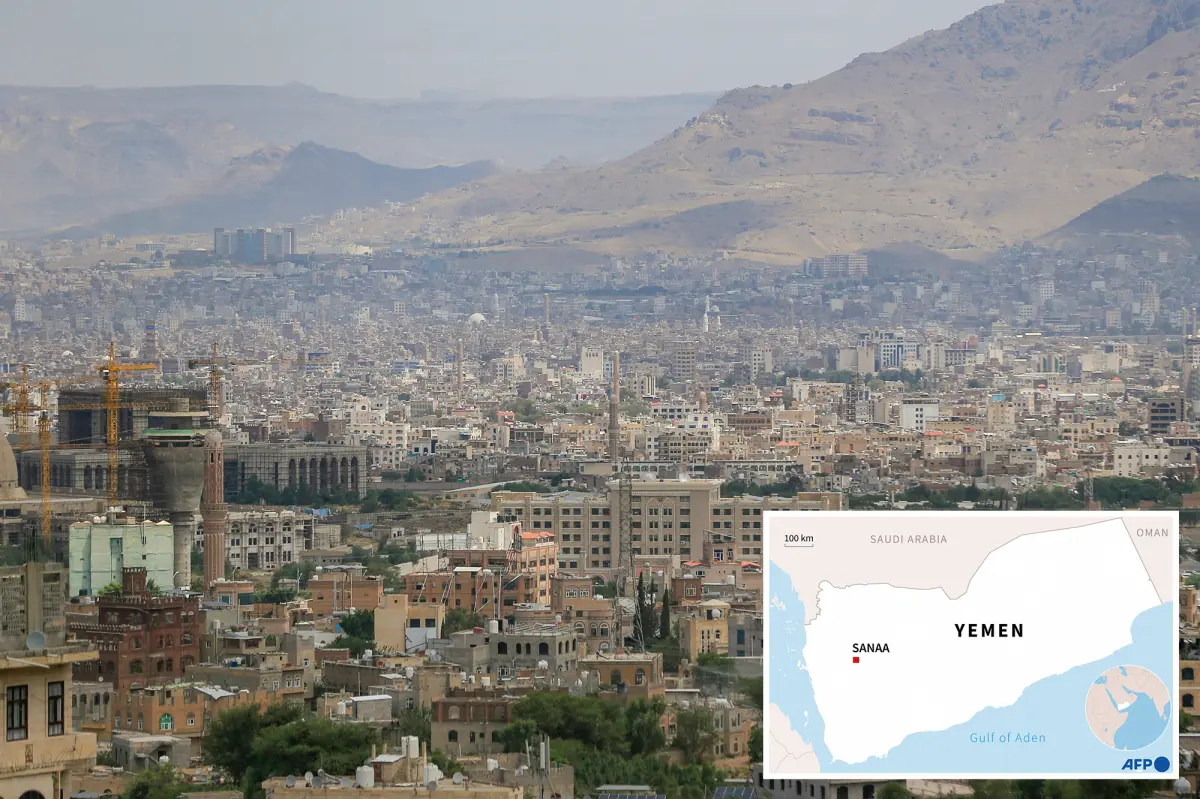

CAIRO (AP) — Airstrikes struck homes in a village near Yemen’s capital, Sanaa, on Saturday, killing at least 25 people and injuring 30 others, most of them women and children, according to a spokesman for the Houthi-run Health Ministry.
Anees Alasbahi told The Associated Press that Saudi Arabia carried out the attacks on al-Shariya. The AP was unable to independently confirm the allegation, and Saudi Arabia’s Information Ministry did not immediately respond to a request for comment.
The reported casualties came as Yemen’s civil war intensifies following the collapse of a yearslong truce over the summer. Fighting has surged between the Iranian-backed Houthis, who control Sanaa and much of northern and western Yemen, and Saudi-backed forces based primarily in the south and east.
On Friday, an airstrike struck a market in southern Yemen, killing at least 30 people, Houthi officials said. Both the Houthis and Yemen’s Saudi-backed military blamed the other side for the attack.
Video broadcast by Houthi-run Al-Masirah TV showed hospital workers removing the limp bodies of several young children from ambulances after Saturday’s strikes. One girl appeared to have suffered a severe head injury, while other children lay bloodied and bandaged on stretchers as medical staff treated them.
Images from the farming village, located in Houthi-controlled territory roughly 15 kilometers (10 miles) northeast of Sanaa, showed homes reduced to rubble and thick clouds of dust rising as residents sought shelter in nearby fields.
NEXT UP: 22-Year-Old Flight Instructor and Pilot, 38, Die in Helicopter Crash
Alasbahi said the death toll had reached at least 25, revising upward an earlier figure of 22 provided to the AP. He told Al-Masirah that civilians remained trapped beneath the wreckage and that follow-up strikes hit emergency responders attempting to rescue survivors. Video showed an injured man, covered in dust and wearing an orange first-responder vest, being assisted from an ambulance.
The renewed violence has fueled fears that Yemen could again descend into the devastating conflict that has lasted more than a decade and produced one of the world’s worst humanitarian crises.
The war began in 2014, when the Houthis advanced from northern Yemen and seized Sanaa, forcing out the internationally recognized government. Saudi Arabia then formed a coalition to support the government and launched a prolonged air campaign that drew widespread international condemnation over civilian casualties.
The conflict has killed at least 150,000 people, according to the United Nations, while hunger and disease outbreaks have caused additional deaths. Front lines remained largely unchanged for years before the sides reached a truce in 2022.
That relative calm unraveled over the summer. The Houthis said they launched new offensives in response to Saudi Arabia’s continued blockade of their territory. The rebels quickly seized large sections of Yemen’s Red Sea coastline and strategic islands in the Bab el-Mandeb Strait, while also intensifying attacks on Saudi oil and military facilities and shipping in the Red Sea.
The Saudi-led coalition, meanwhile, said its airstrikes in Houthi-held areas were aimed at the rebels’ military infrastructure. The most intense ground battles have focused on Taiz, a strategically important city in the south held by the government that the Houthis have encircled. The siege has deepened the humanitarian crisis, with residents struggling to obtain drinking water and food as the Houthis restrict access to the city.


