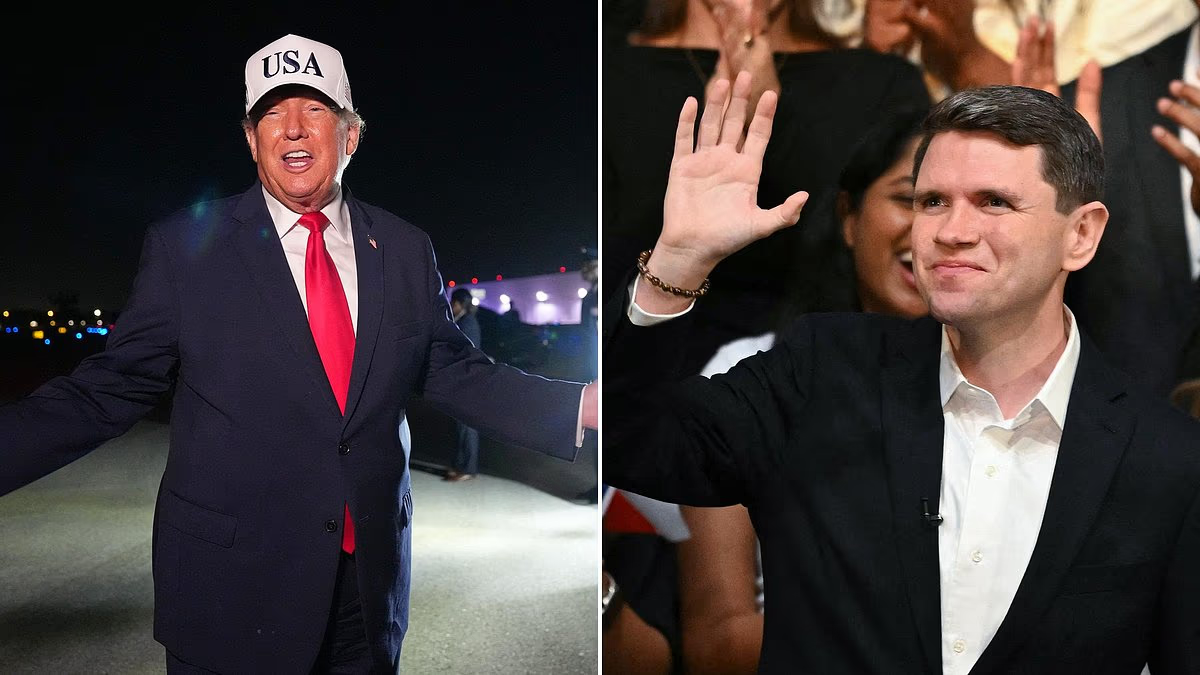

President Donald Trump has reignited controversy by sharing a series of posts casting doubt on the midterm election results, including Democrat James Talarico’s decisive victory in Texas—just days after saying he would accept the outcome.
On Saturday, Trump amplified claims about “unusual” voting patterns, sharp increases in Democratic support and election-night results that some conservative commentators described as implausible.
The president reposted charts and messages on Truth Social that appeared to question the scale of the Democrats’ sweeping gains, which cost Republicans control of both chambers of Congress.
None of the material he shared, however, provided evidence of fraud or other election misconduct.
The posts represented a marked shift from Tuesday night, when Trump told The New York Times he was “absolutely willing” to accept the results and work with the incoming Democratic majorities.
One of the most contentious messages focused on Talarico’s overwhelming defeat of Trump-endorsed Republican Ken Paxton in the Texas Senate race.
Trump reposted a message from an account known as The Lone Raccoon that included a graph tracking the candidates’ vote totals throughout election night, with several pronounced jumps.
The chart emphasized sudden increases in Talarico’s tally, though large batches of ballots released by election officials can naturally produce such rises.

President Donald Trump has revived questions about the midterm results, just days after saying he would accept the outcome of the Republicans’ sweeping defeat

Trump shared a post questioning Democrat James Talarico’s Texas victory. The accompanying graph showed election-night vote totals and asked: “Does anyone believe this at all?”
Talarico’s win was among the election’s biggest surprises and made him the first Democrat elected to the Senate from Texas since 1988.
The 37-year-old former teacher defeated Paxton by roughly 12 percentage points in a state Trump carried comfortably just two years ago.
Paxton has conceded the contest and congratulated his Democratic opponent.
Trump also shared another message claiming Democrats had experienced an extraordinary nationwide surge in support.
The post, first published by Kevin Bass, stated: “Republican votes stayed the same. Democrats materialized 20 million new votes.”
A bar chart accompanying the message compared the House popular vote in the 2022 and 2026 midterm elections.
According to the chart, Republicans received 54.2 million votes in 2022, compared with a projected 55.6 million this year.
The Democratic total, by contrast, appeared to rise from 51.3 million in 2022 to a projected 70.4 million in 2026.

Another post shared by Trump claimed Democrats had added 20 million votes since the 2022 midterms, although the 2026 figures were projections rather than final totals

The president also reposted claims questioning the unusually strong Democratic turnout in Texas, where Gina Hinojosa defeated Republican Governor Greg Abbott

Trump-backed Republican Ken Paxton lost his Texas Senate race to Democrat James Talarico in one of the midterm election’s most significant upsets
DISCOVER MORE: Nicole Virzi, Accused of Baby’s Killing, Gives Police Account
The 2026 figures were projections based on an estimate that 85 percent of the vote had been counted, not certified final results.
An independent review found the claim that Democrats had gained 20 million additional votes to be misleading, with the eventual increase expected to be substantially smaller.
In a third post, Trump questioned what he described as extraordinary Democratic turnout in Texas, where Republican Governor Greg Abbott was defeated by Gina Hinojosa.
The message, written by Donald Ward, pointed out that Abbott had increased his vote total compared with his successful 2022 reelection campaign.
Hinojosa, however, received about 1.7 million more votes than Democratic candidate Beto O’Rourke secured four years earlier.
“Those are Looney Tunes numbers,” Ward wrote.
He further claimed that Hinojosa received 400,000 more votes in Texas than Kamala Harris did in the 2024 presidential election.
“These are not normal midterms numbers,” he wrote. “Not a single opinion poll before the elections came close to predicting this.”
Ward argued that turnout on that scale should have resulted in extremely long lines at polling places.
Yet comparing results from different election years does not, by itself, demonstrate irregularities, and the post offered no evidence that ballots had been improperly counted.
Another message reposted by Trump pointed to what it described as unusually uniform Democratic gains across several states and called for closer examination of ballot totals, voter records and turnout figures.


Democrat Gina Hinojosa scored a major upset by unseating longtime Republican Texas Governor Greg Abbott, ending more than three decades of GOP control of the governor’s mansion

Democrat James Talarico’s victory helped deliver a stunning setback for Republicans, who lost control of both chambers of Congress in Tuesday’s elections
“A pattern this even demands answers at the ballot level,” the post said, urging hand counts and reviews of voter-registration records.
The burst of online activity came fewer than four days after Trump appeared prepared to acknowledge the Republicans’ crushing defeat.
“I am absolutely willing to accept those results,” he told The New York Times in a telephone interview Tuesday night.
“We’ll work with the Democrats, and we’ll, you know, look forward to working with them. We’ll probably work something out.”
Trump had attributed some of the Republican losses to his absence from the ballot, suggesting that his own popularity might have helped candidates who were struggling.
He also said he had no regrets about backing defeated Republicans, including Paxton and South Carolina Senator Darline Graham.
Trump’s latest posts raise fresh questions about whether he will retain that conciliatory stance as Democrats prepare to take control of Congress.
Their victories will give them expanded authority to investigate his administration and potentially obstruct key elements of his legislative agenda.


