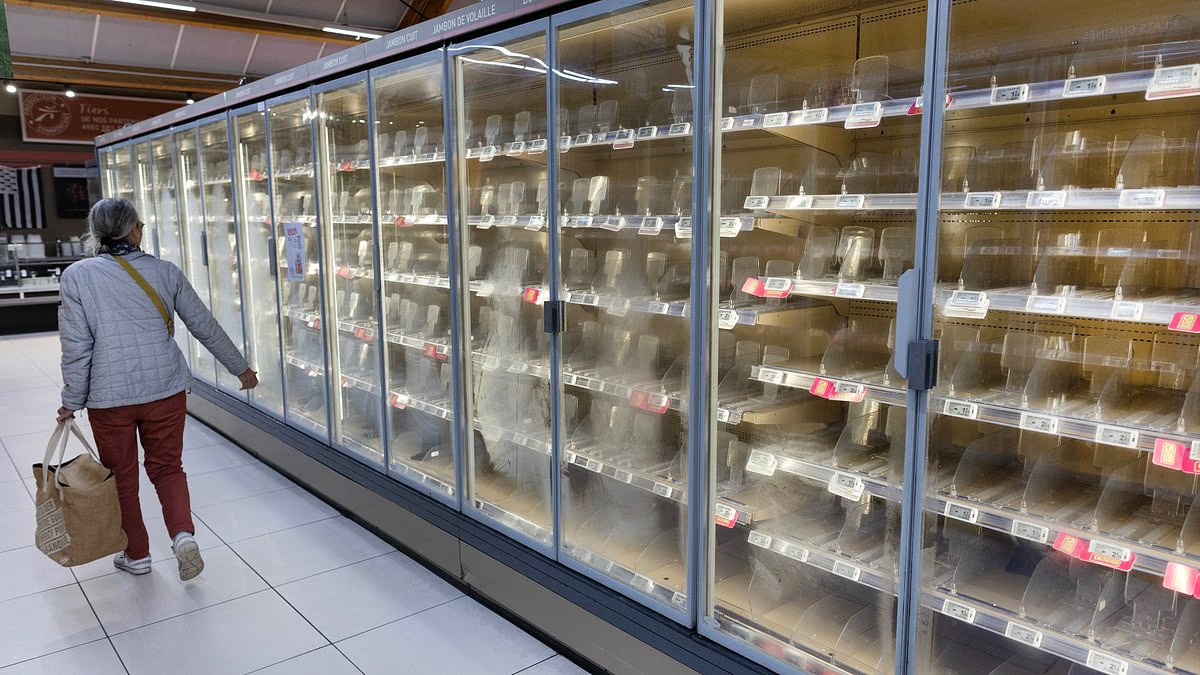
French authorities have blamed Iran’s Islamic Revolutionary Guard Corps for a cyberattack that disrupted commercial refrigerators and freezers nationwide last month, warning that the incident will carry consequences.
The intrusion, which hit hundreds of supermarkets in early October, was one of the most disruptive cyber incidents recorded since the Iran war began in February.
Other major attacks in recent months have targeted Los Angeles’ transit network in March, US water-treatment facilities in July and vessels travelling to the United States in August.
Iran’s mission to the United Nations did not respond to requests for comment. Tehran has repeatedly rejected allegations that it conducts hostile cyber operations.
French Foreign Minister Jean-Noel Barrot said Iran’s ambassador had been called to the foreign ministry.
Mr Barrot also raised the prospect of additional European Union sanctions, declaring that “there will be consequences” for the attack.
The October 11 cyberattack took control of temperature settings on commercial refrigeration units in hundreds of businesses. Cybersecurity specialists previously told Reuters that the systems appeared relatively easy to compromise.
The manufacturer of many of the affected machines said some units were outdated or operating with obsolete firmware, vulnerabilities that may have allowed hackers to gain access.

Cyber attackers targeted hundreds of French supermarkets, causing freezer contents to thaw last month

The attackers set refrigeration systems to pump 50C air into the units, pushing internal temperatures to 36C and forcing stores to discard vast amounts of food
The consequences were severe. In some cases, the temperature was raised so dramatically that refrigeration units caught fire.
The Paris prosecutor’s office said the attack used methods associated with the “Shahid Kaveh Group”, an elite cyber unit believed to operate on behalf of Iran’s Revolutionary Guards.
Prosecutors have sought international arrest warrants for the group’s alleged leader and two deputies.
Investigators examining the refrigerator attacks found the use of Farsi, while internet protocol addresses were traced to devices in Iran.
Speaking after a G7 ministerial meeting in Paris, Mr Barrot said the investigation remained ongoing.
YOU MAY ALSO READ: Nuclear War Fears Rise as Officials Distribute Radiation Drug to Civilians
Following the attack, supermarket workers removed boxes of spoiled meat and melted ice cream, sending them to large waste containers.
One French supermarket owner estimated that the damage could ultimately cost retailers across the country tens of millions of euros.
A second wave of attacks followed this month, affecting more than 100 sites across Europe. Refrigerators at French blood banks were also disrupted, forcing staff to transfer some blood supplies to alternative cold-storage facilities.
The apparently simple nature of the attacks, combined with their spread across several countries, has fuelled debate over the perpetrators. The incidents come amid concerns about suspected Russian sabotage operations in Europe, the US-Iran conflict and the growing threat of AI-assisted cyberattacks.
European supermarket refrigeration systems were not the first such targets. At least one comparable incident had already been reported in the United States.
In August, refrigeration equipment at at least six military commissaries stopped working.
Pentagon investigators are treating those failures as a possible cyberattack and are cooperating with French officials as they seek to establish what happened.
A person familiar with the investigation said the Pentagon regarded Iran as a suspect in the commissary incidents, although the inquiry had not yet reached a conclusion.
The Pentagon said on Monday that it was “aware of speculation regarding a potential cyber incident”. Military investigators were examining the matter, officials said, but declined to provide further details for security reasons.
In France, hackers ordered refrigeration systems to blow air heated to 50C into the units, driving internal temperatures as high as 36C and leaving retailers with no choice but to dispose of large quantities of food.
The attack affected thousands of refrigeration units at more than 700 retailers across France.
Carrefour, Monoprix, Intermarche and Cooperative U were among the supermarket chains hit after the attackers manually changed the temperature controls.
Dominique Schelcher, chief executive of Cooperative U, called the incident “unprecedented”.
He said: “Targeting equipment vital to preserving fresh food and maintaining the supply of food to the French public is extremely serious. It is unprecedented and unacceptable.”
This is a breaking news story. More updates will follow.