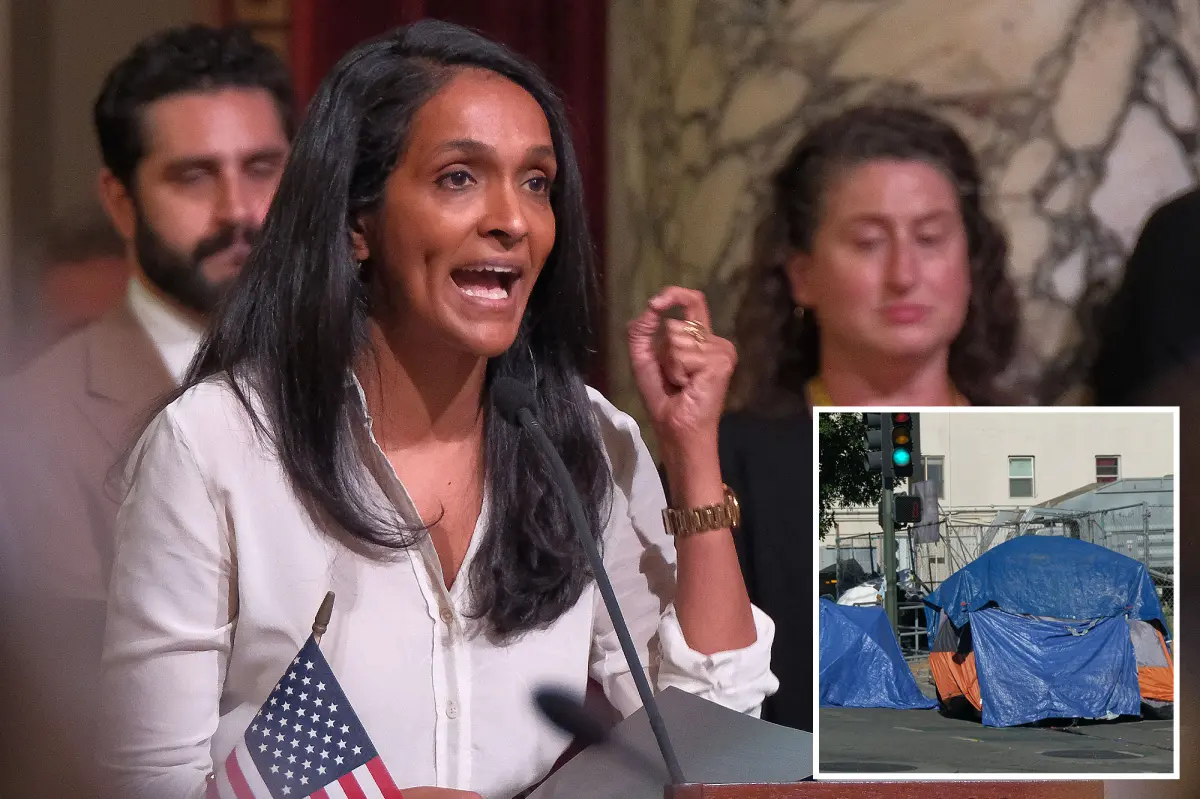

Los Angeles has committed more than $1 billion to addressing homelessness, yet the city still cannot fully explain where hundreds of millions of dollars have gone. That unresolved accounting problem will now fall to Mayor-elect Nithya Raman.
A report presented Tuesday found that the city had spent or committed $368.9 million of its revised homelessness budget as of March 31. Another $636.1 million remained either unspent or not yet assigned.
The figures have renewed scrutiny of Los Angeles’ sprawling homelessness system, which Raman has promised to audit as she works toward reducing street encampments by at least 50% before the 2028 Olympics.
Los Angeles has 45,194 homeless residents, including 29,115 people living outdoors, despite years of substantial taxpayer investment in shelters, housing and related services.
“We want to ensure that we are tracking every dollar, filling every bed, and delivering the results that Angelenos deserve across every neighborhood,” Raman told The California Post and other reporters Tuesday at City Hall.
The extent of the spending gap was detailed in a 23-page report delivered to the City Council’s Homelessness and Health Committee.
The city originally approved $953.3 million for homelessness initiatives during fiscal year 2025–26. Subsequent funding increases brought the total above $1 billion.
Still, the report showed that only $368.9 million had been spent or committed by March 31.
Officials said approximately $441 million of the remaining funds had been set aside for multiyear initiatives. Other money had not yet been designated for specific programs.
The report also highlighted significant differences among city departments in how quickly they were deploying their allocations.
The Los Angeles Homeless Services Authority, which manages shelters and other services, had spent or committed $165.5 million of its adjusted $243.4 million allocation.
By comparison, the city’s Housing Department had spent or committed $56.4 million of the $238.1 million assigned to it.
The Housing Department’s budget includes construction projects and tenant-assistance programs, both of which can take years to complete.
Raman is already familiar with the system she is preparing to lead.
She spent three years chairing the City Council’s Housing and Homelessness Committee.
Raman also co-sponsored the motion that called for the detailed spending report, raising broader concerns about how Los Angeles monitors its homelessness funding.
She will now oversee the same complex network of programs she spent years examining.
On Tuesday, Raman said she intends to put vacant shelter beds to use and accelerate the movement of homeless residents into permanent housing.
“Right now we have a number of beds and facilities across our city that are not all used. Our first step is to use what we have now,” Raman said.
She also criticized the high cost of placing homeless residents in hotels and motels, where some people remain for a year or longer.
“People are staying in our shelters, including at very expensive motels and hotels, for a year or more, costing enormous amounts to the city,” she said.
Raman said she would strengthen case management and make greater use of housing vouchers to transition people into more affordable, permanent homes.
Although she has repeatedly criticized Mayor Karen Bass’ Inside Safe initiative, Raman indicated that its core approach—clearing encampments and moving residents indoors—will remain in place, even if the program is rebranded.
“It may not be called Inside Safe anymore. It may not look exactly the way that that program looks, but encampment resolution will continue,” she said.
The committee continued consideration of the motion Tuesday and is expected to revisit it at its next meeting.