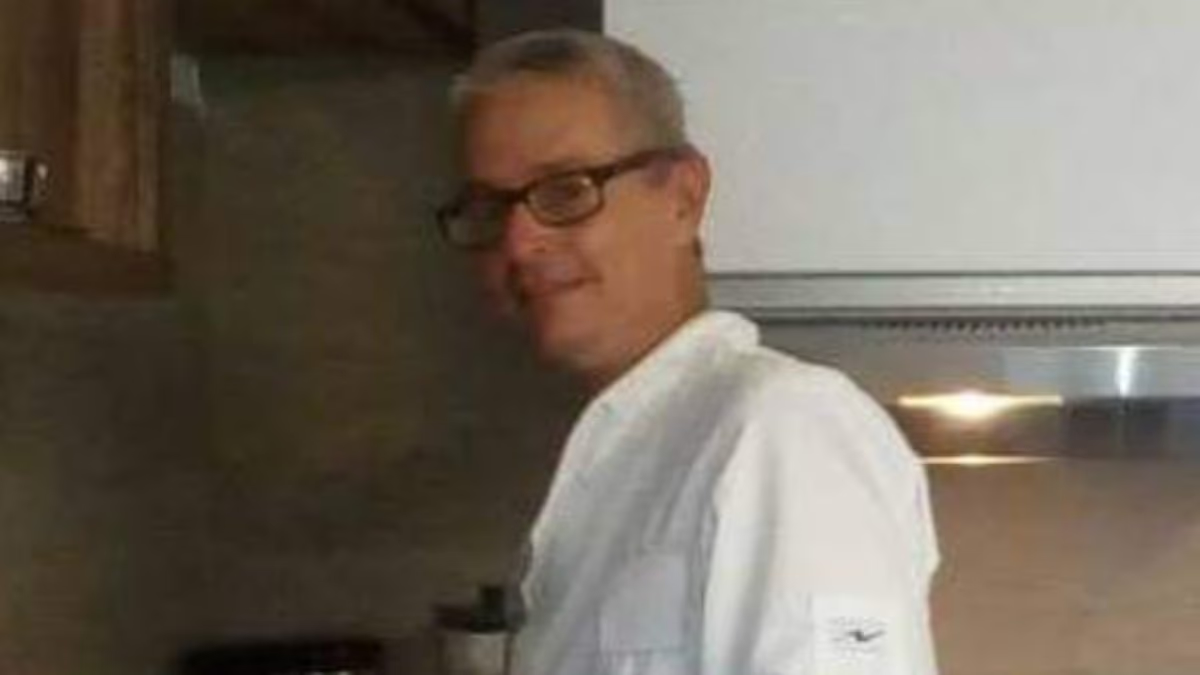

Colombian chef Oscar Rosas once appeared to have a bright future ahead of him.
But Rosas says that, after falling under the control of a notorious criminal gang, he was held captive for three years and forced to cook human flesh for drug traffickers and international criminals.
Now 61, Rosas trained as a chef in New York before spending much of his 30s working in some of Europe’s most prestigious restaurants.
Despite that success, he says his life began to unravel as a devastating heroin addiction cost him his career, his stability and ultimately everything he owned.
With no prospects left, Rosas returned to Colombia with nothing to his name and battling a severe substance-abuse problem.
He moved into Bogotá’s notorious ‘El Bronx’, a lawless district in the city centre that was then one of Colombia’s most dangerous open-air drug markets. The area was controlled by dealers, assassins, sex workers and heavily armed criminal groups.
Rosas says it was there, at his most vulnerable, that he came under the control of Los Sayayines, a violent gang that acted as the neighbourhood’s enforcers.
According to Rosas, what followed was a terrifying descent into a world of hidden tunnels, alleged satanic rituals, organ trafficking and extreme violence.

Oscar Rosas during his career as a chef

Rosas, now 61, says heroin addiction destroyed his life. He is pictured in an undated photograph taken during the worst period of his addiction
In an exclusive interview with Our News Outlet, Rosas described being forced to prepare human flesh as a stew for underground gatherings attended by international criminals. He says he had no choice but to take part in cannibalistic rituals for three years.
While living on the streets of El Bronx, Rosas says he accepted almost any work that could help support his addiction.
So when members of Los Sayayines offered him heroin and crack in exchange for cooking at a private dinner, he agreed.
El Bronx stood above a maze of concealed tunnels and passageways linked to run-down buildings, where criminal organisations conducted their business.
Rosas was told the dinner would take place underground and that senior gang figures would be among the guests.
“They had silverware, fine wine and champagne. They said guests were coming from around the world. I told them I would prepare whatever they wanted, and they said they would pay me in heroin,” he recalled. “They gave me everything I needed.”
What Rosas did not know was that entering the tunnel would mark the beginning of his captivity. He says he was subjected to an ordeal so traumatic that he stopped the interview to pray before continuing.
“I went down into the tunnel, and there was a beautiful woman on my left. She was holding a dead chicken. She wiped its blood on me and threw snails over me,” he said.

Rosas has been sober for 11 years and now runs a rehabilitation centre for people battling addiction in Bucaramanga, Colombia
As he stood there frightened and confused, Rosas says a member of Los Sayayines ran towards him and began punching him.
“I said, ‘What are you doing? It’s me—you told me to come,’ and he said, ‘I don’t care who you are; you are never leaving this place,’” Rosas recalled.
“He told me I had to take part in a satanic ritual and that they would kill me if I refused.”
Moments later, more people began making their way into the tunnel, speaking words Rosas could not understand.
“They made me take a plastic bag filled with meat that had been brought down and place it on the dinner table.
“I picked it up, opened it and was ordered to serve what was inside on a gold platter.”
As he began removing the meat, Rosas says he realised with horror what he was handling.
“They were human remains,” he recalled.
“I turned around and said, ‘Brother, you’re crazy. How do you expect me to cook this?’ He grabbed me, pointed a gun at my head and said, ‘Cook it, or we will eat you.’”
Rosas says he understood that resistance was not an option. “I felt like vomiting. I remember putting a knife into that dismembered body and preparing it as though it were a stew. It was the hardest thing I have ever done,” he said.
“I survived the first ritual. They made me take a bite—and for the next three years, all I ate was human meat,” Rosas claimed.
CHECK THIS OUT: Dem Rep-elect Hamawy Evades Israel’s Right to Exist, Equates U.S., Iran
“They would not let me eat anything else. I had no choice. I had to do it.”
“There was a ritual every day. They would ask me to remove someone’s kidney in exchange for crack.”
Rosas said that every few days, men wearing coats would arrive carrying large suitcases and leave with organs he had allegedly been forced to remove from bodies.
“There was organ trafficking. It was the most horrific thing,” he said.
“Everyone down there ate the bodies. They believed it was a ritual that would protect their souls by capturing the souls of others.”
He said those involved included guerrillas, paramilitaries, thieves, international criminals, drug traffickers and powerful gang leaders.
“International criminals from all over the world would come to eat human flesh prepared as a stew,” Rosas claimed.
“In that slum, there was never a shortage of bodies,” he added. “Some days, seven or eight bodies would come through.
“Some had been murdered, others had died from drug overdoses, and some were members of the police,” he recalled.
“I lived that way for three years. I was desperate. I just wanted to escape.”
After more than 1,000 days in captivity, Rosas says he believed suicide was his only escape and tried to take his own life with a broken glass bottle.
“As I was bleeding, I heard people say they should prepare an acid bath and put me in it. But one of the Sayayines grabbed me, took me out of the tunnel and left me in the street.”
Rosas says he still does not know why the man decided to spare him, but his ordeal was not over.
Badly injured, he was found by police and taken to hospital.
However, when he told doctors what he said had happened over the previous three years, his account was considered so unbelievable that he was placed in a psychiatric ward.
“No one believed me. They thought I was insane,” he said. “I considered suicide. I did not want to face reality—and no one believed me.”
Rosas says his outlook changed when Christian volunteers began visiting him in hospital.

Pictured: ‘El Bronx’, the lawless Bogotá slum that was once one of Colombia’s most dangerous open-air drug markets

In 2016, more than 2,500 police officers and heavily armed soldiers cleared more than 1,000 homeless people and addicts from the slum and rescued about 130 minors

Police search residents of El Bronx during a 2016 raid

Police officers in the area known as El Bronx in central Bogotá, Colombia, on Monday, May 30, 2016
“They sat with me and prayed with me. They taught me about God,” he said, explaining that he has since embraced a religious life. “I still have my demons, but I finally feel at peace.”
Eleven years after escaping the ordeal—and sober for the same length of time—Rosas now lives in Bucaramanga, central Colombia, where he has opened a rehabilitation centre for people struggling with addiction.
Not long after Rosas escaped, police dismantled the dangerous El Bronx settlement.
In 2016, more than 2,500 police officers and heavily armed soldiers removed over 1,000 homeless people and addicts from the area and rescued around 130 minors, many of whom were suspected of being used in child prostitution.
Special forces said at the time that dozens of people had been arrested and large quantities of cocaine, marijuana and crack had been seized.
Authorities also discovered a concealed tunnel about 100 metres long beneath a building occupied by squatters. They said criminal gangs used it to move drugs, weapons and kidnapping victims in and out of the neighbourhood.
For years, accounts of cannibalism and satanic ceremonies in the Colombian slum were dismissed as urban myths.
But earlier this year, Juliana Quitana, then head of the judicial police, said there was sufficient evidence to indicate that criminal groups had used murder victims to “feed homeless people” and “lure foreigners with cannibalistic tendencies.”


