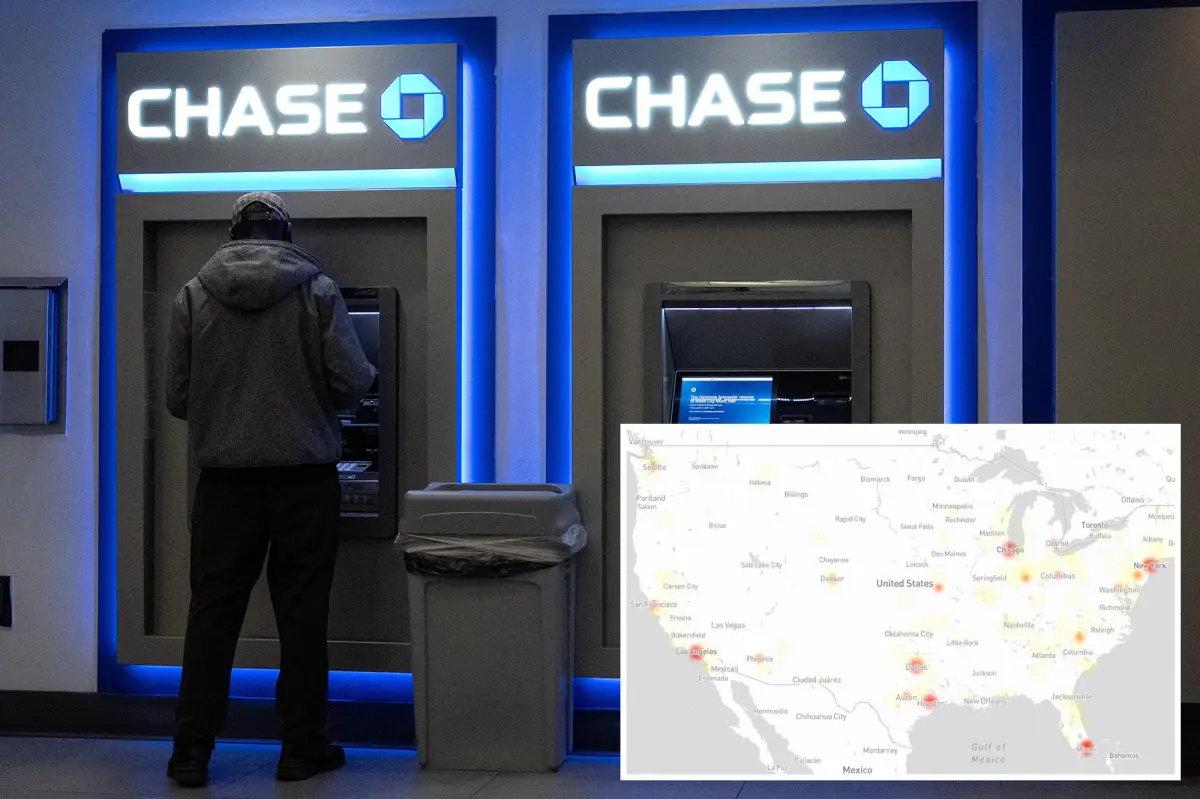
The internet’s recent instability — marked by major disruptions at Microsoft, JPMorgan Chase and United Airlines within days — reflects a broader strain across the digital economy, cybersecurity experts say.
And they warn the turbulence may intensify before companies get systems under control.
Major firms that support everyday digital life are racing to modernize complex, aging computer networks as artificial intelligence tools are rapidly introduced.
They are also working against a hard deadline: completing upgrades before the holiday season, when consumer spending surges and many office workers take time off.
“It’s holiday time, it’s travel time, it’s shopping. So you have all those higher spikes in volume, and more pressure to [update your systems],” Marva Bailer, CEO of technology advisory firm Qualaix, told The Post.
Bailer said legacy networks increasingly resemble Frankenstein’s monster, stitched together with add-on components from AI firms and other outside vendors. Each additional layer creates another potential failure point.
That may have played a role in Monday’s Chase disruption. The bank said a software bug caused the outage, which also affected transactions involving Zelle, Bank of America, Capital One and Wells Fargo, according to multiple reports.
United Airlines also had to suspend all departing flights Monday after a technical failure disrupted its systems.
The incidents followed Microsoft’s worldwide outage Thursday, which disrupted business tools including Outlook email. Microsoft said a dormant software flaw, combined with a sharp increase in demand for server capacity, triggered a chain reaction of failures.
On Friday, the Federal Aviation Administration issued a nationwide ground stop that stranded thousands of travelers. The disruption was blamed on a malfunctioning router in central Arkansas that overwhelmed servers supporting the agency’s aging infrastructure.
None of the outages has been linked to a cyberattack, despite concerns that AI could uncover and exploit previously unknown security vulnerabilities.
Still, Bailer said AI may be contributing indirectly — along with the looming holiday rush.
Businesses commonly impose a freeze on software changes during major shopping periods such as Black Friday, making the weeks beforehand a critical window for completing upgrades.
SEE ALSO: Emotional Video of Alexander’s Brother’s Wife Sparks Tears
The FAA and airlines face comparable pressure as millions of travelers prepare to move across the country.
At the same time, AI is helping companies discover software weaknesses at unprecedented speed, potentially giving already stretched IT teams a growing list of issues to repair.
The situation is further complicated by a vast network of behind-the-scenes technology providers that most consumers never see but depend on when using a debit card, booking an airline ticket or sending money.
These third-party companies supply much of the infrastructure that keeps the banking system operating.
“They do the billing. They do the encryption. They actually move the money,” Bailer said.
“We’ve added layers,” she said.
“When we think about a banking system in layers, we think about branches and ATMs, but do we really think about Zelle?”
A defective software patch or security update can stop otherwise operational systems from communicating, effectively jamming the interconnected machinery that businesses rely on.
Another widespread failure during the holiday shopping season could be especially damaging to retailers and the small companies that serve them.
“It’s not just consumers,” Bailer said. “It’s small businesses.”
Chase has not said whether a software update caused Monday’s outage. There is no evidence that the three disruptions were connected or that artificial intelligence was responsible.
With Post wires.