Kalshi is banning bets tied to Donald Trump’s statements after federal regulators ordered the prediction-market platform to suspend trading on wagers that could be vulnerable to manipulation.
The decision comes months after former White House teleprompter operator Gabriel Perez was fined and ordered to surrender profits he made using privileged knowledge to place bets.
The Commodity Futures Trading Commission (CFTC), which imposed the penalties and a three-year trading ban on Perez, directed Kalshi to temporarily halt markets based on presidential remarks.
Kalshi will continue to offer some political prediction markets. The platform has opened a market on a Wednesday speech by JD Vance and still allows users to speculate about when individual Cabinet officials could be dismissed.
The decision to remove Trump-related markets comes as Democrats prepare to take control of Congress, potentially putting Kalshi executives in line for congressional hearings in Washington.
Elizabeth Warren, who is expected to chair the Senate Banking Committee in the new Congress, described the Perez case as “a wake-up call” for tougher safeguards governing political prediction markets.
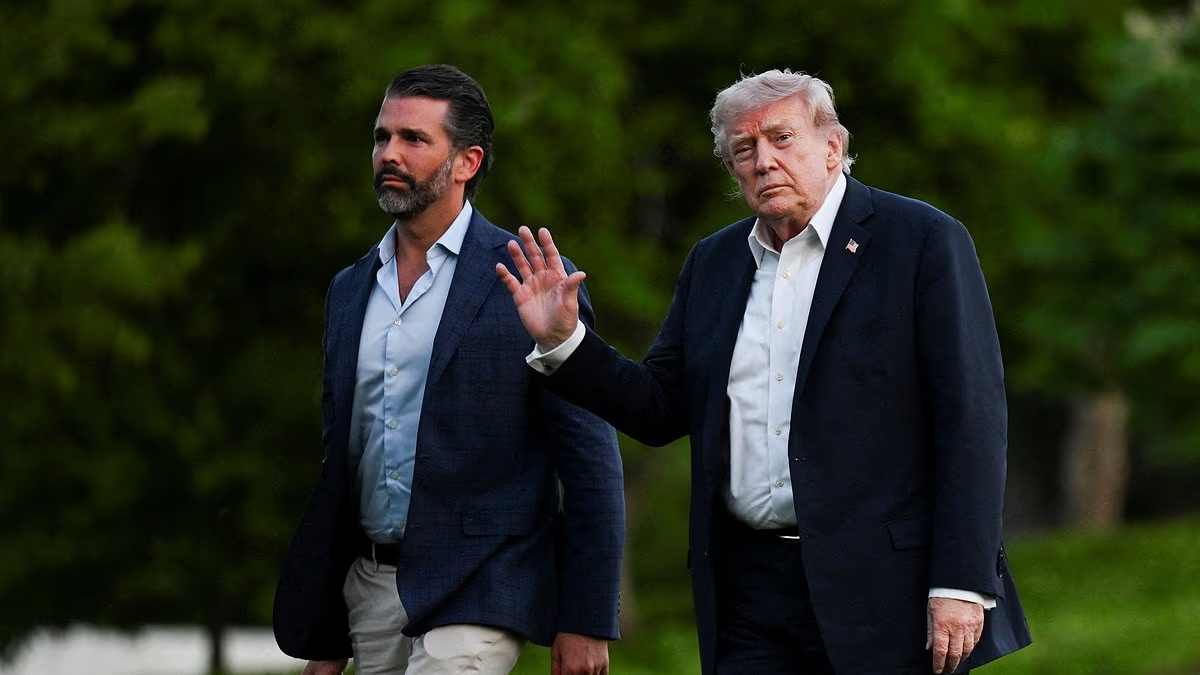
Donald Trump Jr. had also worked as an adviser to Kalshi, but the two sides ended that relationship earlier this month, describing the split as a mutual business decision.
The change followed a move by Trump Jr.’s investment firm, 1789 Capital, to expand its stake in Polymarket, Kalshi’s largest rival.

Kalshi is ending all betting tied to Donald Trump’s statements after federal regulators ordered the platform to suspend the markets

Kalshi will continue offering selected political markets, including a wager on JD Vance’s Wednesday speech and speculation over when Cabinet officials could be fired
Kalshi’s announcement came two weeks after Democrats won control of both the House and Senate in the midterm elections.
Democratic lawmakers have said they intend to examine the Trump family’s investments, including its business ties to both major prediction-market platforms.
“We mutually agreed to end Don’s advisory role after his firm made a significant investment in a competitor this past summer,” Dani Lever, a Kalshi spokesperson, said.
“We are grateful for his contributions in helping us introduce Kalshi to more customers.”
Trump’s eldest son became a paid “strategic adviser” to Kalshi soon after his father returned to the White House for a second term in January 2025. He has also been an investor in Polymarket since August 2025.
Both companies have experienced a sharp rise in popularity and trading activity over the past two years.
At the same time, each platform has benefited from favorable treatment by the White House.
The CFTC has supported the industry’s push to expand nationwide, including efforts to let customers trade contracts linked to sporting events.

Donald Trump Jr. had served as a Kalshi adviser before the two sides ended the relationship in what they described as a mutual business decision

Gabriel Perez, the former White House teleprompter operator accused of using insider knowledge to trade on Kalshi, was ordered to surrender $100,000 in profits and pay a $65,000 fine
Kalshi, Polymarket and the Trump family have strongly denied that their financial connections influenced how the industry was regulated under the administration.
1789 Capital increased its Polymarket investment in August during the platform’s latest fundraising round. That deal prompted discussions about ending Trump Jr.’s advisory position at Kalshi.
Perez’s trading ban and fine were also announced that month.
The former White House teleprompter operator, accused of using advance knowledge of Trump’s speeches to place bets, was ordered to return more than $100,000 in profits and pay a $65,000 penalty.
Under an agreement announced Friday with the CFTC, Perez must also serve a three-year ban from trading.
YOU MIGHT ALSO LIKE: Drug Kingpin ‘The Kraken’ Captured in California After Years-Long Hunt
He was placed on unpaid leave from the White House after reports alleged that he had used his position to bet on which words Trump would say in upcoming speeches on Kalshi.
The commission determined that Perez earned $107,500 on prediction markets by wagering on words and phrases expected to appear in Trump’s remarks between December 2025 and February 2026.
“In his position, Perez had access to presidential speeches before they were delivered, and Perez misappropriated that information—in breach of his duty of trust and confidence,” the commission said in a release.

Perez received a three-year trading ban under an agreement with the Commodity Futures Trading Commission announced Friday
Perez was ordered to repay all of his winnings and pay the $65,000 civil penalty. The commission said the fine reflected a reduction granted because of his “exemplary cooperation.”
The violation was confirmed during a July 16 press briefing by then-White House press secretary Karoline Leavitt.
Confronted by reporters in a packed briefing room, Leavitt said Trump viewed the betrayal as “deeply unfortunate and, frankly, a disgrace.”
Perez had worked as a technical assistant overseeing Trump’s teleprompter scripts since the president’s first campaign in 2016.
Federal regulators alleged that he exploited early access to draft speeches to place lucrative wagers in Kalshi’s “Mentions” market.
The market allows users to bet on whether particular words, phrases or subjects will be mentioned during major public addresses.
Kalshi flagged suspicious trading, triggering an investigation into Perez’s activity over a roughly three-month period.
Investigators reportedly found that he had wagered on more than a dozen presidential events, including Trump’s December prime-time address, a January appearance at the World Economic Forum in Davos, Switzerland, and a Medal of Honor ceremony in March.

Perez cleans the teleprompter before President Donald Trump speaks at the Future Investment Initiative Institute’s summit on March 27, 2026, in Miami Beach

A laptop screen shows trades on the Kalshi website on April 16, 2026, in Portland, Oregon
Leavitt initially misspoke when explaining Perez’s employment status, saying he had been placed on “paid administrative leave” before correcting herself.
She clarified that the leave was unpaid, saying, “To be very clear, that was a decision by the President,” and added that “this individual will no longer be here.”
Asked whether other administration officials were suspected of making similar trades with confidential information, Leavitt replied, “Not to my knowledge, not that I’ve been made aware of.”
She portrayed the incident as the work of an individual who circumvented established safeguards, rather than evidence of a broader failure involving White House security or ethics procedures.
Leavitt said strict rules were already in place, explaining: “There are very strict ethical guidelines here in the White House that explicitly state not to do this, and the White House Counsel’s office makes that clear to all of us who sign up to work in government on behalf of the President.”
She said Perez ignored those requirements and would now face the consequences.
According to Leavitt, the system for detecting misconduct functioned as intended once Kalshi identified the unusual trading.
She said the company reported the suspicious activity to the CFTC.
“They investigated that, identified the individual, and he will now no longer be working at the White House,” she said.
Kalshi reported that trading volume across its election markets during the midterms topped $2.5 billion, up from $1.3 billion during the 2024 election cycle, which also included the presidential contest.
The platform’s election-night favorites either won or were leading in 98 percent of races during the 2026 midterms, as traders placed billions of dollars in wagers on the results.


