
UK inflation climbed again in October as rising household energy costs and increased duties on tobacco added pressure to family budgets, official data has shown.
The Consumer Prices Index (CPI) measure rose to 3.6 per cent, up from 3.5 per cent in September, according to the Office for National Statistics (ONS).
The figure matched economists’ expectations and represented the highest inflation rate since October last year, when CPI inflation also reached 3.6 per cent.
Inflation has continued to build throughout the summer, with an energy shock linked to the conflict in the Middle East pushing up fuel and domestic energy prices.
Grant Fitzner, the ONS chief economist, said: ‘Inflation rose slightly in October, with fuel prices once again making a significant contribution to the annual increase.
‘The yearly costs of raw materials and goods leaving factories are also continuing to rise, driven respectively by higher crude oil and petrol prices.’
October’s increase marked the fourth consecutive monthly rise since CPI inflation fell to 2.6 per cent in June.
That has taken inflation further above the Bank of England’s 2 per cent target. The central bank warned earlier this month that inflation may not return to its goal until the third quarter of 2028.


When it raised interest rates to 4 per cent, the Bank said inflation was likely to increase further over the next few months before reaching a peak of about 5 per cent next year.
Emma Reynolds, Chief Secretary to the Treasury, said: ‘The conflict in the Middle East and Russia’s illegal invasion of Ukraine have driven up costs across the globe.
‘The Household Energy Payment announced in the Budget will send £100 directly to 20 million bank accounts in January, giving families some immediate financial relief.
MUST READ: How America’s Ugliest Divorce Ended With Assisted Suicide
‘The Budget has also set out the long-term measures needed to bring energy bills down permanently, including removing levies from household bills, abolishing standing charges and strengthening Britain’s protection against future global shocks.’
Shadow chancellor Andrew Griffith said on X: ‘Inflation is rising again. It shows how much prices have increased, reducing the buying power of every pound in your pocket.
‘The causes include the UK’s soaring energy bills, along with Labour’s tax and employment-cost increases. Those decisions were not unavoidable, but households will now bear the consequences.’
Economists had already anticipated that higher energy bills, increases in vape and tobacco duties, and rising fuel prices would push inflation higher in October.
Ofgem, the energy regulator, raised its quarterly price cap by 4 per cent at the beginning of October. As a result, the typical annual gas and electricity bill for direct-debit customers in England, Scotland and Wales increased by roughly £60 to £1,723.

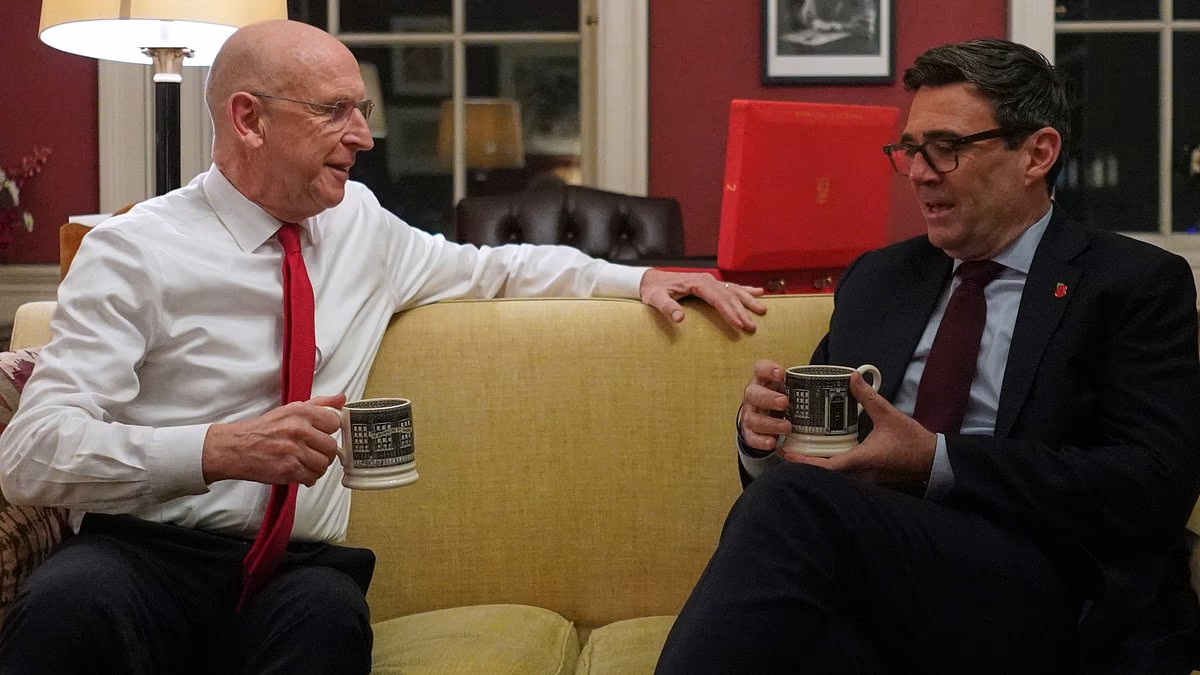
Chancellor John Healey and Prime Minister Andy Burnham at 11 Downing Street last month
The latest inflation figures followed ONS data showing that unemployment had unexpectedly fallen, while the number of available jobs dropped to its lowest non-pandemic level in 12 years, highlighting the challenges facing people seeking work.
The unemployment rate declined from 4.7 per cent to 4.6 per cent in the three months to September. However, vacancies fell by a further 22,000 during the period.
That left the number of advertised vacancies at 690,000 in the three months to October. It was the lowest total since April 2021 and, excluding the Covid-19 period, the weakest figure since September 2014.
Separate figures showed regular pay growth slowing to 3.5 per cent in the three months to September, compared with 3.7 per cent in the previous quarter. Even so, earnings remained ahead of CPI inflation by 0.4 per cent in real terms.
The figures were released as former Labour health secretary Alan Milburn published a long-awaited review of youth unemployment. The report proposed wide-ranging reforms to address the growing number of young people across the UK who are not in education, employment or training, commonly known as Neets.
SEE ALSO: Fashion Empire Chair Delays Court Date as Probe Into Company’s Collapse Continues


