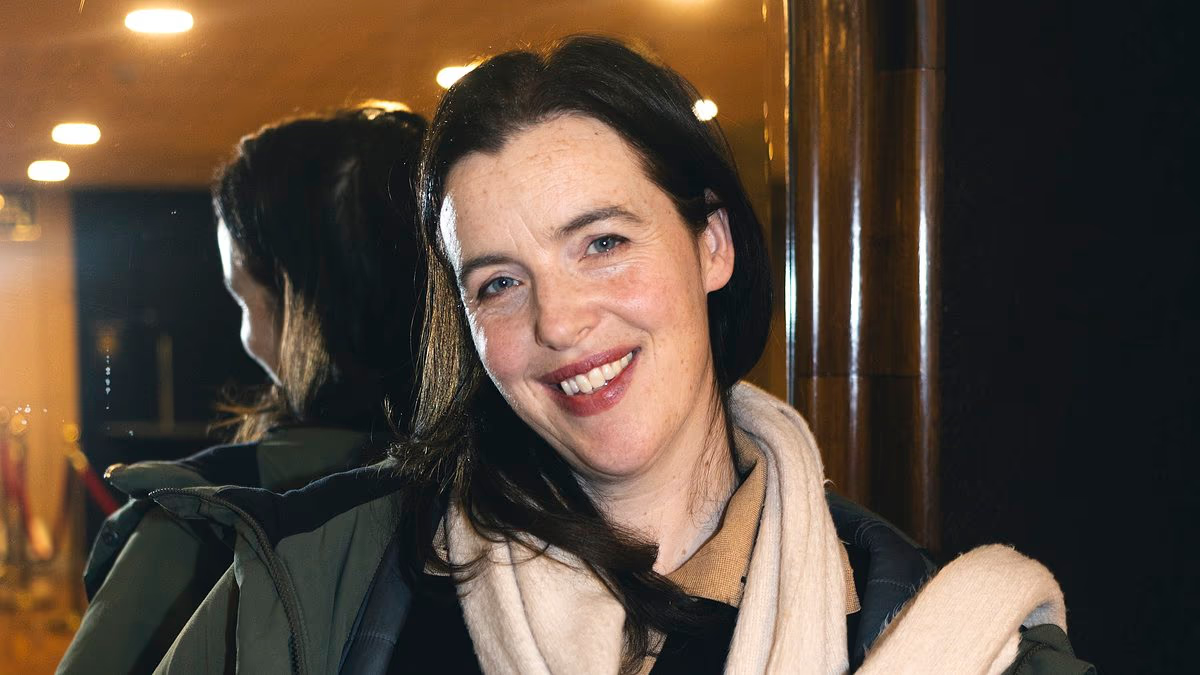

Documentary filmmaker Sinéad O’Shea is approaching two upcoming New York screenings of her latest film with some trepidation, after Quentin Tarantino producer Lawrence Bender delivered a fierce critique at its Sundance premiere earlier this year.
The Navan-born director’s new documentary, All About The Money, examines the life of James ‘Fergie’ Chambers, an heir to the US billionaire Cox Enterprises fortune who has become a communist activist and a donor to left-wing causes, including Palestine Action.
Chambers is reported to have received $250million (€223million) after separating from the family business in 2023. He is now being held in a Spanish prison while awaiting extradition to the US over allegations that he funded Hamas, an organisation he publicly backed following the October 7 attacks.
O’Shea said the response to the film — which opens at a communist residential collective funded by Chambers in Massachusetts before following him to Tunisia and, ultimately, Dublin — has been “fairly mixed”.

O’Shea said the response to the documentary — which begins at the communist residential collective Chambers funds in Massachusetts before travelling with him to Tunisia and Dublin — has been “fairly mixed”

All About The Money profiles James ‘Fergie’ Chambers, heir to the US billionaire Cox Enterprises fortune, communist activist and donor to left-wing causes including Palestine Action

Producer Harvey Weinstein, film critic Elvis Mitchell, director Quentin Tarantino and producer Lawrence Bender
She told the Irish Mail on Sunday: “I think people are sometimes less interested in the film as a piece of filmmaking, journalism or documentary-making. Instead, they are asking themselves, ‘What do I think of Fergie Chambers?’”
“So I think that is really what shapes people’s reactions.”
A Q&A at the Sundance Film Festival in Utah, where the documentary had its premiere, was dominated by Lawrence Bender, the prolific Hollywood producer with eight Oscars to his name and credits on most of Tarantino’s films.
O’Shea recalled: “His was the first question, and he launched into a tirade that lasted about five minutes. ‘Why did you give this guy a platform? Do you know anything about Zionism? Do you know anything about October 7?’”
“The reactions have therefore been quite dramatic. Some people really love the film, while others strongly dislike it.”
The writer-director is returning to the US for screenings and Q&A events on the 14th and 16th of this month.
“I don’t know at all how those New York screenings will go.
“It will be my first time back presenting the film since Sundance, and it is impossible to predict the response. It is incredibly divisive,” she said.
Chambers was himself unhappy with the documentary’s final cut — despite the film holding a 92 per cent rating from 13 critics’ reviews on Rotten Tomatoes — and offered O’Shea a “life-changing” sum to prevent its release.
O’Shea said: “I think he felt the film was too psychological and that his political beliefs did not come through clearly enough.
“I think anyone watching it would have a fairly clear understanding of his political beliefs.
“It is simply not an easy sell, and I think there is enormous nervousness in America at the moment about causing offence.
“Perhaps this week’s midterm results, with sweeping Democratic victories, might give people a little more freedom. But there is also intense budgetary pressure. Netflix has grown hugely, but it is now cutting back.
“There are mergers involving Paramount, HBO and others, so there are fewer buyers.
“Then there is the fact that Fergie is an extremely complicated person.
“The very reasons people want to watch the film are also the reasons buyers feel nervous.”
Chambers, the 41-year-old subject of the documentary, had moved his family to Ireland before his arrest in Spain. He did not object to the film’s discussions of his sexuality or of the child sexual abuse he alleges he experienced while institutionalised as a boy.
O’Shea said his stated commitment to transparency was “something I really like about him”, describing him as “shockingly frank at times in this film”.
“He has this line that rich people hide behind discretion, so he is trying to break that cycle by doing things differently.
“Even though he disliked the film — and obviously had the resources to tie me up in court for a very long time — it still would have been extremely difficult, even if he had not ultimately won.
“For example, he could have sought a super-injunction before Sundance. Ultimately, though, he chose not to and allowed the film to go ahead.
“So I think he ultimately remained true to the idea that he would be the one wealthy person willing to speak out.”
O’Shea has had no contact with Chambers since shortly before his arrest in July.
“I am very conscious that he was meant to come and join me for the Q&As,” she said, adding with a laugh: “That would have been intense.”


