
Polish security services are reported to have thwarted a suspected Russian “false flag” operation bearing similarities to a notorious Nazi deception used as a pretext for the outbreak of the Second World War.
According to officials, the alleged scheme could have resulted in mass casualties near Poland’s border with Russia’s Kaliningrad exclave.
Civilian locations on both sides of the frontier were allegedly targeted, with Ukraine intended to be blamed for the violence, senior Polish officials said.
The operation was reportedly designed to echo the 1939 Gleiwitz incident, in which Nazi agents staged an attack on a German radio station near the Polish border before Germany invaded Poland.
“We had information about the exact locations that were due to be attacked. The Russian plan involved the possibility of mass casualties,” a senior security official familiar with the alleged plot told Polish newspaper Rzeczpospolita.
Under the suspected scenario, saboteurs entering Poland from Russia might have been killed, with forged evidence then placed on them to suggest they were connected to Ukraine.
The alleged operation may also have included a staged attack on a site inside Russian territory, although officials have not disclosed further details.
The suspected objective was to weaken Polish public support for Ukraine and undermine Warsaw’s ongoing military and political assistance to Kyiv.

Poland alleged that it disrupted a Russian sabotage plot near the border with Kaliningrad

The alleged operation was intended to echo the 1939 Gleiwitz incident, when the Nazis staged an attack on a German radio station near the Polish border (pictured) as a pretext for invading Poland
Polish officials said the reported plan bore striking similarities to the infamous Gleiwitz attack, when members of Hitler’s SS disguised themselves as Polish insurgents, seized the German radio station and broadcast a fabricated appeal for Polish action.
One source described the alleged Russian operation as “something similar to Gleiwitz,” adding that anyone crossing the border could have been shot or found carrying planted evidence supposedly linking them to Ukraine. The broader purpose, the source said, was to halt aid to Kyiv.
Polish authorities were reportedly warned about the potential threat by intelligence agencies in allied countries. Similar alerts were said to have been passed to security services in Lithuania, Latvia and Estonia.
MORE STORY: Photos Show Alleged Firework Stains on Chris Bosh’s Palisades Driveway
Rzeczpospolita reported that Polish forces subsequently identified Russian intelligence personnel near the frontier who were suspected of organising sabotage operations.
By the end of October, around 180 additional police officers—including counter-terrorism specialists—had been sent to the border area, while Border Guard units were reinforced.
Members of Poland’s elite GROM special forces were also deployed, carrying out exercises in the Warmian-Masurian region.
“The purpose was to deter any action, but also to ensure that we could respond pre-emptively if necessary,” another source familiar with the matter said.
The reported plot comes as European governments grow increasingly concerned about Russia’s use of hybrid warfare, including suspected sabotage, cyberattacks and drone incursions.

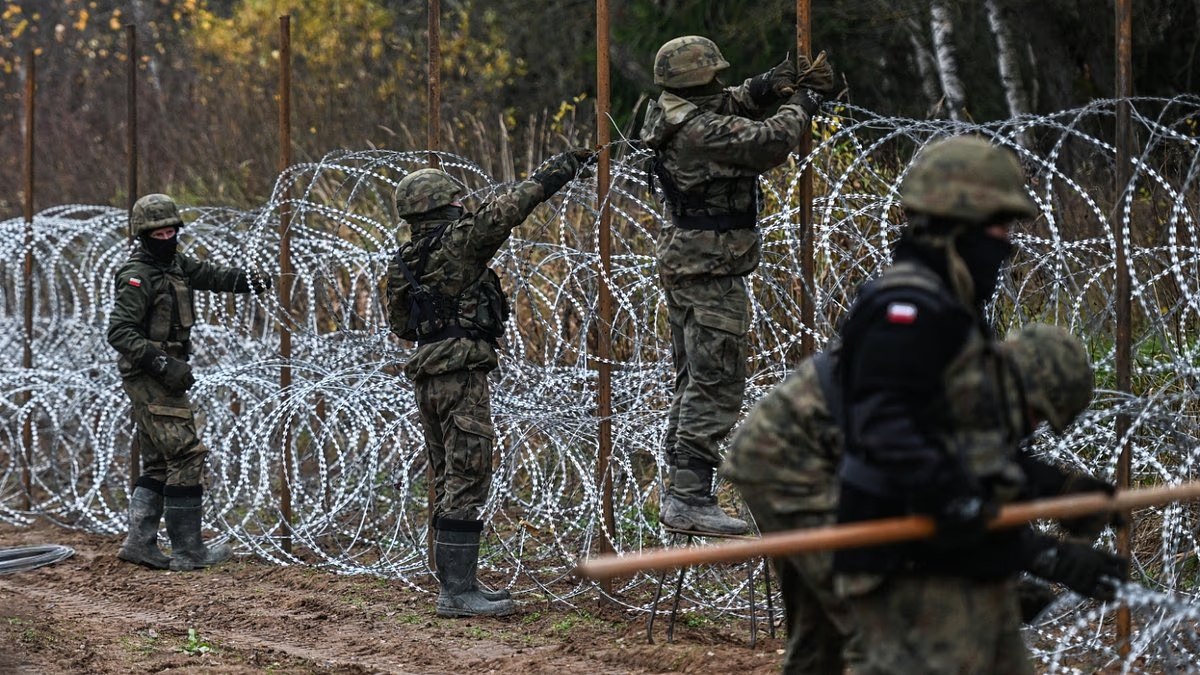
The alleged operation was intended to resemble the 1939 Gleiwitz incident (Polish troops are pictured monitoring the border in November 2024)

Poland said the alleged plot could have involved saboteurs crossing the border (pictured)
Earlier this month, Polish Prime Minister Donald Tusk said authorities had detected “disturbing movement” close to the Kaliningrad frontier.
Russia’s Federal Security Service later announced that it had broken up what it called a “Polish special services intelligence network” in Kaliningrad on November 11, claiming that two agents had been detained.
Warsaw rejected the accusation. Poland’s special services minister, Jacek Dobrzyński, described it as “propaganda,” “disinformation” and an attempt at provocation.
The Kremlin has not commented on the allegations surrounding the suspected sabotage operation in Poland.
Our News Outlet has contacted the Russian embassy for a response.


