
A Harvard astrophysicist who believes a puzzling object racing through the solar system could be a missing Soviet spacecraft says scientists may never obtain a definitive close-up view after Japan canceled a planned mission to reach it.
Avi Loeb told News Outlet that the Japan Aerospace Exploration Agency’s decision to abandon its planned 2031 Hayabusa2 rendezvous with 1998 KY26 eliminates the best opportunity to photograph the object in high resolution and determine whether it is a natural asteroid or the long-lost 1988 Soviet probe Phobos 1.
“There is no way to resolve the object or obtain a high-resolution image of its surface without getting close to it — without a flyby,” Loeb said. “Even the Webb telescope and the largest telescopes on Earth cannot resolve it into multiple pixels because it is too far away.”
The cancellation was announced only days after NASA Administrator Jared Isaacman rejected speculation about the approximately 36-foot-wide object during an appearance on “Fox & Friends.” Isaacman said he had seen “no evidence to suggest this is … anything other than an asteroid.”

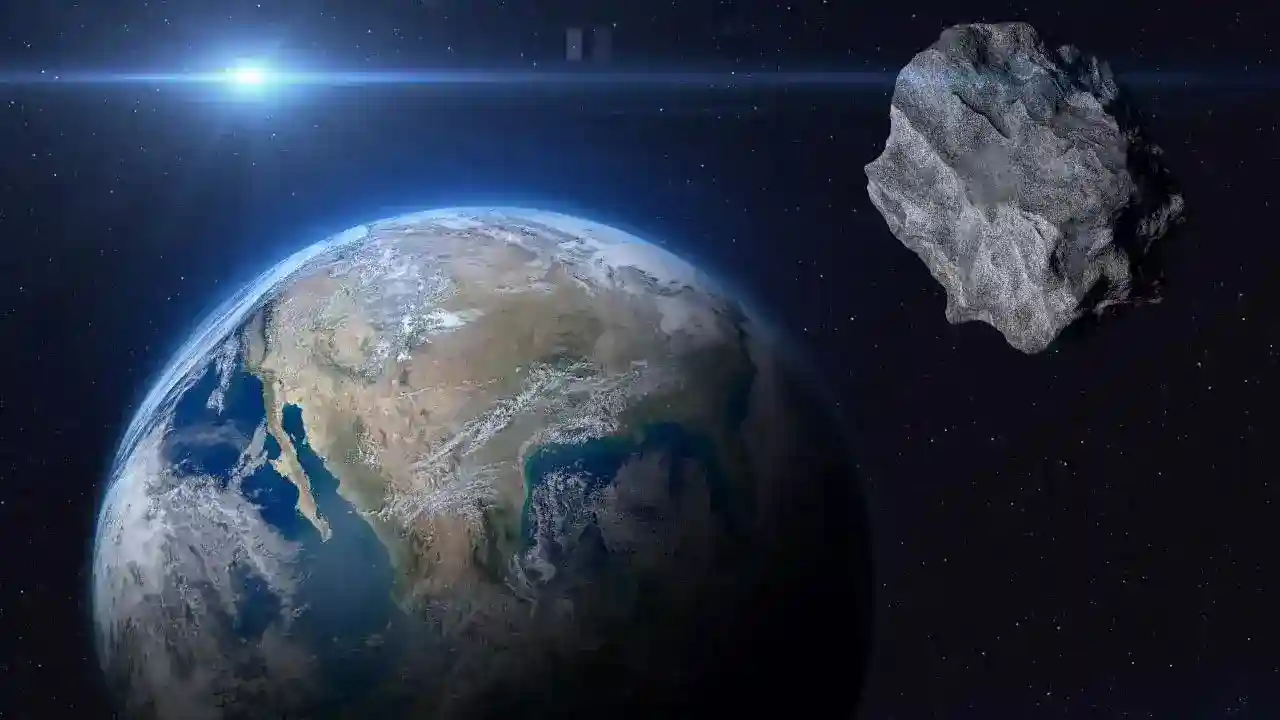
An artist’s concept depicts an asteroid passing near Earth. (iStock)
Loeb disputed that conclusion, saying KY26 is “not an asteroid” because it appears to accelerate in a way gravity alone cannot account for. He predicted that if Japan’s spacecraft had landed on the object in July 2031, scientists might have discovered a plaque reading “Made in the USSR” rather than ice or rock.
JAXA told the Cabinet Office’s Space Policy Committee on Nov. 16 that it was ending the planned 2031 rendezvous after the last normally operational main ion engine aboard Hayabusa2 malfunctioned in mid-August, according to the Japanese newspaper Yomiuri Shimbun.
“I was surprised that JAXA canceled the mission just a day or two after I discussed it publicly, because the engine problem had been known for several months,” Loeb said. “The likelihood of a coincidence is roughly one day divided by the period during which the fourth engine problem was known — more than 100 days.”

A model of Phobos 1, the Soviet spacecraft that lost contact with Earth while traveling toward Mars in 1988. Harvard astrophysicist Avi Loeb and colleagues have investigated whether the mysterious object 1998 KY26 could be the missing probe. (Credit: NASA)
“I would put the odds of a chance coincidence below 1%, although it remains possible that this is simply a coincidence,” he added.
Loeb also questioned why JAXA engineers did not attempt another Earth gravity-assist maneuver to make up for the lost engine thrust, given that Hayabusa2 had been developed over several years, instead of redirecting the spacecraft to a different target.
According to the agency’s report, reaching KY26 in 2031 already depended on an Earth gravity assist. Combining usable components from two damaged engines still did not provide the 12-year-old spacecraft with enough thrust for the required orbital changes. JAXA therefore redirected Hayabusa2 toward a 2028 flyby of asteroid 2015 BM510, the newspaper reported.
Although the close encounter has been canceled, Loeb said astronomers have another way to examine his theory from a distance: NASA’s James Webb Space Telescope could measure heat emitted by KY26 and study its chemical signature.
CONTINUE READING: Powerboat Racing Millionaire Lists Miami Mansion for $43.9 Million

An illustration depicts the Soviet Phobos 1 spacecraft, launched toward Mars in July 1988 before a faulty command caused it to shut down. (Credit: NASA)
“So far, we have detected sunlight reflected from the object,” Loeb said. “Webb could potentially detect the heat it emits, giving us information about its size, surface temperature and composition.”
Mainstream researchers have proposed that KY26 is an ordinary asteroid or comet. Loeb, however, points to its rapid rotation — roughly once every five minutes — and its unusually high brightness.

Avi Loeb speaks at the SALT conference in Manhattan, New York City, on Sept. 14, 2022. (David ‘Dee’ Delgado)
“This object reflects roughly half the sunlight that strikes it, while a typical rock or iceberg reflects about 5%,” Loeb said, calling the object’s brightness “surprising.”
NASA previously told News Outlet that a 2025 orbital analysis by the agency’s Center for Near-Earth Object Studies attributed KY26’s complicated trajectory to solar radiation forces — “the natural push of sunlight and thermal emission on its non-spherical shape” — rather than concealed comet-like activity.
Loeb and his colleagues, by contrast, reported that KY26’s path closely matches the trajectory of Phobos 1, a Soviet spacecraft launched toward Mars in July 1988 that shut down after receiving a faulty command. They calculated that sunlight reflecting from the probe’s solar panels could create the observed acceleration without producing the tail associated with a “dark comet.”
“It could be a comet releasing gas backward and pushing itself forward, but in that case we should have detected the gas,” Loeb said. “We should also have seen dust. Comets typically produce tails, and solar radiation pushes those dust particles away from the sun.”

In this photo provided by SpaceX, a Tesla Roadster launched aboard the Falcon Heavy rocket, carrying a dummy driver named “Starman,” travels toward Mars. (Photo by SpaceX via Getty Images)
Loeb said KY26 travels around the sun at a distance ranging from a fraction of the Earth-sun separation to several times that distance. He emphasized that it poses no impact threat to Earth but argued that space agencies should remain open to unconventional explanations when studying unexplained objects.
He pointed to an incident in January 2025, when astronomers briefly classified an object near Earth as an asteroid before determining that it was the Tesla Roadster SpaceX launched in 2018. The error was corrected because researchers already knew the vehicle’s flight path.
“Hopefully, the Rubin Observatory in Chile, funded by the Department of Energy and the National Science Foundation, will discover dozens of interstellar objects over the next decade,” Loeb said. “We should be curious enough to ask whether every one is rock or ice. If even one has a technological origin, it would change how we understand our place in the universe.”


