
Until I reached my late 30s, I slept effortlessly. When friends complained about insomnia, I could barely understand what they were experiencing.
Then, at 38, I became pregnant. Three months later, my ability to sleep disappeared almost overnight.
The shock was profound. Surviving on just a few hours of sleep before my baby arrived was difficult, although I could at least lie in or nap during the day. Once my child was born, however, the situation became a relentless nightmare. More than 25 years later, it was still affecting me.
After I finished breastfeeding, my GP prescribed zopiclone, one of the commonly used sleeping tablets known as Z drugs because their names generally begin with the letter Z. It helped me sleep, but left me struggling with a thick fog of daytime fatigue.
I also tried almost every natural remedy available, including acupuncture, weighted blankets and white noise. Nothing made a meaningful difference.
The breakthrough came in 2023, when my doctor prescribed an online six-week course of CBTi — cognitive behavioural therapy for insomnia — which I later wrote about for Good Health.
It was demanding, particularly because it involved a period of deliberately restricted sleep, but it worked. I began sleeping for eight hours a night, felt sharper during the day and noticed that my low mood had lifted.
After about two years, though, the benefits began to fade. I was once again waking every 60 to 90 minutes and sometimes remained awake for as long as two hours.

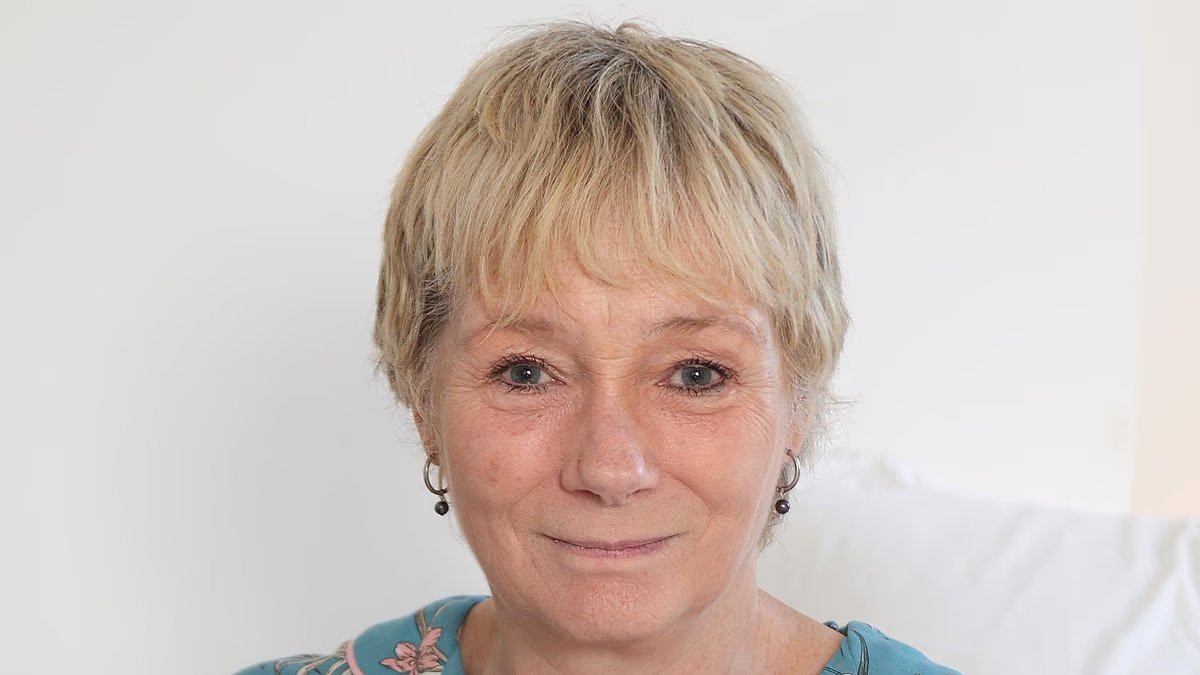
Jane Alexander found relief from insomnia with a new drug after suffering from the sleep disorder since the birth of her first child
The familiar despair returned, accompanied by exhaustion and mental fog during the day.
“CBTi is the gold-standard first-line treatment for insomnia,” says Professor Guy Leschziner, a consultant neurologist specialising in sleep disorders at Guy’s and St Thomas’ NHS Trust in London. “However, for some people it is very difficult to follow.
“For others, it works initially but insomnia can return if they have an underlying predisposition, particularly when they stop following the principles of CBTi.”
To be fair, I had started cutting corners. CBTi advises people to leave bed after 20 minutes of wakefulness and do something calming, such as reading or listening to music, somewhere outside the bedroom. In a freezing house, I simply couldn’t face it.
“Have you tried Quviviq?” asked my friend Vicky, who also suffers from insomnia.
“Quiviviq what?” I said.
She told me it was a newer type of sleeping tablet. “Honestly, it’s a lifesaver,” she said.
I looked it up and discovered that the difficult-to-pronounce drug is the brand name for daridorexant, a dual orexin receptor antagonist, or DORA.
The drug blocks the action of orexin, a chemical messenger that triggers the release of other substances involved in wakefulness, explains Dr Hugh Selsick, a consultant in psychiatry and sleep medicine at University College London Hospitals.
“Orexin causes a whole range of other chemicals to be released in the brain, most of which wake you up and help keep you awake,” he says.
“It is generally thought that the orexin system is more active at night in people with insomnia,” adds Professor Leschziner.
“Stress, anxiety and disrupted sleep patterns can all contribute. There is also evidence that prolonged sleep loss may drive orexin levels higher. When the brain is deprived of sleep, it releases more orexin to keep you alert during the day, potentially creating long-term changes in the system.”
Two trials published in The Lancet Neurology in 2022 found that a nightly 50mg dose of daridorexant significantly reduced the time people needed to fall asleep and the amount of time they spent awake during the night. Crucially, the drug did not appear to cause the traditional “hangover” effect associated with older sleeping pills.
Quviviq is also highly targeted. Rather than sedating the entire central nervous system, it acts specifically on orexin receptors and does not alter the structure of natural sleep.
That sets it apart from older medicines, which “tend to increase light or intermediate sleep”, says Professor Leschziner, while reducing deep sleep and REM, or rapid eye movement, sleep. Deep sleep helps restore the body and clear waste from the brain, while REM sleep — the stage associated with dreaming — supports emotional processing and memory consolidation. For an insomniac, it sounded almost too good to be true.
The difficulty is that there is currently no straightforward test to show whether a person’s insomnia is caused by a problem with the orexin system.
“Although the orexin system is important, it is unlikely to be the only factor driving insomnia in most people,” says Dr Selsick, who notes that conditions such as restless legs syndrome may also be responsible.
There is another limitation. Quviviq was approved for NHS use in England and Wales in 2023 and in Scotland in 2024, but guidance from the National Institute for Health and Care Excellence says it can be prescribed only when insomnia occurs at least three nights a week for more than three months and seriously affects daytime functioning.
It is also intended for people who have not benefited from CBTi or cannot access it.
Cost may be another reason it has not replaced older medicines. A month’s supply of zopiclone costs the NHS less than £1, while Quviviq costs more than £40. Prescriptions for the newer treatment are therefore outnumbered by those for Z drugs by around 25 to one.
“[But] I think the main reason is a lack of awareness and experience with this drug,” says Professor Leschziner.
That certainly seemed true in my case. When I mentioned Quviviq to my GP earlier this year, she had to search for information about it. She agreed that I could try it and issued a one-month prescription.
I was not expecting an instant cure. The drug can take up to three weeks to build up in the body, although a 2025 study published in European Psychiatry found that some people notice better sleep and improved daytime wellbeing after a week — and occasionally within the first day or two.
I took my first tablet half an hour before bed. Patients need to allow at least seven hours before waking and at least nine hours before driving or operating machinery because drowsiness may persist into the following day.
I fell asleep quickly. Although I continued to wake roughly every hour, I returned to sleep almost immediately. The downside was that I woke feeling groggy, and the sensation lasted until around midday.
By the third night, I noticed that my usual anxiety about going to bed had disappeared. I felt confident that the tablet would help me fall asleep.
By the fifth day, I was considerably less sleepy during daylight hours. My dreams, however, had become unusually vivid and often tipped into disturbing nightmares.
Professor Leschziner says this is a common side-effect. As Quviviq restores deeper, more continuous sleep, the brain may experience “REM rebound”, increasing the duration, frequency and intensity of REM sleep to compensate for previously missed cycles. I did not experience other possible reactions, such as headaches, dizziness or nausea.
By the third week, I was waking between three and six times a night. After a month, that had fallen to just two or three awakenings — a remarkable improvement. My GP agreed to extend the prescription for another two months. Over the weeks that followed, I rediscovered the feeling of going to bed expecting to sleep and waking refreshed. My energy was finally returning.
Then, after attending a work event, I did not get home until nearly midnight and no longer had a seven-hour sleep window.
I decided to skip the tablet because I did not want to be unsteady and exhausted the next morning. The crushing insomnia returned almost immediately.
Because the medication leaves the body relatively quickly, missing a dose means the brain’s overactive wake signals are no longer being blocked.
By week 12, I had used all my Quviviq. I was worried about losing the energy I had regained and increasingly aware of the risks associated with chronic insomnia, including cardiovascular disease, neurological conditions such as dementia, type 2 diabetes, obesity, depression and anxiety.
The first night without the drug was dreadful. I was awake every hour again. Yet within three days, my sleep had settled back into a healthier pattern.
“There is evidence that daridorexant can produce continuing improvements even after treatment stops,” says Dr Selsick.
However, he adds that studies followed patients for only one week after discontinuation, “so we do not know whether those improvements continue beyond that point”.
For me, they have. A month after stopping the medication, I am still sleeping remarkably well. If my insomnia returns, I could theoretically restart treatment.
“There is no upper limit on how long someone can take daridorexant,” says Dr Selsick. “It is not a magic bullet, but it gives us a new and very different option for treating insomnia — and that can only be a good thing.”
I could not agree more.


