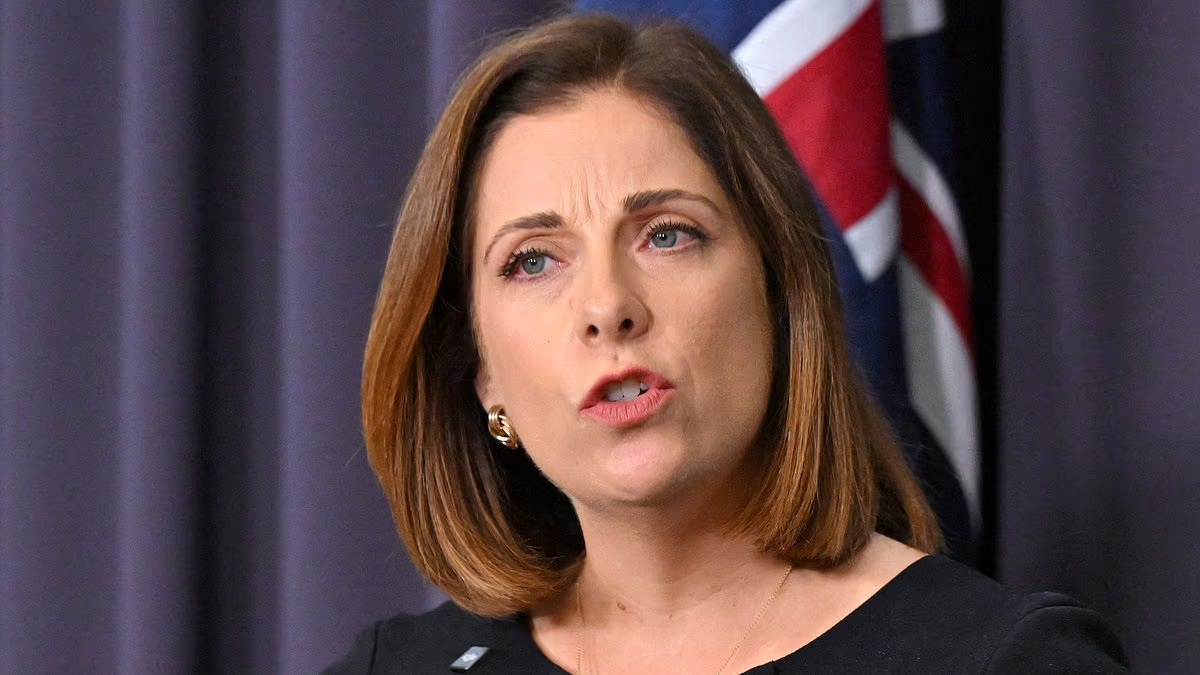

A sweeping new crackdown on online platforms including Facebook, TikTok and Google is on track to become law after the Albanese Government reached an agreement with the Greens. Critics warn the reforms could have serious consequences for freedom of expression in Australia.
The proposed Digital Duty of Care laws would give Australians greater control over their social media feeds, allowing them to choose between algorithmically recommended posts and content published by accounts they follow.
The legislation would also require major technology companies to take proactive steps against harmful online material, rather than waiting for users to lodge complaints. At the same time, it would expand the authority of the eSafety Commissioner.
Some websites and digital services could also begin asking users to prove they are over 18 before granting access to adult content.
Communications Minister Anika Wells described the package on Tuesday as “the most seismic and significant online safety reform that our country has ever known”.
Labor secured the Greens’ backing after agreeing to an amendment that could expose technology companies to fines of $109 million or up to five per cent of their worldwide revenue, whichever amount is higher, if they fail to act against harmful content.
For global companies such as Meta, Google and TikTok, the penalties could run into the billions of dollars.
“Just like food producers and toy manufacturers, Big Tech will not get away with creating products that put people at risk,” Greens Senator Sarah Hanson-Young said.

Anika Wells (pictured) has struck a deal with the Greens to pass the Digital Duty of Care laws
The Opposition has criticised the reforms, arguing they could place online free speech at risk. The Liberals say the bill may give the government too much influence over what is classified as harmful content.
Coalition communications spokeswoman Sarah Henderson said the proposed laws could ultimately be used to limit speech that is legal.
“The Digital Duty of Care, as proposed by this government, is a very dangerous path… it creates a framework in which free speech can be circumvented and the government of the day can effectively impose political censorship on what Australians see and say online,” she said.
“That is dangerous. It is undemocratic.”
One Nation leader Pauline Hanson also described the reforms as a “censorship bill”, saying they could narrow the space for lawful political discussion online.
“Protecting children is essential, but child safety must not become an excuse to restrict lawful political debate,” she told the Senate on Tuesday.
Here is how the changes could affect Australians.
Facebook and Instagram feeds will change
For everyday users, the most visible impact may be greater control over the algorithms that decide which posts appear in their social media feeds.

Platforms such as Mark Zuckerberg’s (pictured) Meta, Google and TikTok will face new penalties
The Albanese Government has branded the initiative “My Feed, My Way”, reflecting its aim of giving users more say over how online content is delivered.
According to Wells, the policy is intended to reduce the influence of engagement-driven recommendation systems that automatically select and promote material.
Users would instead be able to decide whether they want personalised recommendations or a feed made up primarily of posts from accounts they have chosen to follow.
Wells said the legislation would also make technology companies more accountable for the content they recommend and amplify.
“It is not about controlling adults online. It is about getting illegal and seriously harmful material offline and giving adults choice,” she said.
The precise changes will be determined by individual platforms.
More websites could ask for your age
The bill would impose a broad responsibility on digital platforms to identify and reduce the risks children face from dangerous online material.
RELATED: Nvidia Shares Soar in $1T Rebound After Trump Backs Its CEO
That material includes child sexual abuse content, grooming, pornography, self-harm and eating disorder content, fake nude images and other forms of serious harm.

Sarah Henderson (pictured) warned the bill could lead to political opinions being censored online
The legislation does not explicitly require Australians to show identification simply to use the internet.
However, with companies facing potentially substantial fines if they fail to protect children, many may introduce more robust age-verification systems to show they are meeting their obligations.
Technology businesses have cautioned that the requirements could reach beyond conventional social media, potentially affecting messaging services, email providers and cloud-storage platforms.
The way age checks are ultimately conducted will depend on future enforcement decisions and the steps individual companies choose to take.
Controversial opinions could become harder to share
The Government maintains that the reforms are aimed at harmful behaviour and unsafe platform design, not at suppressing political beliefs or viewpoints.
As part of the Senate agreement, Labor introduced changes to clarify provisions concerning material that promotes hostility towards women and gender equality.
Wells said the amendments would make it clear that people would not be penalised simply for holding personal beliefs or expressing political opinions.
“That will make it abundantly clear that this is not about disagreeing with feminism or about expressing an opinion,” she said.

Pauline Hanson (pictured) called the Digital Duty of Care a ‘censorship bill’ during a speech
“It is about protecting children from content that promotes hatred of women, violence, coercion, intimidation, harassment and death threats.”
The bill sets out a broad range of exemptions intended to protect journalism, education and legitimate public debate.
Material designated as “excluded material” cannot be classified as harmful under the Digital Duty of Care framework.
The exemptions cover professional news reporting, educational resources, academic research, public health information, court records, artistic works and anything considered to be in the public interest.
Films, television programs and video games that have already gone through Australia’s classification system would also be excluded.
Critics nevertheless argue that the scale of the proposed fines could encourage platforms to err on the side of caution, removing lawful content to avoid legal or regulatory exposure.
The Coalition, which plans to oppose the bill, says controversial commentary, legitimate political views and other lawful material could be increasingly restricted as companies seek to avoid potentially massive penalties.
Australians could sue technology giants – and it will hurt them
Australians would, for the first time, have the ability to take technology companies to court if a platform breached its duty of care and caused harm.
The proposed right would be available to individuals and groups seeking legal action against digital businesses.
It was a central demand from the Greens during negotiations and formed part of the final agreement with the Government.
Greens communications spokeswoman Sarah Hanson-Young said the measure would enable Australians to seek compensation where platforms had failed to make their services safer.
She also indicated that the reform could open the door to future class actions against social media companies.
The Government is additionally establishing an independent complaints process, similar to a digital ombudsman, giving users another option when disputes with technology companies cannot be settled directly.


