
New Yorkers planning to celebrate the holidays with Dom Pérignon or Veuve Clicquot may find their festive plans complicated by a looming shortage.
Stocks of several high-end champagne brands are reportedly running low across the city as one of New York’s biggest liquor distributors faces mounting financial problems.
Empire Merchants, the state’s second-largest wine and spirits distributor, is said to be having difficulty obtaining new shipments from several key suppliers.
The Queens-based business has long been a powerful presence in New York’s beverage industry, supplying thousands of restaurants, bars, hotels and retailers with wine, spirits and champagne.
However, inventory from LVMH’s Moët Hennessy division appears to be dwindling. The portfolio includes Dom Pérignon, Veuve Clicquot, Moët & Chandon, Krug and Hennessy cognac.
A sales representative for Empire reportedly advised local wine and liquor stores to order “extra [Moët Hennessy] where you can,” according to the New York Post.
The message cautioned that products available one day could be gone the next, while describing the distributor’s financial position as “serious,” fluid and subject to daily changes.
A second email sent Friday also highlighted concerns over Santa Margherita Pinot Grigio. It reportedly said only 2,100 cases were left and that additional shipments could not be guaranteed.

New Yorkers planning to serve Dom Pérignon or Veuve Clicquot during the holidays may be forced to rethink their champagne choices

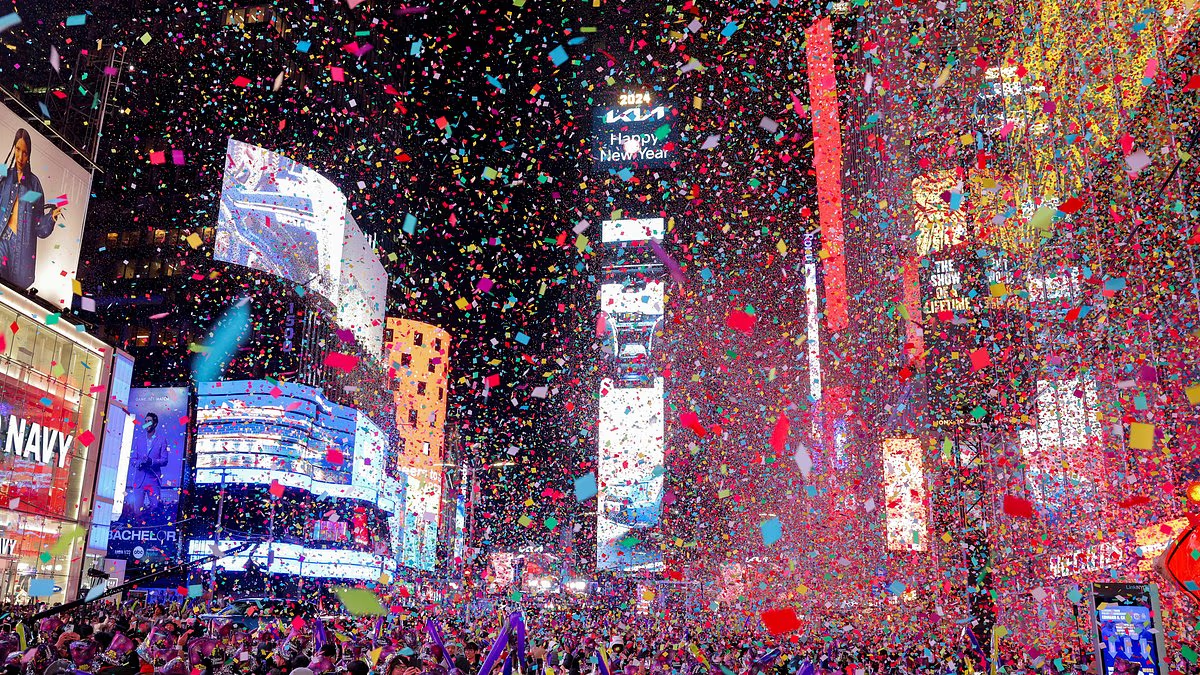
New Year’s Eve is among the busiest nights of the year for New York City businesses
Customers were encouraged to place orders immediately to secure the products they wanted before supplies ran out.
The warning arrives just ahead of Thanksgiving, Christmas and New Year’s Eve—some of the busiest times of the year for champagne, wine and spirits sales.
Empire’s distribution network also carries brands such as La Marca Prosecco, High Noon, Whispering Angel and Hendrick’s Gin.
An industry source told the New York Post that Empire had already run out of Veuve Clicquot, with more than 3,000 cases reportedly waiting to be fulfilled.
“Their suppliers are not shipping to them,” Daniel Posner, owner of Grapes The Wine Company in White Plains, told the newspaper.
Empire Merchants was created in February 2007 when two long-established distributors, Charmer Industries and Peerless Importers, merged. Both companies traced their histories to the period following the end of Prohibition.
The privately owned distributor has since become a major force in the metropolitan New York beverage market, serving more than 10,000 restaurants, bars, hotels and retail outlets.
IN CASE YOU MISSED IT: Study Says Russia Has Lost 700,000 Soldiers in Ukraine War Since 2022
Moët Hennessy USA did not reject reports that its products may become harder to find in New York, though the company stopped short of confirming an actual shortage.

A source said Empire had sold out of Veuve Clicquot, with more than 3,000 cases reportedly back-ordered

Empire Merchants ranks as New York’s second-largest wine and spirits distributor
“The holiday season is one of the most festive times of the year,” a company spokesperson said, adding that Moët Hennessy remained focused on supporting its retail partners and customers.
Even with the supply concerns, shoppers may not necessarily see dramatic price increases when looking for their preferred champagne.
Posner said retailers would probably steer customers toward substitute bottles instead of sharply raising prices, since consumers could easily shop at another store.
He added that prices for the affected champagne brands had already risen by more than 30 percent since the coronavirus pandemic.
Empire’s position could become even more difficult if reports that LVMH and California-based wine producer E. & J. Gallo are leaving its distribution network take effect on January 1.
Gallo’s brands include La Marca Prosecco, along with Barefoot wine and High Noon.
Industry sources said Gallo is shifting to a different distribution model, while the loss of Moët Hennessy could create a gap that will not be quickly replaced.
“There will be a period of transition,” a distribution executive told the New York Post.
The disruption reflects broader strain across the U.S. alcohol distribution industry, following the July collapse of Republic National Distributing Company, or RNDC, the nation’s second-largest wine and spirits wholesaler.
That bankruptcy underscored the growing challenges facing the sector, including shifting consumer preferences, softer demand and increasingly difficult wholesale conditions.
Michael Correra, executive director of the Metro Package Store Association, told the outlet that distributors and suppliers were also finding it harder to secure credit as sales weakened.
The pressure is also being felt among consumers. An August Gallup poll found that alcohol consumption in the United States had dropped to its lowest level since 1939.
Our News Outlet has contacted Empire Merchants for comment.


