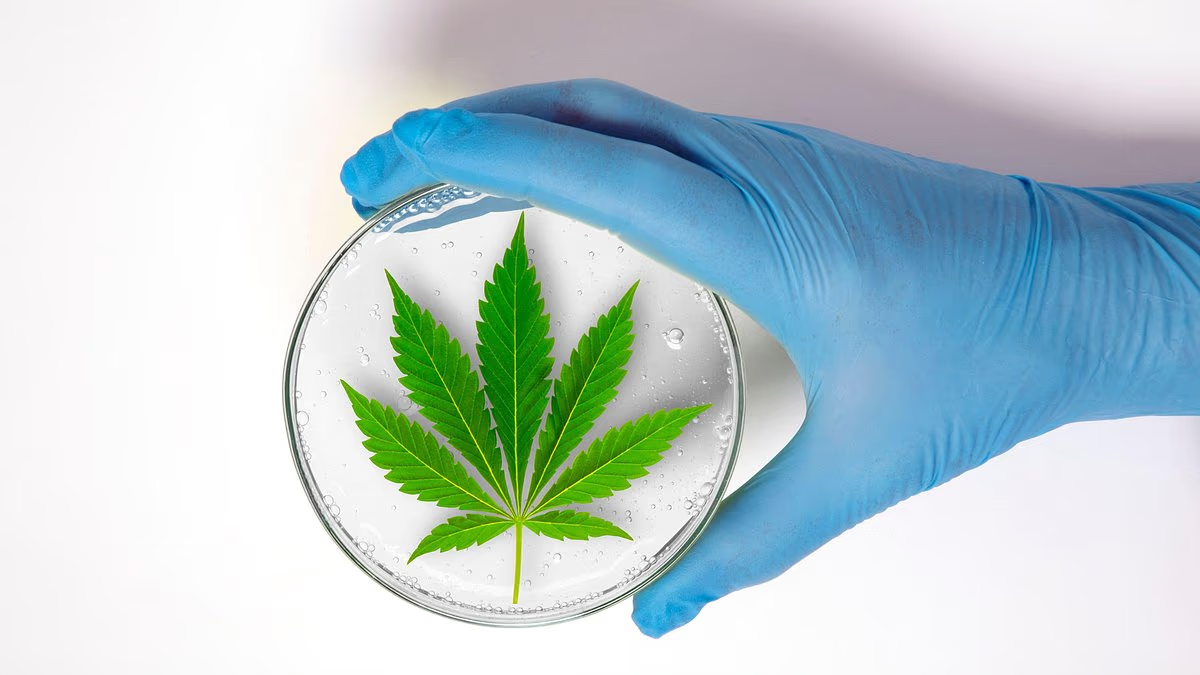
Medical cannabis is promoted as a treatment for pain, insomnia and anxiety, but experts say some people should consider the risks carefully before using it.
Despite being prescribed for medical reasons, some products supplied through private UK clinics are “even more potent than the street skunk” sold illegally, according to Sir Robin Murray, professor of psychiatric research at King’s College London.
Medical cannabis is sometimes recommended for anxiety, yet high-potency doses can actually intensify anxious feelings, warns Marta di Forti, professor of drug use, genes and psychosis at King’s College London. She leads the UK’s first cannabis clinic for patients with psychosis at South London and Maudsley NHS Foundation Trust.
The discussion has gained fresh attention after Boots announced last week that it had launched a medical cannabis service.
The online-only service, named SureLeaf, is open to people aged 25 and over with chronic pain, anxiety or insomnia who have not been helped by at least two conventional treatments. Patients must provide details of their medical history to demonstrate that they meet this requirement.
After completing an online assessment, which asks questions such as whether the applicant has psychosis or holds a pilot’s licence—factors that could make them unsuitable—they attend a video consultation with a consultant in the relevant speciality. The clinician then decides whether a prescription would be appropriate.
If medical cannabis is considered suitable, patients may be prescribed either cannabis flower, inhaled through a medically approved vaporiser, or an oil placed under the tongue. Every prescription is reviewed by a multidisciplinary team.
An initial one-month trial costs £89, covering the assessment, a 10ml starter dose and a review at the end of the month.

Boots has launched SureLeaf, an online-only medical cannabis service for people aged 25 and over with chronic pain, anxiety or insomnia
An annual package, recommended for people who have previously used medical cannabis, costs a further £99. It includes an assessment and four follow-up appointments to monitor progress.
Additional reviews are available for an extra charge, while the medication itself is also priced separately.
Medical cannabis became legal on prescription in the UK in 2018, and about 60 private clinics have since begun prescribing it. The involvement of a well-known brand such as Boots is expected to increase awareness and demand. “Many people still don’t know that medical cannabis has been legal on prescription since 2018,” says Dr Mikael Sodergren, clinical associate professor of surgery and tech innovation at Imperial College London and chief medical officer of Curaleaf International, which operates private medical cannabis clinics.
“Having a high-profile company like Boots involved is going to help change that. I think that’s a good thing,” he told Good Health. “Many people are struggling with symptoms after exhausting conventional options and may benefit from medical cannabis.”
The medical rationale for cannabis is linked to the body’s own endocannabinoid system. This produces compounds known as endocannabinoids—chemical messengers similar to the cannabinoids found in the cannabis plant.
Endocannabinoids attach to receptors in areas including the brain and immune system. The theory is that plant cannabinoids can imitate these effects, potentially reducing inflammation, easing pain or influencing brain chemistry.
Although cannabis contains 130 cannabinoids, medical products mainly focus on two: cannabidiol, or CBD, and tetrahydrocannabinol, or THC. THC is the psychoactive compound responsible for the “high”.
Street cannabis, which is a class B drug, generally contains very little CBD and relatively high levels of THC. Medical cannabis, by contrast, is formulated to contain specific proportions of CBD, THC or both.
Boots offers flower with a higher THC-to-CBD ratio, as well as oil in three formulations: one with more THC than CBD, one containing equal amounts, and one with more CBD than THC.
The formulation prescribed depends on the patient’s symptoms and medical history, with the aim of starting treatment at the lowest effective dose.
CBD is generally considered safe. “I wouldn’t mind if most people decided to take that,” says Professor Murray. It is also sold over the counter in products such as gummies, although these contain very low doses. THC carries greater concerns.
“The latest Home Office figures show that skunk is around 16 per cent THC, and we know that using it every day leads to a 5 to 9 per cent increased risk of psychosis,” says Professor Di Forti.
“I don’t know what strength Boots will prescribe, but private clinics issue prescriptions for medical cannabis averaging 22 per cent THC. Whether it is prescribed or not, taking high-potency cannabis every day carries the same concern.”
Professor Murray adds that doctors are now seeing more people from private cannabis clinics developing psychosis. They represent a minority of cases, he says, but the problem does occur.
Alongside younger people, whose brains are still developing, middle-aged women may face a particularly high risk because hormonal changes can affect the dopamine, or reward, system, says Professor Di Forti.
There are also concerns about whether prescribed medical cannabis can lead to dependence.
Boots says on its website that the risk is “low”—lower, it claims, than that associated with many commonly prescribed pain medicines—and says patients will be monitored regularly.
However, Edward Chesney, an academic clinical lecturer at King’s College London who researches cannabis, says this is a striking claim given research suggesting that 60 per cent of medical cannabis users experience moderate to severe withdrawal problems.
Professor Murray says any product containing THC has the potential to become addictive.
“People with anxiety and depression are the most likely to become addicted and to experience a worsening of psychiatric problems,” he adds.
Stopping treatment can also trigger withdrawal symptoms, including disrupted sleep, stomach problems, irritability, cramps and nausea, says Professor Di Forti.
Even so, patients who have not benefited from conventional treatments may decide that medical cannabis is worth trying.
There is evidence that it can help some people. For example, medical cannabis has transformed the lives of some children with epilepsy.
Other patients may benefit too.
A UK study published this year in the journal Rheumatology found that 60 per cent of 240 patients with hypermobility-related pain who used medical cannabis reported clinically meaningful pain reductions after two years.
However, larger studies have produced less encouraging findings.
A review published this year in JAMA found some benefit from medical cannabis for chemotherapy-related nausea, but concluded that clinical trial evidence does not support its use for “most conditions for which it is promoted”.
Dr Sodergren says most patients seeking medical cannabis have post-traumatic stress disorder, chronic pain or anxiety. “It doesn’t work for every patient—but then no medicine does,” he says.
His research team is now using artificial intelligence to identify the patients most likely to respond to treatment.
Professor Di Forti believes medical cannabis has a role to play.
She says she was prescribed nabilone, a form of medical cannabis, to control nausea during cancer treatment. However, she cautions that public messaging must be handled carefully. She fears people may use herbal street cannabis in joints and argue: “But it’s available at Boots.”
Professor Murray predicts that other pharmacies will follow Boots’ example. He fears psychiatrists will then have to deal with more patients experiencing anxiety, depression and psychosis.


