

WASHINGTON – The Trump administration is preparing to announce plans for higher tariffs on China, the European Union and 14 other economies, according to two people familiar with the matter.
The Office of the U.S. Trade Representative is expected to release the findings of a months-long investigation into industrial subsidies provided by the 16 economies within the coming days, the people said. They were not authorized to speak publicly and requested anonymity.
The timing of the announcement remains subject to change, they cautioned. The White House and USTR did not respond to requests for comment.
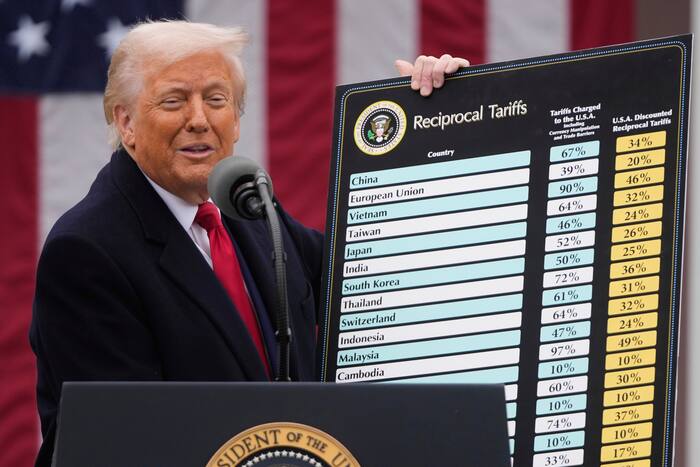
The proposed tariffs are intended to replace broader duties imposed by the administration last year that were later struck down by the Supreme Court. Bloomberg and The Wall Street Journal first reported the plans earlier Tuesday.
The White House says the tariffs are aimed at excessive manufacturing output in those economies. Officials argue that government subsidies have contributed to a flood of low-priced goods, putting American manufacturers at a disadvantage.
The expected announcement would mark the second phase of the administration’s effort to replace tariffs unveiled in April 2025, which the Supreme Court ruled unconstitutional in February. In July, the White House imposed levies of 10% to 12.5% on 60 trading partners, accusing them of failing to adequately enforce bans on goods made with forced labor.
The move would underscore the Trump administration’s continued willingness to use import taxes despite a sweeping Republican defeat in this month’s midterm elections. Affordability concerns, including persistently high inflation, were a major factor in the result. The new duties could also force Democrats to determine how to respond to tariffs imposed unilaterally by Trump.
Although Trump could face opposition from Democratic majorities in both chambers of Congress, he would have the power to veto legislation seeking to repeal or weaken the tariffs.
The investigations into excess industrial capacity were launched under Section 301 of the Trade Act of 1974. The law authorizes the president to impose tariffs on countries found to discriminate against U.S. companies or commerce.
The precise level of the proposed tariffs was not immediately known. Any new duties would be added to the 10% to 12.5% tariffs announced earlier this year.
Several countries, including China, objected to those tariffs. They took effect as temporary levies expired—measures Trump had adopted after the Supreme Court struck down in February the sweeping “reciprocal” tariffs imposed on nearly every U.S. trading partner.
The expected action follows Trump’s visit last week to Shenzhen, China’s technology hub, where he held his third in-person meeting with Chinese President Xi Jinping this year. Xi is expected to travel to Doral, Florida, next month for the Group of 20 Summit, which Trump is hosting.
Trump has sought to deepen his relationship with Xi, but the wide trade deficit remains a major source of tension between the United States and China.
China’s vast production capacity across industries including automobiles, solar panels, cement and steel has drawn growing scrutiny from trading partners in recent years.
Chinese leaders have made economic rebalancing a priority, but weak domestic demand has encouraged companies to pursue growth in overseas markets. Rising exports drove China’s trade surplus to a record nearly $1.2 trillion last year.


