
“When I said I didn’t believe in marriage, that was a lie,” Taylor Swift once sang—one of many lyrics about true love and happily-ever-after endings that helped carry her from aspiring country singer with a guitar to one of the world’s biggest pop stars.
Ultimately, she appeared to embrace that belief, marrying NFL star Travis Kelce in July. The lavish celebration reportedly cost around $30 million, turning New York’s Madison Square Garden from a vast concrete arena into a storybook setting. Guests were treated to designer handbags in a raffle, while hundreds attended—including some people who were said to barely know the bride.
Four months on, Swift is dominating headlines again—not because she has released the highly anticipated wedding photographs, but because of a strange 4,000-word Vanity Fair article. Although the story never mentions Taylor Swift by name, it is unmistakably about her, presenting a deeply unflattering portrait of a star accused of reshaping the story of her privileged upbringing and controlling those around her.
The article has triggered a fierce backlash. Some readers believe it could damage Swift’s carefully cultivated image, while her devoted fans have dismissed it as an unnecessary and strangely executed “hit piece.”
The reaction was so intense after its publication on Monday that rumors quickly circulated claiming Vanity Fair editorial director Mark Guiducci could lose his job for approving the story.
A Vanity Fair representative told the gossip site Page Six that “any notion that Mark’s job is in trouble is categorically false.”

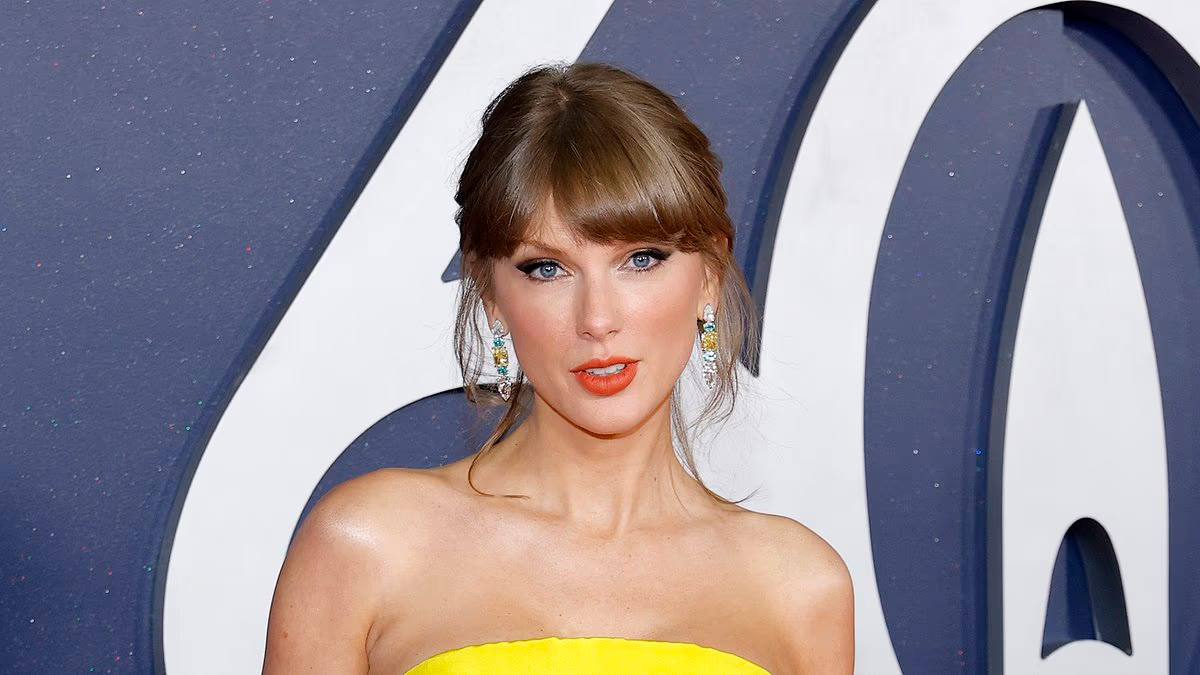
Taylor Swift appeared to be portrayed as a bully in a blistering Vanity Fair feature published on Monday (pictured earlier this month)

The article, titled ‘The Mastermind,’ has caused widespread outrage only four months after Swift’s lavish Madison Square Garden wedding to Travis Kelce in New York City
So what exactly has caused such a storm?
Called “The Mastermind,” the article revolves around a figure identified only as The Star. She is described as being “born in 1989,” Swift’s birth year, and called “Miss Americana,” the title of Swift’s 2020 Netflix documentary. The story also mentions fans exchanging friendship bracelets, a defining feature of Swift’s record-breaking Eras Tour. Why the writer relied on such unmistakable clues instead of naming her subject is unclear, although it may be a reference to Swift’s well-known habit of planting hidden “Easter Eggs” in her work.
“Once upon a time, a country girl became the biggest star on the planet,” the opening says, portraying its central figure as someone who is “universally, famously” adored—but also as a “combination of victim and victimizer.” It claims that “her highness” exerts control over the charts, public opinion and social relationships.
The article goes on to allege that she has punished people who challenge her and used her own experiences of pain to present herself as morally superior.
The account draws on interviews with more than 100 people, including a former romantic partner, who offer harsh assessments of The Star’s personality, childhood, rise to fame and position as a cultural force.
Only six sources are identified by their real names. The rest speak under descriptions such as “The Exec” and “The Person Familiar,” apparently to shield them from possible retaliation. One named source, former classmate Chanice Skinner, claims: “If you weren’t part of her friend group, you didn’t exist to her.”
Some of the most damaging allegations concern Swift’s childhood and her affluent parents, who are portrayed as relentlessly coaching and steering their daughter toward stardom. That version conflicts with the underdog narrative often associated with her rise.
One passage describes her mother as “definitely a theater mom, very aggressive.”

The feature never names 36-year-old Swift, instead focusing on “The Star” and assembling accounts from more than 100 people who criticize the subject’s personality, early career and status as a cultural phenomenon

Written by journalist May Jeong, the story uses pseudonyms, with “Redwood” appearing to be a reference to Kelce (pictured together in March 2026)
Given the article’s conclusions, it is perhaps unsurprising that so many contributors chose to remain anonymous. One retold story describes a music critic who supposedly angered The Star by publishing a negative review.
According to the article, the critic’s musician friends—artists who had credited her with helping them early in their careers—then cut ties. Her roommate also asked her to leave their shared duplex, apparently without being instructed to do so. “The Star had won,” the passage concludes.
Another anonymous source compares the singer to Regina George, the calculating school bully played by Rachel McAdams in the 2004 movie Mean Girls. A former confidante allegedly says The Star “loves to smack people in the head,” quickly clarifying that the comment was meant figuratively.
“This is her way of feeling like she can discipline people,” the source says.
“Nobody is beyond reproach with her,” another person claims. “If you don’t see it her way, she comes after you. It’s always the same.”
That raises a broader question: where does the apparent hostility toward Swift come from, and why do people who have worked with her seem to hold such strong views?
One music-industry insider told Our News Outlet that some critics believe Swift’s influence has become overwhelmingly powerful.
“There are people who think she has pushed more innovative artists away because it feels as though she runs the industry with an iron fist,” the source said. “Every label wants its own Taylor, but the women who succeed seem to be the ones willing to fall in line with her.”

“Nobody is beyond reproach with her,” one source alleged. “If you don’t see it her way, she comes after you. It’s always the same” (Swift pictured in 2008)
“It’s difficult to thrive in pop music if you don’t kiss the ring,” the insider added.
The story also appears to hint at tensions involving “The Protege” and “The Brat,” figures believed to represent American singer Olivia Rodrigo and British star Charli XCX, both of whom have been linked to rumored disputes with Swift.
Yet the article never directly confirms that Swift is its subject.
The investigation was written by US-based journalist May Jeong, whose previous work includes acclaimed reporting on sex workers and murders at the Fort Hood military base in Texas.
Jeong also spent four years based in Kabul, Afghanistan, where she produced award-winning journalism.
She is therefore no stranger to reporting in dangerous environments. Even so, reports say that the Committee to Protect Journalists offered her support this week after she faced sustained criticism from Swift’s fans.
Many of the attacks have focused on Jeong’s career and appearance. In light of her earlier investigative work, the Vanity Fair feature represents an unusual assignment for her.
When contacted by Our News Outlet, Jeong declined to comment and referred questions to a colleague at Conde Nast, Vanity Fair’s parent company. No response has yet been received.


The article also appears to reference alleged tensions between Swift and singers Charli XCX and Olivia Rodrigo
Swift has not always been protected from harsh media coverage. In 2017, entertainment site BuzzFeed published an article accusing her of adopting a victim narrative.
More recently, reviewers have offered a lukewarm response to her latest music. Swift released Encore in October this year, a 16-track deluxe edition of her 12th studio album, The Life of a Showgirl. The project included widely mocked lyrics about Kelce and was criticized by some listeners as sounding AI-generated.
The Atlantic ran a headline declaring, “Taylor Swift’s Audience Is Growing Up. Her Music Is Devolving,” while The Telegraph published the more personal verdict: “I’m a Swiftie and even I think these new songs are terrible.”
“These hit pieces are perhaps the industry’s way of expressing its frustrations with her,” the music insider said.
There is an argument that a star of Swift’s scale should face scrutiny. Her influence has grown so extensive that her concerts can affect national economies, while her social-media posts can influence chart performance and even political debate. During her wedding, streets in New York were closed and access to Penn Station was restricted as residents endured power outages during sweltering summer weather.
A separate source close to Swift’s inner circle said she “knew [the article] was coming.”
“Some of her friends contacted her to say they had been approached,” the source said. “She made no effort to stop the story because she isn’t afraid of journalists expressing their views—in fact, that is the opposite of what the article claimed about her.”
The source also claimed that Vanity Fair approached two of Swift’s dancers, both of whom declined to participate, as well as US singer Ice Spice, a more recent member of Swift’s wider circle. She too reportedly refused to comment.
“Ice is extremely loyal to Taylor and had no interest in discussing her on the record,” the source said. “Taylor’s friends could have spoken publicly about her generosity, but they don’t believe they need to defend her.”
Still, the Vanity Fair controversy arrives after what has been a particularly difficult period for the singer.
In recent months, Swift has faced repeated accusations that she uses her fan base to overwhelm rival artists on the charts. She has also been criticized for not speaking out against the US government’s aggressive ICE operations and became entangled in Blake Lively’s legal dispute with fellow actor Justin Baldoni in ways that did little to improve her public image. Her wedding brought further scrutiny, including claims that the £9 million she and Kelce donated to charities across the United States was intended to divert attention from the extravagance of the Madison Square Garden celebration.
Swift also appeared not to object when music from The Life of a Showgirl was used in several social-media posts by the Trump administration. That silence stood out because she has previously taken legal action over unauthorized use of her songs and once ignored advice from her own team to stay out of politics, saying she felt compelled to “be on the right side of history.”
Earlier this year, she nevertheless found time to ask the US patents office to reject a home-goods company’s attempt to trademark the phrase “Swift Home.”
Could more than two decades in the spotlight finally be turning public opinion against Taylor Swift? That seems unlikely. She remains one of the world’s most successful recording artists and touring performers. According to the insider, she has not been especially shaken by the Vanity Fair article, although the magazine may now find itself excluded from her media orbit.
“Vanity Fair will not be on Taylor’s radar for the foreseeable future,” the source said. “That much is certain.”
Our News Outlet contacted Swift’s representatives for comment.