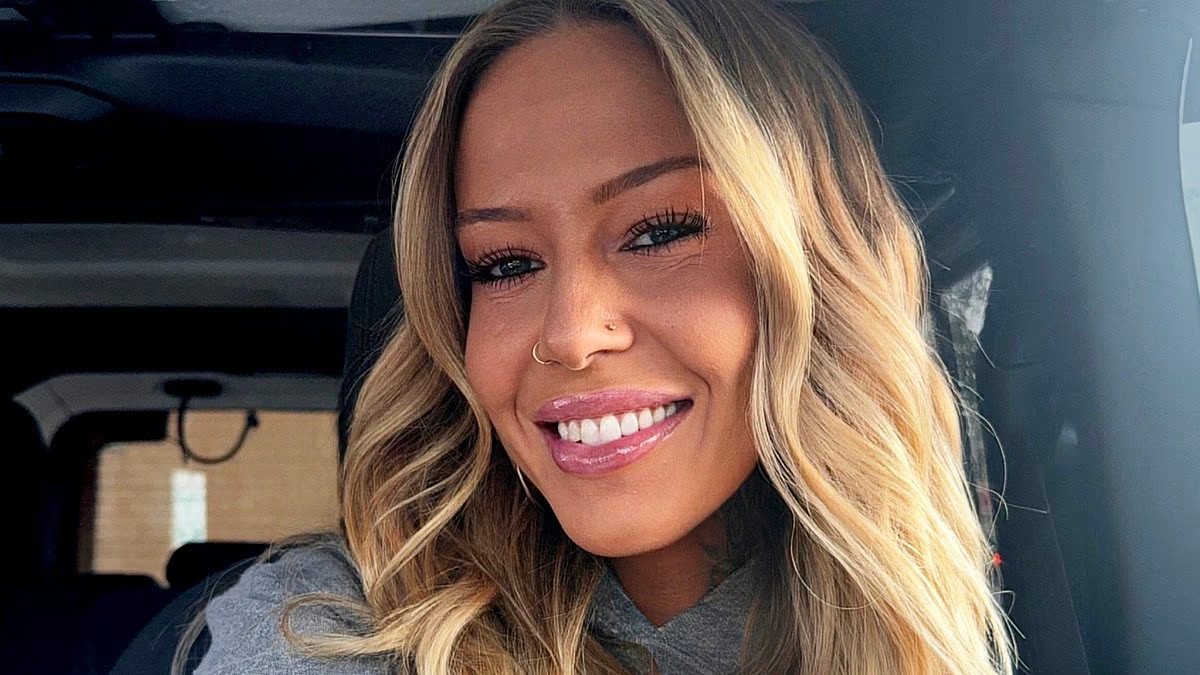

Lauren Gaffney grew up in a quiet neighborhood outside Philadelphia—what she describes as the kind of place where “nothing really happens.”
She enjoyed a happy childhood, graduated from high school at 18 and appeared to have her entire future ahead of her.
That changed after her boyfriend was prescribed Percocet, the brand name for the highly addictive opioid oxycodone, following an undisclosed injury.
Lauren had already experimented with alcohol and marijuana while spending time with older boys in the neighborhood. On one or two occasions, she had also taken ecstasy.
So when her boyfriend had Percocet, taking it together did not initially seem unusual. But Lauren, now 37, soon found herself pursuing the sense of feeling “at peace” that the drug provided.
“I didn’t know anybody else who was taking it, so I had no idea of the severity of the situation,” she said. “I just thought we were having fun, but it escalated really quickly.”
She said she began taking between 80 and 100 milligrams of the drug each day. By the time her boyfriend’s prescription ended two months later, she was addicted.
While people her age were beginning their careers, Lauren was already focused on finding her next high.

Lauren Gaffney, pictured, battled heroin addiction. The 37-year-old from Pennsylvania is now marking seven and a half years of sobriety
At first, she managed to keep her life together.
When the Percocet ran out, she turned to a drug dealer for OxyContin, a brand-name medication that also contains oxycodone. The habit cost her approximately $200 a day, or $6,000 a month.
For two years, she continued working as a waitress and maintained the appearance of a normal life. She also kept her drug use hidden from her parents.
Then, in 2010, OxyContin was reformulated so the pills could no longer be crushed and snorted, a change intended to reduce abuse.
For Lauren, however, the reformulation prompted her to begin using heroin—and her life soon began to fall apart.
“When you’re a drug addict who is withdrawing, you will do anything to feel better,” she said.
“Once I did heroin for the first time, I never looked back.”
Stories of middle-class women becoming dependent on Schedule I drugs—the most serious classification, reserved for substances considered to have no accepted medical use and a high potential for addiction—have become increasingly common.
Addiction specialists have also long warned about the hidden population of “functioning” addicts: people dependent on drugs who continue to appear capable in demanding careers and may even care for young children.
The United States continues to grapple with a severe opioid addiction crisis.
According to 2022 figures, an estimated 9.3 million Americans have opioid use disorder, a condition that includes heroin use.
In the year ending June 2026, 64,433 drug overdose deaths were reported, the latest figure available. That was 12 percent lower than the 73,905 deaths recorded a year earlier and 42 percent below the 2023 peak of 111,400 fatalities.

Lauren said her problems began when she took Percocet with her boyfriend, setting her on a path toward increasingly powerful substances
Even so, the number of overdose deaths in the US remains higher than it was before 2016.
Heroin is highly addictive and can cause a range of serious health problems. People who use it face elevated risks of liver, kidney and lung disease, as well as mental health disorders. Those who inject the drug are also more vulnerable to skin infections.
Heroin binds to receptors in the brain, triggering a surge of dopamine—the chemical associated with reward and pleasure.
That artificial rush can fuel addiction, as users require increasing amounts of the drug to achieve the same “high.”
Six months after she began injecting heroin regularly, Lauren was arrested for drug possession for the first time.
“Since it was my first charge, I only got community service, but after I was arrested, my family found out about my addiction,” she said. “They were terrified and worried about me.”
MORE STORY: Trump Mourns Florida Detective Killed by Suspected Drunk Driver
She lost her job after failing to show up for a shift, while her drug use continued to worsen.
Over the next five years, she became trapped in a cycle of DUI arrests, failed drug tests, months in prison and release. In total, she was incarcerated seven times.
Her relationship with her family grew increasingly strained, but they continued to support and encourage her.
“They never kicked me out, and they always tried to help me, but they just didn’t know what to do,” she said. “One of the lowest points of my addiction was seeing the fear in their eyes that I was going to die.”
Lauren also attended rehab seven times, but said she agreed to go only because her parents or probation officer wanted her to. “I never really took it seriously,” she said.
Her health suffered as well. Her weight fell to 95 pounds, and she was repeatedly hospitalized with blood infections and cellulitis, a bacterial skin infection.

Lauren is pictured in hospital during her struggle with drug addiction
In 2016, while serving time in jail, Lauren enrolled in a drug court program that substitutes intensive substance abuse treatment for prison time.
The program helped her remain sober for two years. But after graduating in June 2018, she convinced herself that she could continue smoking marijuana while staying free from heroin.
“Within a month, I was back to shooting heroin,” she said.
For the next 11 months, Lauren became convinced that her addiction would kill her—and came to believe she was ready for that to happen. She continued to be arrested and missed court appearances.
At Christmas in 2018, Lauren’s mother bought all of her gifts for relatives because Lauren had “no interest in being a responsible adult.”
“My mom is an angel, and I took advantage of that,” she said.
Her turning point came in May 2019, when police arrived at her parents’ home at 6 a.m. to arrest her.
“We live in a nice neighborhood where nothing really happens,” she said. “My parents having to see me like that was one of my worst moments.”
She was sentenced to one year in state prison. After her release in April 2020, she moved into a recovery home.
Lauren said her time in prison helped her remain sober and forced her to confront what her life could become if she continued using drugs.

Lauren said she is delighted to be sober and no longer dependent on heroin
“Something just clicked, and I had a real perspective change,” she said.
She began attending recovery meetings and completed the 12-step program, a widely recognized approach to addiction treatment built around peer support and regular individual therapy.
The American Addiction Centers recommends combining support groups with talk therapy to treat heroin addiction.
This month, Lauren marked seven and a half years of sobriety.
“I don’t think I would have been able to get sober without that jail sentence,” she said. “I needed law enforcement to literally come and pluck me out of my addiction.”
“I haven’t thought about a drink or drugs in such a long time, which is amazing, because there was a point when I couldn’t go a few seconds without thinking about them. My life is so full now.”
“Since getting sober, my life has been amazing, and I have reached so many milestones.”
“One of my favorite things is being able to buy Christmas gifts for my niece and nephew and watch them open them.”
“Those little things were completely foreign to me before, and now I get to experience them every day.”


