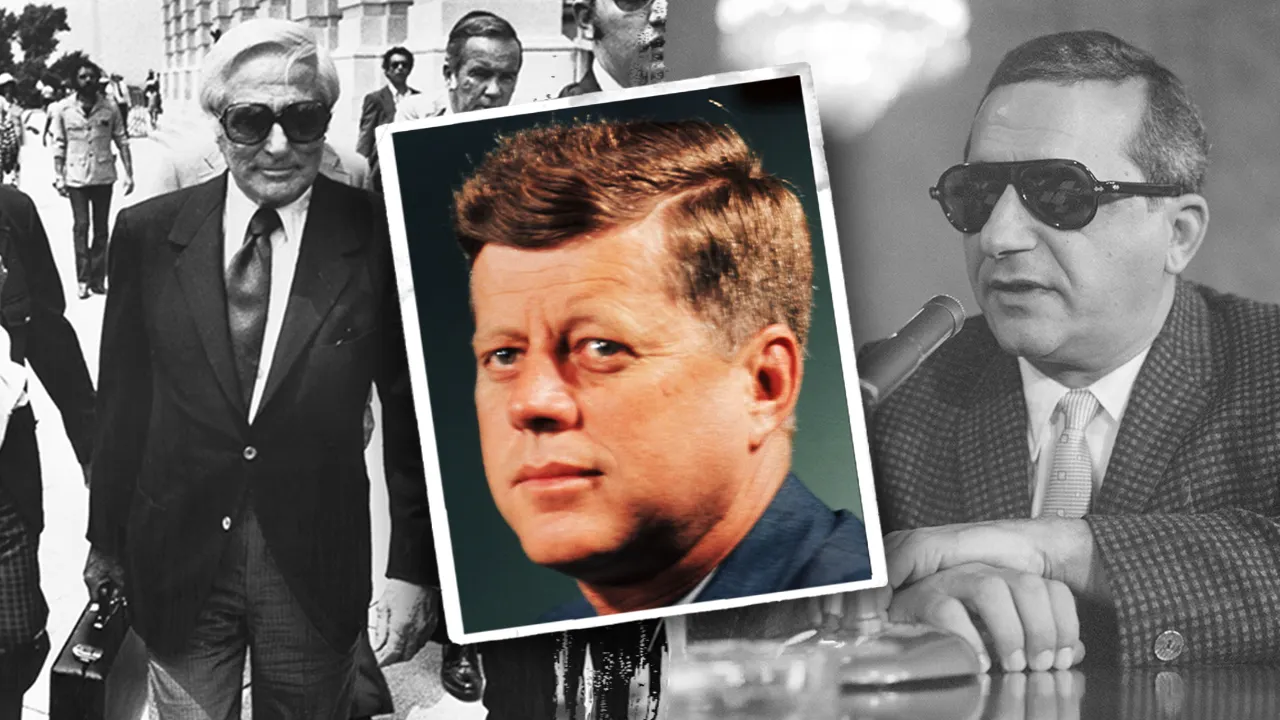

More than six decades after President John F. Kennedy was assassinated, allegations that Chicago organized crime figures helped orchestrate the killing are once again drawing attention.
The forthcoming film “November 1963” follows Chicago mob boss Sam Giancana, played by Thomas Fiscella; Outfit leader Anthony Accardo, portrayed by Mandy Patinkin; and underworld intermediary Johnny Roselli, played by John Travolta. The movie explores claims that the syndicate helped arrange Kennedy’s assassination in Dallas.
Separate from the film’s allegations, federal records show that the FBI investigated whether Roselli was murdered in retaliation for testimony he gave to the Senate Church Committee. Giancana died just days before he was scheduled to testify.
On June 19, 1975, a gunman killed 67-year-old Giancana while he prepared a late-night meal in the basement of his Oak Park, Illinois, home. The attacker shot him once in the back of the head and six more times around his mouth and neck.
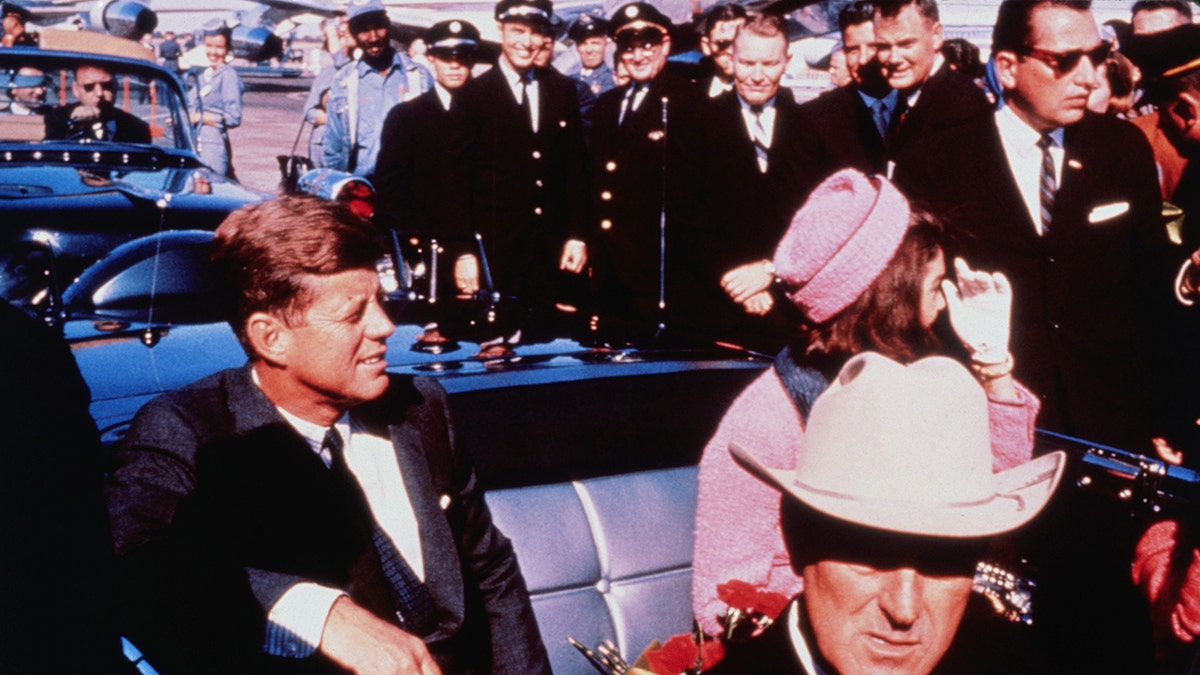
Texas Gov. John Connally adjusts his tie as President John F. Kennedy and first lady Jacqueline Kennedy settle into the back seat of their limousine before a motorcade through Dallas on Nov. 22, 1963. The president was assassinated in the same vehicle after several speaking stops. (Getty Images)
“The way he was shot does suggest a message,” Geoff Schumacher, vice president of exhibits and programs at The Mob Museum in Las Vegas, told News Outlet. “But I wouldn’t say that this is something that’s like a signature that you’ve seen through the years.”
Roselli, 71, vanished on July 28, 1976, after visiting his sister in Plantation, Florida. Ten days later, fishermen discovered a 55-gallon steel drum floating in Dumfoundling Bay near Miami. Inside were Roselli’s dismembered remains. Investigators said he had been asphyxiated.
“They wanted him to disappear by placing him in this drum and then dumping him in the ocean. But they made a mistake in that they should have set up the barrel so that it was not close to the surface,” Schumacher added.
No one has ever been charged in either killing.
Schumacher said Giancana wielded significant power as a mob leader, while Roselli relied on his charm and connections as a mob-linked fixer to build relationships in Hollywood and Las Vegas.
The CIA connection and Senate testimony
Declassified CIA documents describe efforts during the early 1960s to recruit organized crime figures for plots against Cuban leader Fidel Castro. Giancana and Roselli served as intermediaries in those efforts.

Chicago mobster Sam “Mooney” Giancana, reputed to be the No. 2 figure in the Chicago crime syndicate, appears before the Senate Rackets Committee. He invoked the Fifth Amendment when questioned about alleged links to a pinball, pizza and prostitution operation in Lake County, Indiana. (Bettmann/Getty Images)
Congress also examined possible connections between organized crime and Kennedy’s assassination. Because of their Mafia ties and involvement in CIA operations, Giancana and Roselli emerged as potential witnesses.
Giancana was killed soon after the FBI ended surveillance outside his Illinois residence.
“The concern was among people in Chicago that he may talk a little too much, that he may reveal things that he should not, that the other mob guys were not comfortable with him revealing,” Schumacher said.
Roselli testified privately before the committee and returned on April 23, 1976, to face additional questions. In the period before his death, he repeatedly said he feared retaliation.
Unlike Giancana, Roselli had already provided congressional investigators with information, including details about the CIA’s plots against Castro, Schumacher said.
“He was naming names and providing detail in a way that undoubtedly made other mob guys nervous,” Schumacher said.
Federal investigators examine possible retaliation
Attorney General Edward Levi directed the FBI on Aug. 13, 1976, to investigate whether Roselli’s murder was connected to his testimony before the Senate intelligence committee. Levi referred to reports from Sens. Daniel Inouye and Howard Baker concerning Roselli’s fears.
“Mr. ROSELLI, on several occasions, expressed fear for his life as a result of his having testified,” Levi wrote in a memorandum to FBI Director Clarence Kelley. He asked the bureau to determine whether the killing violated federal witness-protection laws.

John Roselli, a reputed underworld figure dating to the era of Al Capone, arrives in Washington, D.C., under heavy security to testify before the Senate Select Committee on Intelligence about his CIA connections and an alleged 1961 plot to assassinate Cuban Premier Fidel Castro. (Bettmann/Getty Images)
Schumacher said he believes Roselli’s testimony played a direct role in his death.
YOU MAY ALSO READ: How the ‘Blue Goo’ Aircraft Flaw Triggered In-Flight Power Losses
“I would say almost certainly his murder was in response to his testimony,” he said.
A declassified CIA memorandum said Miami-Dade detectives met with CIA, FBI and Senate staff members on Aug. 24, 1976, to review Roselli’s intelligence contacts and possible Cuban connections to his killing.
An FBI report dated March 22, 1977, named Florida mob boss Santo Trafficante Jr. as a possible source of a contract on Roselli. The report said Trafficante may have been able to arrange the murder through his organized crime influence and ties to Cuba.
The FBI assessment did not establish that Trafficante ordered the killing. It also identified five unnamed suspects and offered no confirmed motive.

Santo Trafficante, a suspected organized crime boss, enters Queens’ Kew Gardens Criminal Court to testify before a grand jury. (Bettmann/Getty Images)
The Kennedy assassination allegations
While federal records centered on whether Giancana and Roselli were silenced because of their testimony, the forthcoming film examines disputed claims that the Chicago Outfit helped kill Kennedy.
Nicholas Celozzi, Giancana’s great-nephew and a Hollywood screenwriter, said his uncle Pepe Giancana told him that the syndicate organized Kennedy’s assassination and that Roselli was one of the gunmen.
“I was kind of scared about it,” Celozzi told CBS News, saying his mother warned him to remain silent because “the people involved didn’t generation out.”
Supporters of the theory point to the Kennedy administration’s crackdown on organized crime under Attorney General Robert F. Kennedy. They argue that mobsters saw the campaign as a threat and sought revenge. Others cite the Mafia’s lost casino interests in Cuba after Castro seized power.
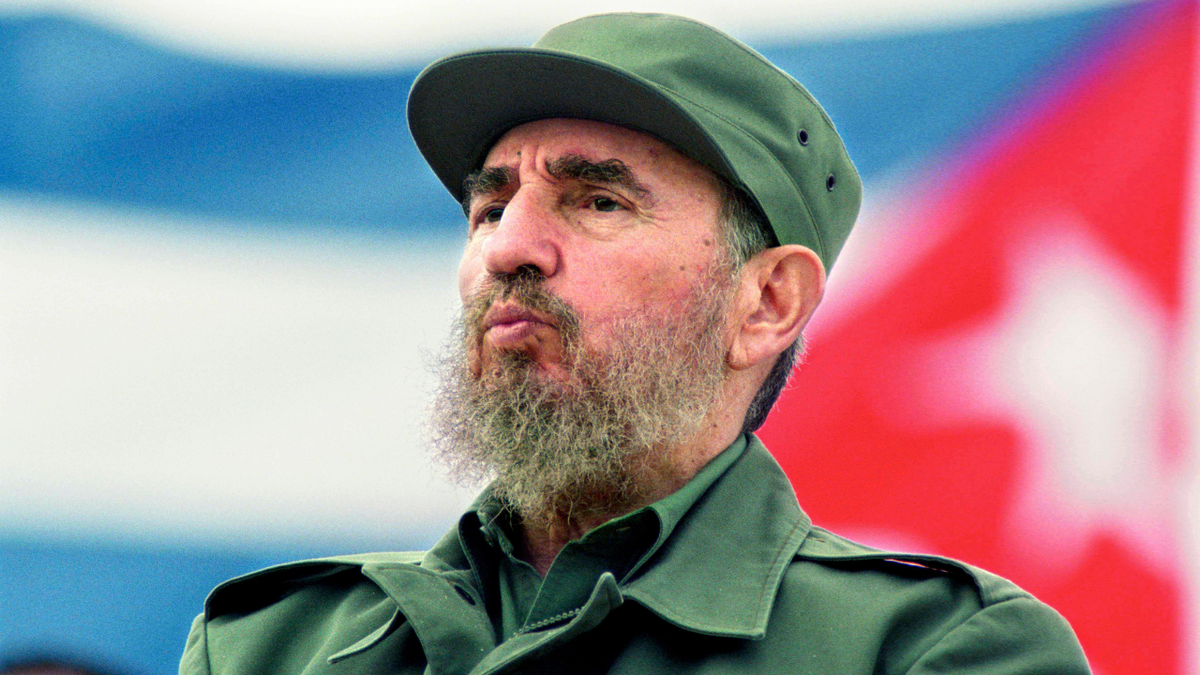
Fidel Castro watches the May Day parade at Revolution Square in Havana, Cuba, on May 1, 1998. (Sven Creutzmann/Mambo Photography/Getty Images)
“They didn’t really look at Kennedy as a president,” Celozzi told CBS News. “They just looked at him as someone who screwed them over.”
Schumacher rejected the claim that Roselli took part in Kennedy’s assassination.
“There is zero evidence of that, and what we do know is Johnny Roselli was in Las Vegas at the time of the Kennedy assassination,” he said.
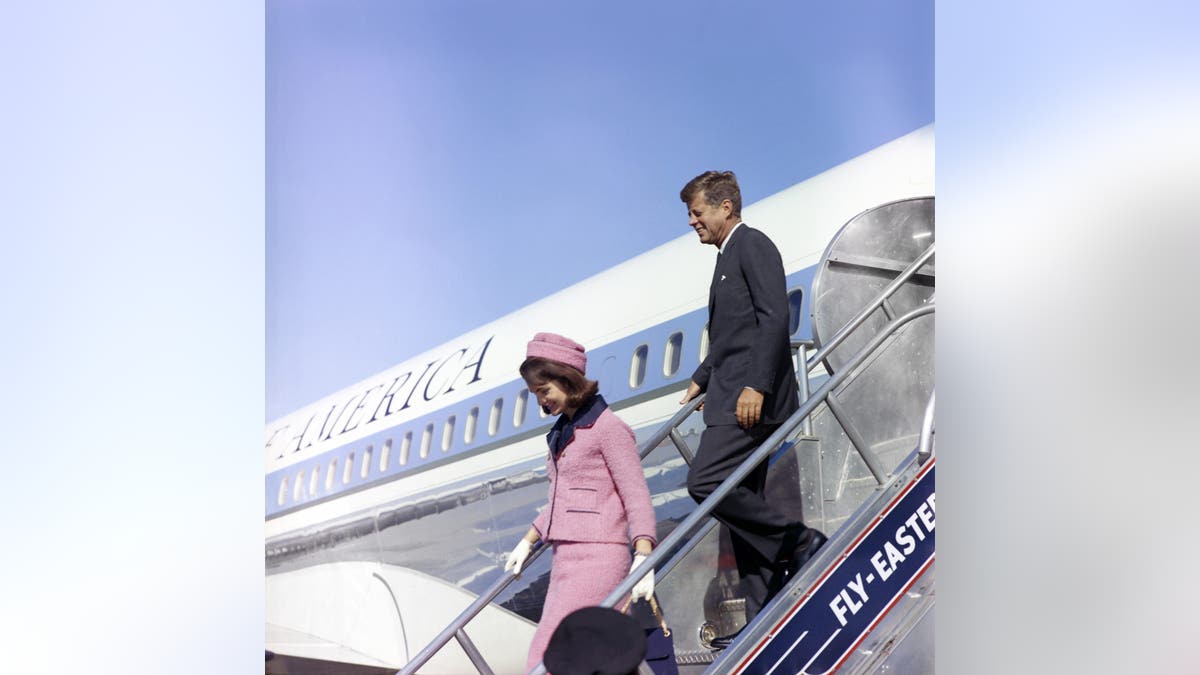
President John F. Kennedy and first lady Jacqueline Kennedy leave Air Force One after arriving at Love Field in Dallas, Texas, on Nov. 22, 1963. (GHI/Universal History Archive/Universal Images Group via Getty Images)
“That’s something that’s very popular in culture, but it’s not really backed up by a lot of information, a lot of evidence. However, by contrast, the CIA-mob connection to assassinate Castro was well documented and absolutely happened.”
The Warren Commission concluded that Lee Harvey Oswald acted alone when he shot Kennedy from the sixth floor of the Texas School Book Depository on Nov. 22, 1963.

Dallas Police Department mugshots of Lee Harvey Oswald after his arrest in connection with President John F. Kennedy’s assassination and the killing of Officer J.D. Tippit. (CORBIS/Corbis via Getty Images))
In 1979, the House Select Committee on Assassinations concluded that a conspiracy probably played a role in Kennedy’s murder. The committee said the national organized crime syndicate was not responsible, though individual mob figures may have been involved.
Two days after Kennedy was killed, Dallas nightclub owner Jack Ruby fatally shot Oswald on live television. Ruby had documented ties to low-level organized crime figures.
For Schumacher, the central unresolved question is why someone would target Giancana at all.
“He was essentially retired from the mob at that time, and he was not a person who was known to be an informant or any kind of a loudmouth as relating to sharing information about his underworld past,” Schumacher said. “So I almost wonder if there was some other motivation for why Giancana was killed that may not be related to his testimony.”
Written by Celozzi and executive-produced by Giancana’s daughter, Bonnie Giancana, “November 1963” is scheduled to open in theaters Dec. 4.
DISCOVER MORE: Police Patrol Car Was Travelling Over 150km/h Before Fatal Crash