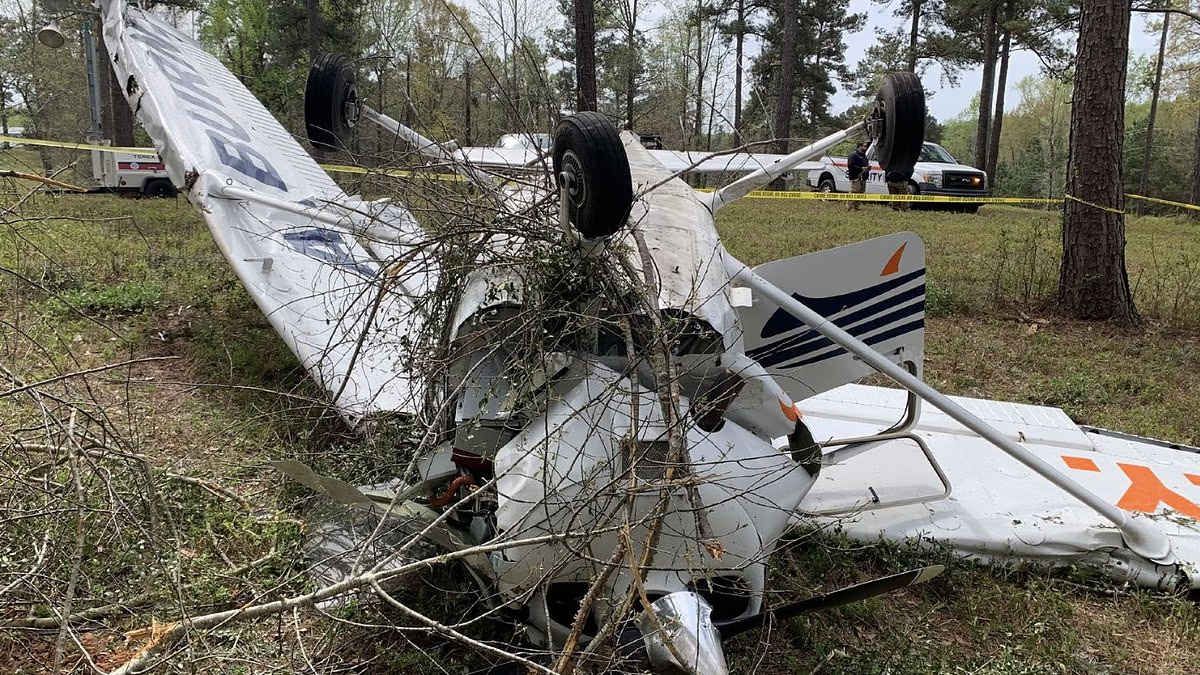
A troubling design defect involving a mysterious “blue goo” has been linked to sudden engine-power losses affecting thousands of aircraft worldwide.
Aliya Applin, then an 18-year-old student pilot at Auburn University in Alabama, encountered the problem during her first year of airline-pilot training, according to the Wall Street Journal.
In March 2024, Applin crashed soon after taking off in one of the university’s Cessna 172S training aircraft.
She had been carrying out takeoff and landing exercises when the aircraft abruptly lost power. The plane became entangled in tree branches before falling to the ground, but Applin survived.
In the months that followed, Auburn’s Cessna 172S fleet recorded 48 comparable engine failures, the outlet reported.
A full inspection of the university’s aircraft found that 40 contained a dark blue, jelly-like substance inside the engines.
As reports continued to mount, Jim Dozer, then responsible for Auburn’s aircraft maintenance team, grounded the entire fleet.
Records from the Federal Aviation Administration (FAA), combined with industry data reviewed by the WSJ, indicate that the design issue may affect approximately 8,000 aircraft globally.

A blue, gelatinous residue has been associated with a design defect affecting an estimated 8,000 aircraft worldwide

Auburn University student pilot Aliya Applin survived a March 2024 crash linked to an engine-power loss and later resumed her training
At the height of the problem, Dozer said he was receiving roughly two engine-failure reports each day. In many incidents, the loss of power lasted only a few seconds.
One aircraft lost power while flying close to a busy highway.
The pilots believed they were about to crash, but the engine restarted before the plane went down, narrowly preventing a potentially catastrophic accident.
Dozer contacted flight schools across the country and discovered that other operators were reporting similar failures in their Cessna aircraft.
“We were just trying to find answers,” Dozer told the outlet.
Investigators traced the residue to a specialized component called a fuel servo. The device regulates airflow through the engine and adjusts the amount of fuel delivered to it.
Because the servo sits beneath the engine, fuel left over after shutdown can flow down toward the component.
If the servo’s ring-shaped rubber seals deteriorate, fuel may enter chambers designed to contain only air. The resulting residue can interfere with moving parts and trigger a sudden reduction in engine power.
The engine from Applin’s aircraft was examined under the supervision of an FAA inspector. Dozer said pilot error was initially identified as the cause of the crash.
YOU MAY ALSO READ: Suit: N.C. child Er’Mias Mitchell dies after unapproved anesthesia
After grounding Auburn’s fleet, Dozer asked the FAA to arrange a second, independent examination of Applin’s engine.
That inspection found blue residue coating the engine’s air chambers. Auburn’s maintenance team said the finding had not been communicated to them during the original review.

An inspection of Auburn University’s Cessna 172S fleet found blue residue in 40 of the aircraft
The National Transportation Safety Board ultimately cleared Applin of blame, attributing the crash to a “partial loss of engine power due to a combination of fuel/oil contamination in the fuel injector assembly.”
Applin sustained cuts to her hands and legs from shattered glass. She escaped the aircraft by breaking through a window.
About five months after the 2024 crash, Applin resumed her flight training. She remains focused on her ambition of becoming a pilot for Delta Air Lines.
Embry-Riddle Aeronautical University, another major flight-training institution, told Dozer that it had been monitoring the issue for more than two years.
The university said it had submitted multiple reports to the FAA but received no response, according to Dozer, who no longer works at Auburn.
In December 2025, the FAA issued a formal notice to US operators outlining the problem. However, the agency did not recommend a specific repair or introduce new operating procedures.
“Our investigation has not identified a consistent issue or common root cause that warrants a corrective action,” the FAA told the WSJ.
The agency said it was examining “whether the issue involves interactions among the engine, fuel servo, and aircraft fuel system, rather than a single component.”

Jim Dozer grounded Auburn’s aircraft fleet as reports of sudden engine-power losses continued to increase
An FAA spokeswoman told the outlet that the agency treats “every report seriously” and is working with engine and aircraft manufacturers, suppliers and operators to investigate the failures.
“As with any safety concern, the FAA will take immediate action if necessary to protect the flying public,” she added.
Dozer said he was dissatisfied with the agency’s response to what he considers a serious aviation-safety concern.
“Two years on, and where are we?” Dozer said. “Nowhere.”
A review of NTSB records by Dozer identified accidents involving Cessna 172S aircraft, including one that struck a park bench in Florida and another that hit a tree and burst into flames in Oregon.
Our News Outlet has contacted the FAA for comment.


