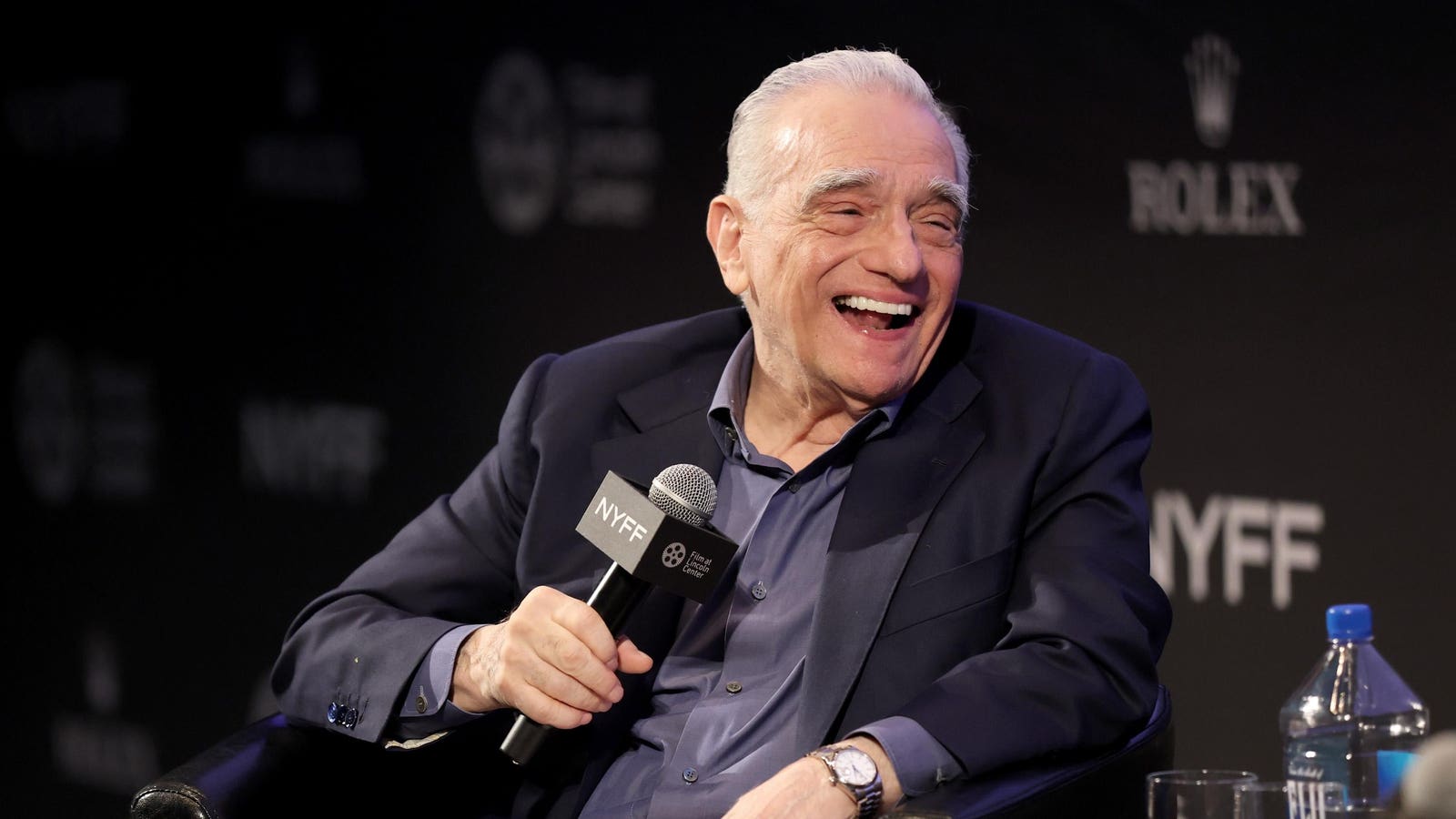


Martin Scorsese, a revered figure in filmmaking, might be embracing AI technology as part of his cinematic toolkit, a move that has generated significant debate within the industry. Known for his unwavering support of human creativity, Scorsese now finds himself at odds with many who previously shared his artistic vision.
Recently, the 83-year-old filmmaker announced his involvement as an adviser and partner with Black Forest Labs, a German AI startup that focuses on text-to-image generation. As part of this collaboration, Scorsese featured in a promotional video where he demonstrated the company’s FLUX generative AI software, using it to bring his visual ideas to life. The reaction from the film community was immediate, with some responses being quite unrestrained.
Scorsese views this partnership not as a replacement for human creativity but rather as a valuable pre-production tool. “For 70 years, I’ve been crafting my own storyboards, always grappling with how to convey my mental imagery to my team,” he explained in the video. “This tool allows me to communicate my vision more effectively to my creative partners—the production designer, art designer, and cinematographer—helping them enhance the project’s cinematic intelligence.” He emphasized that in pre-production, “time equates to money, and this tool enables us to expedite the process without compromising quality or artistry.”
Addressing the broader implications of AI in film, Scorsese stated, “I’m curious about how technology intersects with storytelling, pushing the boundaries of creativity to enrich audience experiences. Cinema, being a relatively young medium at around 125 years old, should be open to evolution.”
What Scorsese Said About The AI Partnership
The strongest opposition has come from the Art Directors Guild, IATSE Local 800, which publicly criticized Scorsese’s decision. In a statement reported by Variety, the Guild accused him of “turning his back on the human artists” who have contributed to his iconic work and described his endorsement as a “betrayal of the collaborative nature of cinema.” They also highlighted that the AI technology Scorsese praised relies on copyrighted materials from artists represented by the Guild.
He also addressed the broader question of AI’s place in cinema directly. “I’m interested in the intersection of technology and storytelling, and seeing how that can push the bounds of creativity to create deeper and richer experiences for audiences. Remember, cinema is a young medium, only around 125 years old, so we have to be open to how it can evolve,” he said.
The Art Directors Guild Response
The most institutional pushback came today from the Art Directors Guild, IATSE Local 800, which issued a formal statement condemning Scorsese’s partnership, per Variety. “Oscar-winning director Martin Scorsese is turning his back on the human artists who throughout his career have helped him create his most memorable works,” the statement began, describing his endorsement as “a betrayal of the collaborative nature of cinema.” The Guild pointed out that the technology Scorsese touted as providing “less wear and tear on the crew” relies on copyrighted works from artists like those it represents.
Boots Riley’s Response
AUSTIN, TEXAS – MARCH 12: Boots Riley attends the “I Love Boosters” premiere during the 2026 SXSW Conference and Festival at The Paramount Theatre on March 12, 2026 in Austin, Texas. (Photo by Tibrina Hobson/Getty Images)
Getty Images
One of the most scathing individual responses came from filmmaker Boots Riley, director of Sorry to Bother You and the recent I Love Boosters, who addressed Scorsese’s endorsement on social media. “My guess: at 83, they gave his family a gang of money — they throw tens of millions left and right — he wanted the income stream for them and feels like AI will fall on its face anyway, so he doesn’t give a f—k,” Riley wrote. “If that’s not the case, extra f—k him.”
Why This Matters Beyond Scorsese Himself
Scorsese is now the most prominent and most respected filmmaker to publicly endorse generative AI, and the list of filmmakers exploring or engaging with AI continues to grow, including Darren Aronofsky, Roger Deakins, Brady Corbet, Michael Mann, James Cameron, Paul Schrader, Werner Herzog, George Miller, Doug Liman, Alex Proyas, and Roger Avary. When a filmmaker of Scorsese’s stature and stated commitment to craft endorses the technology, it lends it a cultural legitimacy that a startup press release alone could never bring about.
Martin Scorsese is the director who in 2019 described Marvel films as “not cinema” on the grounds that they did not engage with the emotional, psychological realities of human beings. His comparison that he is simply adapting to new tools as he did with 3D on Hugo and de-ageing technology on The Irishman will satisfy some. The Art Directors Guild’s response today suggests it will not satisfy everyone.


