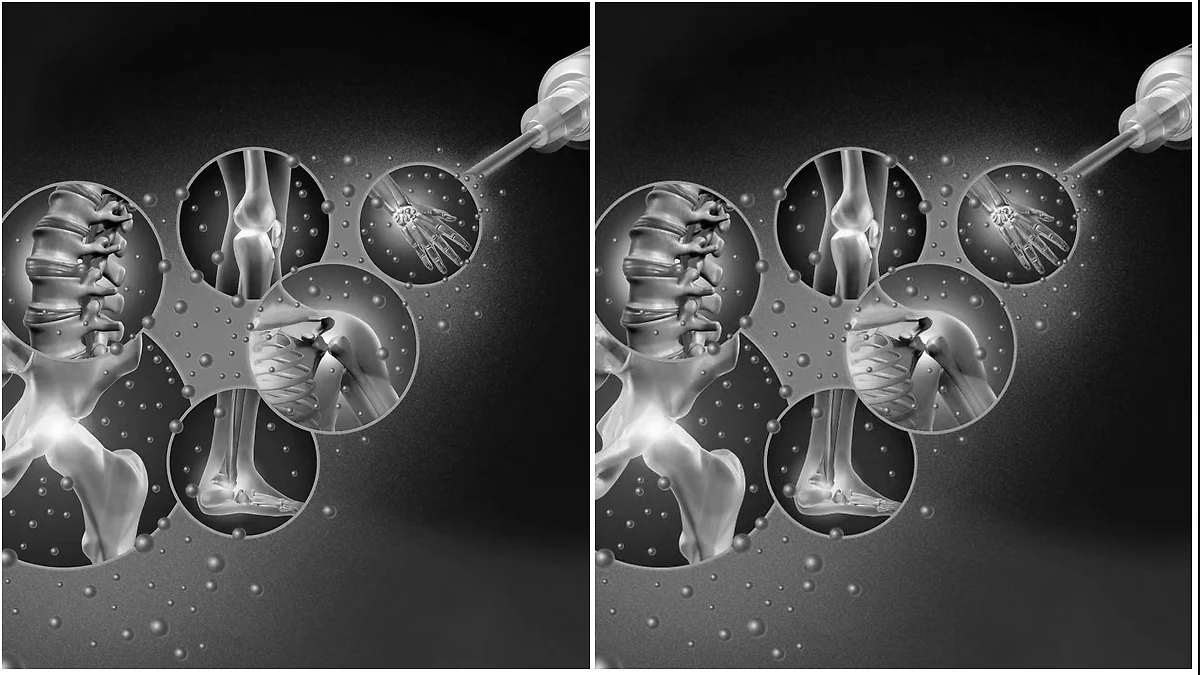


Regenerative medicine, once viewed as a specialized option for top-tier athletes, is increasingly becoming part of everyday orthopedic and spine treatment.
getty
Not long ago, regenerative therapies such as platelet-rich plasma, or PRP, were associated mostly with professional sports stars and the wealthiest patients. Tiger Woods has spoken about using PRP injections during his recovery from knee and Achilles injuries, and Kobe Bryant famously went abroad for a PRP procedure to treat his troubled knee. What was once seen as a competitive edge reserved for elite athletes is now moving steadily into broader orthopedic and spine care, especially among founders, executives and other high-performing professionals who cannot afford the lengthy recovery time often linked to surgery.
How Regenerative Medicine Is Transforming Spine Care
Back pain remains the leading cause of disability worldwide, with roughly 619 million people affected. For much of modern medicine, treatment has followed a reactive model: wait until a disc, joint or related structure deteriorates, then step in. Earlier in my career, the standard tools were familiar ones: corticosteroid injections into the epidural space, radiofrequency ablation to interrupt pain-carrying nerves or, when less invasive measures no longer worked, surgical hardware.
Those approaches can be valuable, particularly when the goal is to reduce pain. But in many cases, they quiet the symptoms without changing the degenerative process that caused them. Regenerative medicine is built around a different premise. Instead of simply turning down the alarm, it seeks to repair the damaged tissue behind the signal and support an environment less likely to continue breaking down.
The Functional Spinal Unit: Disc and Joint as an Example
Disc disease offers a clear example of how this thinking is evolving. A healthy spinal disc acts somewhat like a jelly doughnut: the annulus fibrosus, a strong fibrocartilage outer ring, surrounds the nucleus pulposus, a soft, water-rich center. Over time, routine forces from lifting, long hours of sitting and poor posture can create tiny tears in the annulus. When that happens, inflammatory proteins from the nucleus can escape and irritate nearby nerve roots, contributing to the sciatica and central back pain commonly seen in clinical practice.
Still, a disc tear by itself often does not explain the full picture. That is where the concept of the functional spinal unit, or FSU, becomes essential. The vertebral bodies, spinal disc, paired facet joints and surrounding ligaments work together as one biomechanical system. Chronic back pain usually reflects dysfunction across multiple structures, rather than one damaged disc acting alone. By assessing and treating the FSU as an interconnected unit, instead of targeting only a single pain generator that may provide limited relief, regenerative therapies may offer broader and longer-lasting improvement.
Exploring the Mechanisms Behind Regenerative Spine Care
Treatment decisions typically depend on which parts of the functional spinal unit are affected. In many cases, clinicians use one of two regenerative options: platelet-rich plasma or bone marrow concentrate. PRP is made from a patient’s own blood by concentrating platelets, which contain high levels of growth factors and cytokines, the signaling molecules involved in tissue repair. Bone marrow concentrate also contains growth factors, but it is additionally rich in mesenchymal stem cells, or MSCs, progenitor cells with the potential to develop into muscle, bone, cartilage, tendon and disc-related tissue.
Whether the target is the disc itself, a facet joint, or a supporting ligament, both therapies work through a similar biological logic: they accelerate and amplify the body’s native healing cascade, helping degraded tissue stabilize on its own rather than continuing to break down and generate inflammatory pain signals.
Clinical Evidence: A Decade of Follow-Up
I led one of the first randomized controlled trials investigating the effects of autologous bone marrow concentrate and the growth factors in platelet-rich plasma on human intervertebral discs. Compared with placebo, patients receiving the treatment showed statistically significant improvements in both pain and functional outcomes, with no adverse effects, hospitalizations, or surgeries reported at 12 months. Notably, many participants required only a single injection rather than a repeated treatment series. In my own practice, I have followed a number of these patients for a decade or longer, and the majority remain surgery-free today.
A Proactive Approach for High Performers
An increasing number of executives and high performers are choosing to intervene before an injury forces the issue. Regenerative medicine offers an alternative: one that works in concert with the body’s own reparative biology instead of waiting for a structural failure that forces a binary choice between surgery and years of managed pain. By supporting the body’s innate capacity for self-repair, we are able to unlock healing that once seemed possible only through the operating room.


