
Every July 1, baseball fans mark Bobby Bonilla Day, the now-annual reminder that the New York Mets are still cutting Bonilla a $1.193 million check even though he last appeared in the majors in 2001. The arrangement has become famous for a reason: the Mets owed him $5.9 million, pushed the payout into the future at 8% interest, and ultimately agreed to pay him close to $30 million from 2011 through 2035. It is simple, memorable, and reliable — a sports-business punchline that shows up on the calendar like a holiday.
But Bonilla was far from the only player to turn deferred money into baseball folklore. In fact, his deal may not even be the most remarkable one.
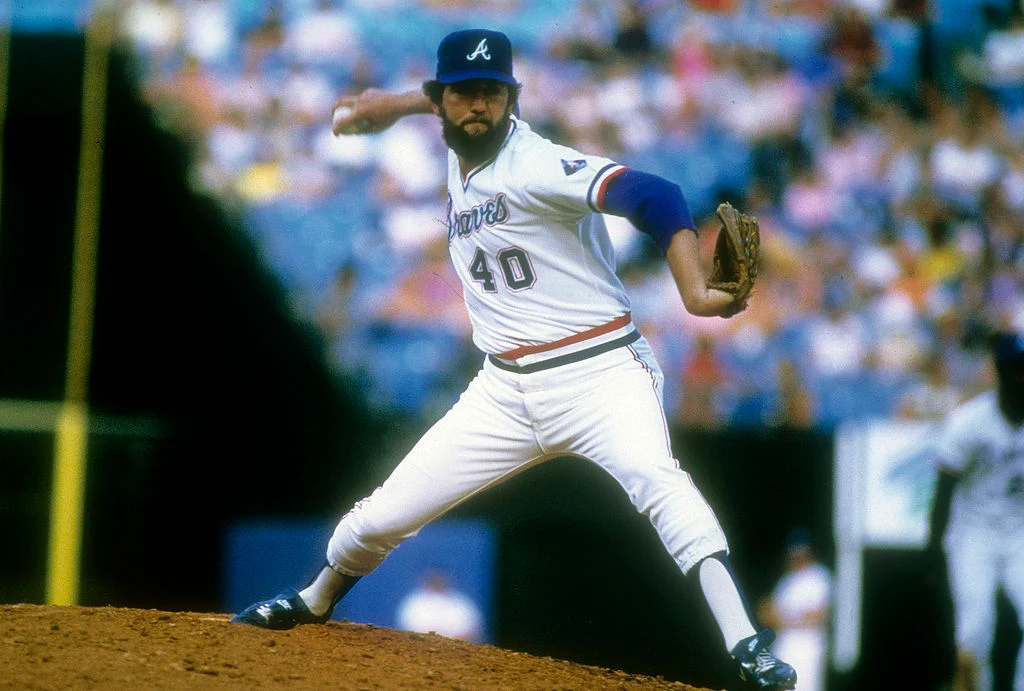
Before Bonilla and the Mets became shorthand for deferred-contract genius, Hall of Fame reliever Bruce Sutter landed an agreement with the Atlanta Braves that still stands as one of the sport’s most fascinating financial arrangements. This was not just a case of postponing salary. Sutter’s contract functioned like a long-running investment vehicle, turning a six-year, $9.1 million free-agent deal into decades of payments that continued well beyond his final pitch, his last save, and even into the year of his death.
The Pitcher Who Made The Splitter Famous
Sutter’s leverage came from more than name recognition. At his best, he was one of the most influential relief pitchers the game had ever seen. He helped shape the modern closer role, made the split-finger fastball a signature weapon, and gave managers the kind of late-inning force who could change the entire feel of a game.
He debuted with the Chicago Cubs in 1976 and later enjoyed his finest seasons with the St. Louis Cardinals. Sutter won the National League Cy Young Award in 1979, earned six All-Star selections, led the NL in saves five times, and recorded the final out of the Cardinals’ 1982 World Series championship. By the time he retired, he had exactly 300 saves, then the third-highest total in major league history. In 2006, he was inducted into the Baseball Hall of Fame, becoming the first pitcher elected to Cooperstown without ever starting a major league game.
That résumé made him one of the most coveted players on the market after the 1984 season. Sutter had just led the majors with 45 saves while posting a brilliant 1.54 ERA for St. Louis. The Braves, owned at the time by Ted Turner, wanted a star closer badly enough to get creative with the finances.
The Braves Contract That Became An Annuity
In December 1984, Sutter agreed to join Atlanta on what was commonly reported as a six-year, $9.1 million contract. The headline number, however, only hinted at the real story. The power of the deal was buried in its deferred-payment structure.
The arrangement was so unusual that even contemporary reports struggled to clearly explain it, with the Los Angeles Times revisiting the numbers only weeks after the signing. In broad terms, Sutter received salary during the six-year contract while a deferred account accumulated interest at a guaranteed double-digit rate. Early accounts cited 13%, while later details identified the guaranteed minimum as 12.3%. The agreement called for annual payments of at least $1.12 million over 30 years, followed by a final $9.1 million principal payment at the end.
That is the part that makes the deal so wild. Sutter did not merely defer a chunk of salary and get it back later. The Braves essentially turned his contract into a long-term income stream. Starting in 1991, after the original six-year term expired, Sutter began receiving seven-figure annual payments. Those payments continued for three decades. Then came the balloon payment.
Depending on which version of the accounting you use, Sutter’s deferred money alone totaled roughly $42.7 million: 30 annual payments of about $1.12 million, plus the final $9.1 million principal payment. Add the salary he received during the original playing-contract years, and the total value landed around the $47 million to $50 million range.
For a contract signed in 1984, that is staggering.

(Photo by Focus on Sport/Getty Images)
The Braves Got Almost Nothing On The Field
From Sutter’s perspective, the contract was brilliant. From the Braves’ perspective, it was a disaster.
Sutter arrived in Atlanta as one of the best closers alive, but his body was already breaking down. In 1985, his first season with the Braves, he saved 23 games but posted a 4.48 ERA. Shoulder problems soon derailed him. He pitched only 16 games in 1986, missed the entire 1987 season, and returned for one final partial season in 1988. Across his entire Braves tenure, Sutter produced 40 saves and a 4.55 ERA in 152 1/3 innings.
His final major league appearance came on September 9, 1988. Fittingly, it was also his 300th career save, making him just the third pitcher to reach that milestone. But by then, the Braves had already lost the gamble. They had signed a Hall of Fame closer and received three injury-plagued seasons. Then, after he was gone, the checks kept going out.
That is what separates the Sutter deal from so many other bad sports contracts. The Braves were not merely paying for disappointing production. They were paying for disappointing production with a compounding financial tail that stretched into another century.
Better Than Bobby Bonilla?
Bobby Bonilla’s contract is famous because it is easy to understand. He gets $1.193 million every July 1 from 2011 through 2035. The total payout is about $29.8 million. It is the perfect internet story.
Bruce Sutter’s contract is less famous because it is messier. The dates are less clean. The math is more complicated. The annual payment was not attached to a modern meme. But financially, Sutter’s arrangement was arguably even more impressive.
Bonilla turned $5.9 million into $29.8 million. Sutter turned a $9.1 million headline contract into something approaching $50 million in total value. Bonilla’s payments last 25 years. Sutter’s annual deferred payments lasted 30 years, and then the Braves still owed him a final $9.1 million payment.
And while Bonilla’s deal became famous because the Mets are the Mets, Sutter’s deal quietly made him one of the great deferred-compensation winners in sports history.
The Final Twist
Bruce Sutter died in October 2022 at age 69 after a recent cancer diagnosis. The Baseball Hall of Fame said he died in Cartersville, Georgia, and one of his sons told the Associated Press that Sutter had been in hospice surrounded by family.
That same year was also the scheduled end of his Braves annuity. In one of the stranger coincidences in sports finance history, Sutter lived long enough to see the final year of a contract he had signed nearly four decades earlier. He had last pitched for Atlanta in 1988. The Braves were still paying him in 2022.


