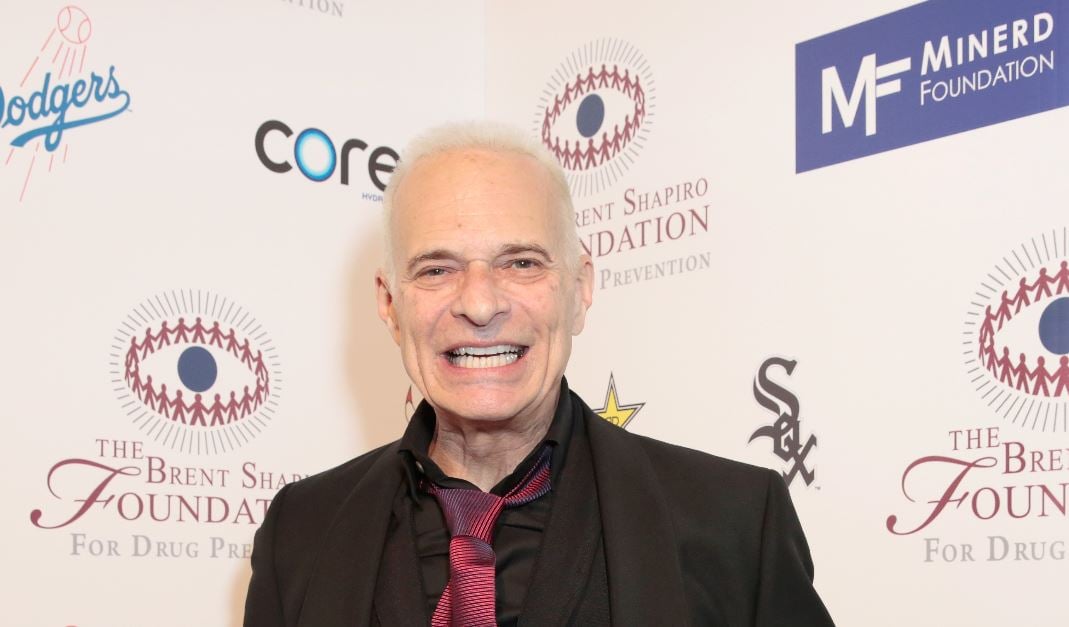

For many, the notion that David Lee Roth is just now starting to feel wealthy might seem unbelievable.
As the iconic lead singer of one of rock music’s most legendary bands, Roth is the voice behind hits like “Jump,” “Panama,” and “Hot for Teacher.” He spent years electrifying stadiums, achieving astronomical album sales, and embodying the wild lifestyle typical of the 1980s rock scene.
However, Roth himself has suggested that this perception of affluence was somewhat misleading.
During a recent interview backstage at Coachella, Roth made an unexpected revelation: he parted with his music publishing catalog around eight months ago. When asked about his current state of mind, he was clear:
“Rich! … For the first time in my life, I can rub two coins together and create a little interest.”
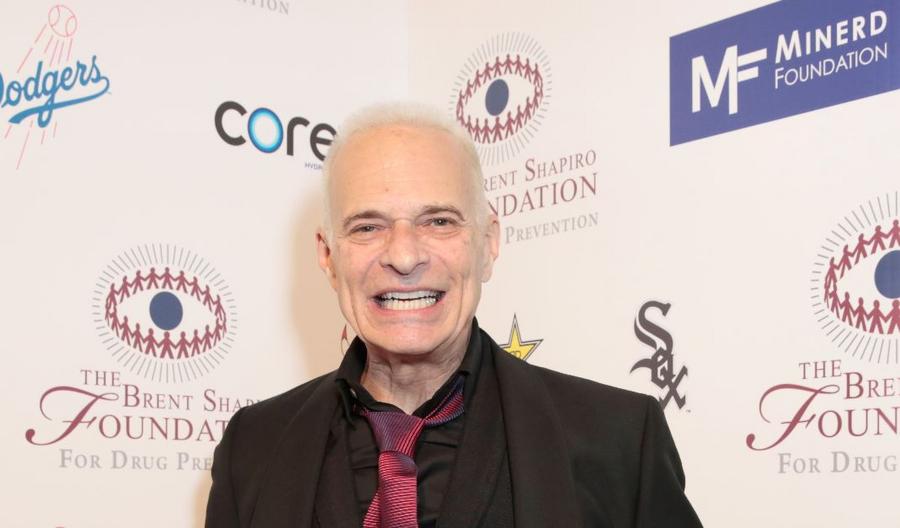
Getty
What Did David Lee Roth Actually Sell?
Importantly, Roth did not sell his master recordings; instead, he sold his publishing rights.
This is a significant difference.
Publishing rights cover the underlying songwriting: the lyrics, melodies, and composition. Every time a song is streamed, played on the radio, licensed to a movie, or performed live, publishing generates income.
For an artist like Roth, that means decades of royalties from classic Van Halen songs, plus his solo catalog.
These rights have become one of the hottest assets on Wall Street over the last decade, with private equity firms paying massive upfront sums in exchange for long-term royalty streams.
So… How Much Did He Get?
Roth didn’t disclose a number. But we can get very close using real-world comps.
The cleanest comparison is Stevie Nicks.
In 2020, Nicks sold 80% of her publishing for $100 million, implying a full catalog value of around $125 million. Like Roth, she was the lead singer and a major songwriter in a massive legacy band, with additional solo success.
Then there’s Red Hot Chili Peppers. When the band sold its publishing for $140 million, that value was split among four members. Lead singer Anthony Kiedis likely walked away with roughly $35 million.
And for broader context, Mötley Crüe sold their entire catalog, including both publishing and masters, for $150 million.
Van Halen’s catalog is arguably more valuable than most of those comps, but Roth only owned a fractional share of the publishing, likely split among band members.
Would you say David Lee Roth’s Van Halen work is comparable to Stevie Nicks’ Fleetwood and solo work? Her solo career is much more successful than David’s, but for my money and taste, his Van Halen work is next level. So let’s take a conservative range. Using Stevie’s deal as a comp, David almost certainly just sold his catalog for $60 – $100 million in upfront cash.
If he walked away with $50 million after fees and taxes, and simply parked it in conservative, 5% yield investments (like Treasury bills or a standard wealth management portfolio), he would be generating $2.5 million a year in pure, zero-effort cash.
The Secret Tax Motivation
Why do artists sell instead of just collecting their royalty checks every year? Taxes. When David Lee Roth collects standard royalty checks, that money is taxed as ordinary income. For a high earner living in California, state and federal taxes can eat up to 50% of those checks.
However, thanks to specific tax codes, when a songwriter sells their entire catalog as a lump sum, it is generally treated as a capital asset. That means it is taxed at the long-term capital gains rate (around 20%). Selling the catalog isn’t just about getting cash up front; it’s a massive tax shield that legally saves the artist millions of dollars.
Why This Is The First Time He Feels “Rich”
Here’s the key insight: being famous and earning a lot of money is not the same as building lasting wealth.
For decades, Roth made money the traditional rock star way:
- Touring
- Album sales
- Merchandise
- Performance fees
But those income streams are inconsistent, expensive to maintain, and often shared among multiple people. Add in decades of spending, management fees, taxes, and the general chaos of the music business, and it’s entirely possible to earn hundreds of millions over a lifetime without ever feeling financially secure.
Publishing, on the other hand, is different. It’s stable. Predictable. Passive.
And when you sell it, you convert decades of future royalties into a single, massive, liquid payday.
(function() {
var _fbq = window._fbq || (window._fbq = []);
if (!_fbq.loaded) {
var fbds = document.createElement(‘script’);
fbds.async = true;
fbds.src=”
var s = document.getElementsByTagName(‘script’)[0];
s.parentNode.insertBefore(fbds, s);
_fbq.loaded = true;
}
_fbq.push([‘addPixelId’, ‘1471602713096627’]);
})();
window._fbq = window._fbq || [];
window._fbq.push([‘track’, ‘PixelInitialized’, {}]);


