
Achieving the dream of selling a company for hundreds of millions is impressive enough. But orchestrating a sale at the market’s peak, seeing the buyer squander nearly the entire investment, and then reacquiring the same business for a fraction of the price? That’s the stuff of business legends.
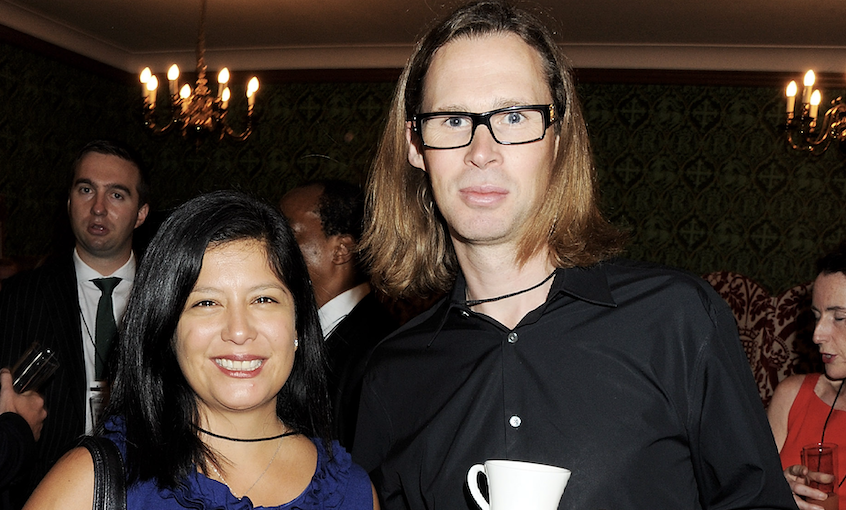
This remarkable tale belongs to Michael and Xochi Birch, the entrepreneurial couple behind Bebo.
In 2005, the Birches introduced Bebo, a social networking platform with the motto “Blog Early, Blog Often.” It quickly climbed the ranks to become one of the leading social networks globally. The site found immense popularity in the UK, Ireland, and New Zealand, becoming a favorite among teenagers and young adults. Users flocked to share photos, write blogs, customize their profiles, chat with friends, and engage in what was then an emerging digital lifestyle.
Then came their ideal exit strategy.
In March 2008, AOL acquired Bebo for a staggering $850 million in cash. At that time, such a price seemed justifiable. Myspace was still a giant, and Facebook was expanding fast, though not yet the global powerhouse it would become. Google had snapped up YouTube for $1.65 billion, and Microsoft had invested in Facebook at a valuation of $15 billion. The internet landscape was defined by a fierce competition for one key asset:
Eyeballs.
Bebo had a lot of eyeballs. Tens of millions of registered users. Massive traffic in key English-speaking markets. A loyal audience. A real brand. A foothold in the social media race.
For Michael and Xochi Birch, the deal was life-changing. They reportedly still owned around 70% of the company when AOL came calling, meaning the couple walked away with hundreds of millions of dollars.
For AOL, the deal became one of the most brutal acquisition disasters of the Web 2.0 era.

(Photo by Dave M. Benett/Getty Images)
The Social Network Before The Social Network
To understand why AOL wanted Bebo so badly, you have to remember what the internet looked like in 2008.
Facebook was not yet the inevitable winner. Twitter was still weird and niche. Instagram did not exist. TikTok did not exist. Snapchat did not exist. The iPhone had only been out for a year. Social networking was clearly going to be huge, but no one knew exactly which platform would dominate.
Myspace was still the giant. Rupert Murdoch’s News Corp. had acquired Myspace in 2005 for $580 million, and for a while that deal looked brilliant. Myspace was one of the most visited websites in the world. It had music, profiles, blogs, friends, comments, photos, and endless teenage chaos. Every media company wanted its own version of that magic.
AOL was desperate to matter again.
The company had once been synonymous with the internet itself. Millions of Americans had first gone online through AOL CDs and dial-up modems. But by 2008, that world was fading. Broadband had replaced dial-up. Google owned search. Yahoo was struggling. Facebook was rising. AOL needed something that made it look like part of the future instead of a relic of the past.
Bebo looked like a shortcut.
The $850 Million Bet
On March 13, 2008, AOL announced that it was buying Bebo for $850 million in cash. AOL CEO Randy Falco called the acquisition a “game changer” and said it would put AOL in a leading position in social media.
The logic was simple enough. Bebo had a huge audience. AOL had advertising infrastructure, messaging products, and media content. Combine those things, the theory went, and AOL could create a social media powerhouse.
There was also precedent. When News Corp. bought Myspace, it paid roughly $26 per user. AOL’s price for Bebo worked out to a little more than $20 per user, depending on which user count you used. In the overheated logic of 2008 social media math, AOL could convince itself it was getting a bargain.
It was not.
The timing could hardly have been worse. AOL bought Bebo just as Facebook was beginning to crush the rest of the social networking field. Facebook had a cleaner product, better network effects, a more disciplined identity system, and eventually a mobile strategy that left older social networks behind. Once Facebook started pulling users in, platforms like Bebo and Myspace did not merely slow down. They collapsed.
Bebo’s users drifted away. Its cultural energy disappeared. AOL never figured out what to do with it.
Randy Falco was gone roughly a year after the deal was announced.
The Collapse
By 2010, just two years after paying $850 million, AOL sold Bebo to private equity firm Criterion Capital Partners for a reported price of less than $10 million.
That means AOL lost more than $840 million in value in around two years.
That is not a typo. AOL bought Bebo for $850 million and sold it for less than $10 million. In hindsight, it stands as one of the most painful examples of a big company buying yesterday’s hot internet trend right before the market moves on.
Criterion tried to revive Bebo, but the platform’s moment had passed. The users were gone. The brand still had nostalgic value, especially among people who had grown up with it in the UK and Ireland, but nostalgia is not the same thing as a working social network.
In 2013, Bebo filed for bankruptcy.
That probably should have been the end of the story.
Instead, Michael and Xochi Birch came back.
The $1 Million Buyback
In July 2013, five years after selling Bebo to AOL for $850 million, Michael Birch announced that he and Xochi had bought the company back for $1 million.
Think about that for a second.
Even if you assume taxes, investors, employees, and deal costs took huge chunks out of their original payday, the basic math is still incredible. The Birches sold high, waited out the crash, then bought the name and remaining assets back for roughly 0.12% of the original sale price.
Michael Birch summed it up perfectly at the time, writing: “Can we actually re-invent it? Who knows, but it will be fun trying.”
When most entrepreneurs buy back their failed company, they are trying to save their life’s work. The Birches were playing with house money. If Bebo came back, great. If it failed again, they had already made the trade of a lifetime.
The Relaunches
Bebo did not simply return to its old form. The Birches tried several different versions.
There was a relaunch as a messaging app. There were experiments around avatars, streaming, and social video. Later, Bebo moved into tools for streamers and esports. That version attracted interest from Twitch, the Amazon-owned streaming platform, which acquired Bebo in 2019 in a deal reportedly worth up to $25 million.
So the round trip became even stranger.
The Birches sold Bebo for $850 million. Bought it back for $1 million. Reworked it. Then a later version of Bebo was sold again, this time to Twitch, for a much smaller but still very real payday.
After that, Bebo went quiet again. There were more comeback attempts, more nostalgia, and more questions about whether a name from the Myspace era could mean anything in a world dominated by TikTok, Instagram, YouTube, Discord, Reddit, and group chats.
The Greatest Exit Timing In Social Media History?
The Bebo saga is a perfect example of how timing can matter as much as execution.
Michael and Xochi Birch built a real product. Bebo was not fake. It had millions of users, cultural relevance, and genuine popularity. But they also sold at the exact right moment, in the final window before Facebook’s dominance became obvious and before older social networks began losing value at shocking speed.
AOL bought the dream of social media just as the market was about to choose a winner.
The Birches sold the dream before that happened.
That is what makes the story so extraordinary. Plenty of founders sell companies. Plenty of acquirers overpay. Plenty of websites flame out. But very few founders sell for $850 million, watch the asset collapse, then buy it back five years later for $1 million.
It is the kind of transaction every entrepreneur secretly fantasizes about.
Build something beloved. Sell it for a fortune. Watch someone else absorb the downside. Then, years later, buy back the name, the nostalgia, and the possibility for less than the price of a nice house in Los Angeles.
(function() {
var _fbq = window._fbq || (window._fbq = []);
if (!_fbq.loaded) {
var fbds = document.createElement(‘script’);
fbds.async = true;
fbds.src=”
var s = document.getElementsByTagName(‘script’)[0];
s.parentNode.insertBefore(fbds, s);
_fbq.loaded = true;
}
_fbq.push([‘addPixelId’, ‘1471602713096627’]);
})();
window._fbq = window._fbq || [];
window._fbq.push([‘track’, ‘PixelInitialized’, {}]);


