

Share this @internewscast.com
What is Max Brooks’ net worth?
Maximillian Michael “Max” Brooks, a notable American horror author and screenwriter, boasts an impressive net worth of $20 million. Brooks has carved a unique niche in the realm of modern zombie fiction, elevating the genre from mere pulp horror to a medium for profound social commentary, political satire, and speculative realism. Unlike many of his peers, Brooks opts to explore zombie narratives through the lens of systems, institutions, and their global ramifications, rather than focusing solely on individual survival tales. This distinctive approach broadened his audience and established Brooks as a leading voice in speculative fiction.
His acclaimed breakthrough, “World War Z,” reimagines a zombie apocalypse as an oral history, borrowing from the grave tone and structure of serious nonfiction rather than traditional genre fiction. This innovative style resonated with readers far beyond the typical horror fanbase, turning the book into a cultural milestone. Over the years, Brooks has expanded his repertoire to include essays, public speaking, comics, and screenwriting, often using fantastical threats to delve into real-world issues such as politics, pandemics, technology, and institutional failures. Despite zombies being a central theme in his public persona, Brooks’ broader work consistently reflects a fascination with preparedness, governance, and societal responses under duress.
Early Life
Born on May 22, 1972, in New York City, Maximilian Michael Brooks is the son of famed filmmaker Mel Brooks and talented actress Anne Bancroft. Growing up in a household steeped in the entertainment industry, Brooks faced academic challenges in his youth due to undiagnosed dyslexia, a subject he has candidly addressed in his later years. His education at Crossroads School in Santa Monica and subsequent graduation from Pitzer College with a degree in history deeply influenced his narrative style, particularly his penchant for framing fictional scenarios with a documentary-like precision.
Early Career and Screenwriting
Prior to his success as an author, Brooks honed his skills in television writing. He gained early professional experience on the animated series “Saturday Night Live” spin-off “Saturday TV Funhouse,” and contributed comedic writing to various projects. This phase of his career drew from both his rich family legacy and personal inclination towards satire. Despite finding initial footing in screenwriting, Brooks was increasingly drawn to long-form writing, where he could thoroughly explore his ideas.
Breakthrough With Zombie Fiction
Brooks’ literary journey saw its first significant triumph with the 2003 release of “The Zombie Survival Guide.” The book, crafted as a tongue-in-cheek manual, deftly combined humor with detailed pseudo-scientific and sociological insights. Its success paved the way for his magnum opus, “World War Z,” which debuted in 2006.
“World War Z” diverged from conventional storytelling by presenting a collection of fictional interviews conducted post-humanity’s triumph over a global zombie crisis. The narrative dissected geopolitical strategies, military tactics, public health oversights, and media hysteria, earning acclaim for its originality and thematic depth. A bestseller, it was later adapted into a feature film starring Brad Pitt, albeit with significant deviations from the book’s structure and themes. Nevertheless, the film adaptation solidified Brooks’ influence in popular culture.
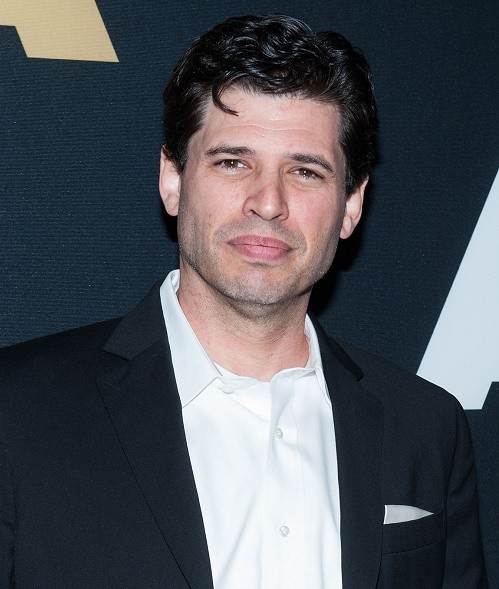
Valerie Macon/Getty Images
Later Books and Expanding Themes
Following the success of “World War Z,” Brooks continued to explore speculative threats through new lenses. His novel “Devolution” shifted focus from zombies to a fictional Sasquatch uprising, again emphasizing institutional breakdown and human psychology under crisis conditions. He also wrote “Minecraft: The Island,” a novel that applied survivalist themes to a digital setting, introducing his ideas to a younger audience.
In addition to fiction, Brooks authored “The Harlem Hellfighters,” a graphic novel that highlighted the real-life story of an African American regiment in World War I, demonstrating his ongoing interest in overlooked history and military narratives.
Beyond books, Brooks has become a frequent commentator on disaster preparedness and societal resilience. Drawing parallels between fictional catastrophes and real-world events, he has spoken publicly about pandemics, climate risks, and emergency planning. His work in this area often blurs the line between entertainment and public education, reinforcing the idea that speculative fiction can function as a warning system rather than escapism alone.
Personal Life
Max Brooks is married to Michelle Kholos Brooks, an actress and musician. The couple have one son together. Brooks has spoken publicly about balancing family life with a career that often involves dark or catastrophic subject matter, emphasizing the importance of grounding his work in human relationships rather than spectacle.
Writing Style and Influence
Brooks’ influence extends beyond zombie fiction. His documentary-style approach, emphasis on institutions over individuals, and use of genre as a tool for critique have influenced a wave of speculative writers interested in realism and plausibility. While he remains closely associated with zombies in the public imagination, his broader body of work reflects a consistent concern with how societies prepare for, respond to, and recover from existential threats.
All net worths are calculated using data drawn from public sources. When provided, we also incorporate private tips and feedback received from the celebrities or their representatives. While we work diligently to ensure that our numbers are as accurate as possible, unless otherwise indicated they are only estimates. We welcome all corrections and feedback using the button below.
(function() {
var _fbq = window._fbq || (window._fbq = []);
if (!_fbq.loaded) {
var fbds = document.createElement(‘script’);
fbds.async = true;
fbds.src=”
var s = document.getElementsByTagName(‘script’)[0];
s.parentNode.insertBefore(fbds, s);
_fbq.loaded = true;
}
_fbq.push([‘addPixelId’, ‘1471602713096627’]);
})();
window._fbq = window._fbq || [];
window._fbq.push([‘track’, ‘PixelInitialized’, {}]);