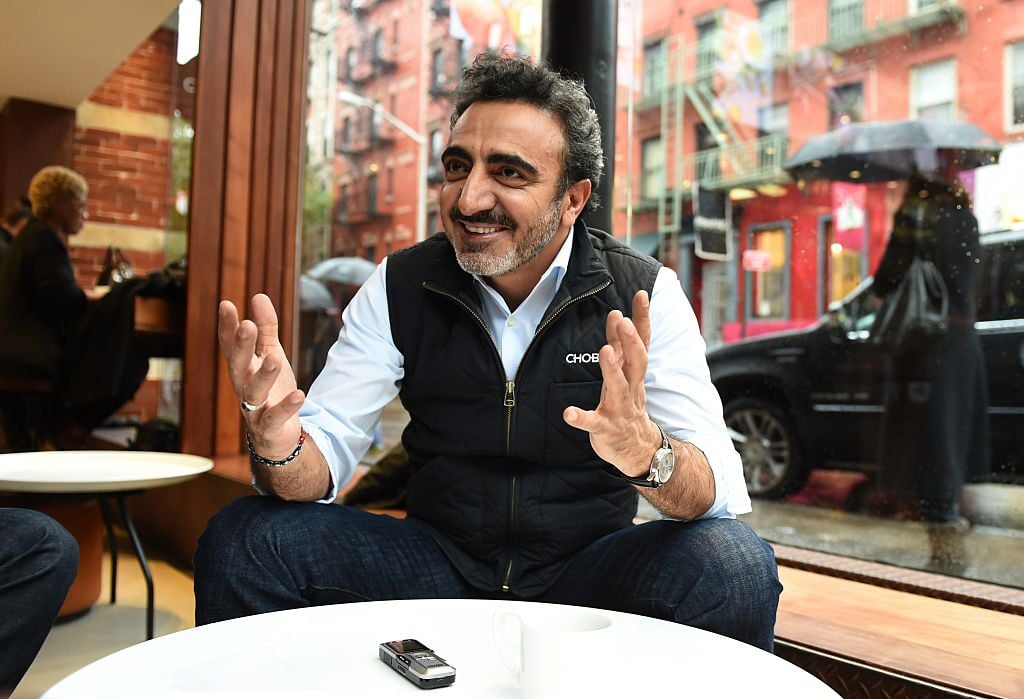

At the dawn of the 21st century, the yogurt shelves in American supermarkets were a veritable sugar rush, dominated by brands that seemed more akin to desserts than nutritious snacks. Greek yogurt was available, but it lingered in obscurity, relegated to a niche corner with scant attention from mainstream consumers. That landscape, however, transformed almost overnight, spearheaded by an unexpected figure: Hamdi Ulukaya.
Hamdi Ulukaya, a Turkish immigrant with roots in artisanal cheese-making, perceived a golden opportunity where others saw only an obsolete asset. In 2005, he boldly took out a loan of $800,000 to acquire a defunct yogurt factory in upstate New York, a site abandoned by a major food conglomerate. Over the next few years, he breathed new life into that neglected facility, laying the groundwork for Chobani—a brand that would soon dominate the U.S. yogurt sector. Today, Chobani boasts a valuation in the tens of billions, and Ulukaya’s personal wealth hovers around $11 billion, marking his journey as one of the most compelling modern case studies in entrepreneurship.
From Rural Turkey To Upstate New York
Born into a Kurdish family in the eastern regions of Turkey, Ulukaya’s upbringing was steeped in the traditions of dairy farming. His parents ran a farm that produced yogurt and cheese using age-old techniques. Although it might not have been evident back then, these early experiences with livestock and rural life would later prove to be a cornerstone of his success.
In 1994, at 22, Ulukaya ventured to the United States, intent on studying English and business. Like many immigrants, his initial years were fraught with uncertainty and adjustment. He attended classes, took on various jobs, and gradually carved out a niche for himself in this foreign land. Eventually, he settled in upstate New York, where he began to explore opportunities in the food industry.
His inaugural enterprise was Euphrates, a small feta cheese operation. Although it never achieved significant financial success, it offered Ulukaya invaluable lessons in manufacturing, distribution, and navigating the complexities of the American food industry.
The $800,000 Bet
In 2005, Ulukaya stumbled upon an advertisement for a dormant yogurt facility in New Berlin, New York. Abandoned by a large food corporation, the plant was largely seen as a liability. But where others saw decay, Ulukaya saw untapped potential.
He secured an $800,000 loan backed by the Small Business Administration and purchased the plant. It was a massive risk. He had limited capital, no guarantee of success, and was entering a category dominated by established giants.
Instead of rushing to launch a product, Ulukaya spent nearly two years perfecting his yogurt recipe. He brought in a yogurt maker from Turkey and focused on creating a thicker, creamier product with higher protein and less sugar than what was typically available in American supermarkets.
Building A Brand Without A Marketing Budget
Chobani officially launched in 2007, but it didn’t follow the traditional playbook. Ulukaya couldn’t afford expensive advertising campaigns or the hefty fees required to secure prime placement in grocery stores.
So he improvised.
He invested heavily in packaging design, making sure the product stood out visually. He focused on sampling, handing out yogurt at events and festivals to build word-of-mouth buzz. He personally reached out to consumers and buyers, building relationships the slow, scrappy way.
One of his more creative tactics involved negotiating with retailers to stock Chobani without upfront fees, offering additional product instead of cash. It was unconventional, but it worked.
By 2009, regional grocery chains like Stop & Shop and ShopRite began carrying Chobani. Demand quickly surged. Within months, the brand was selling hundreds of thousands of cases per week. When Costco and other warehouse clubs added the product later that year, sales exploded again.
Turning Greek Yogurt Into A Mainstream Staple
Chobani didn’t just succeed as a brand. It fundamentally changed consumer behavior.
Before its rise, Greek yogurt accounted for a tiny fraction of U.S. yogurt sales. Within a few years, it became the dominant category. The appeal was simple but powerful: more protein, less sugar, and a thicker, more satisfying texture.
By 2011, Chobani had become the top-selling Greek yogurt brand in the United States. In 2012, the company surpassed $1 billion in annual revenue and opened what was widely considered the largest yogurt manufacturing facility in the world in Twin Falls, Idaho.
Around the same time, Ulukaya reportedly turned down multibillion-dollar acquisition offers, choosing instead to retain control and continue building the company on his own terms.
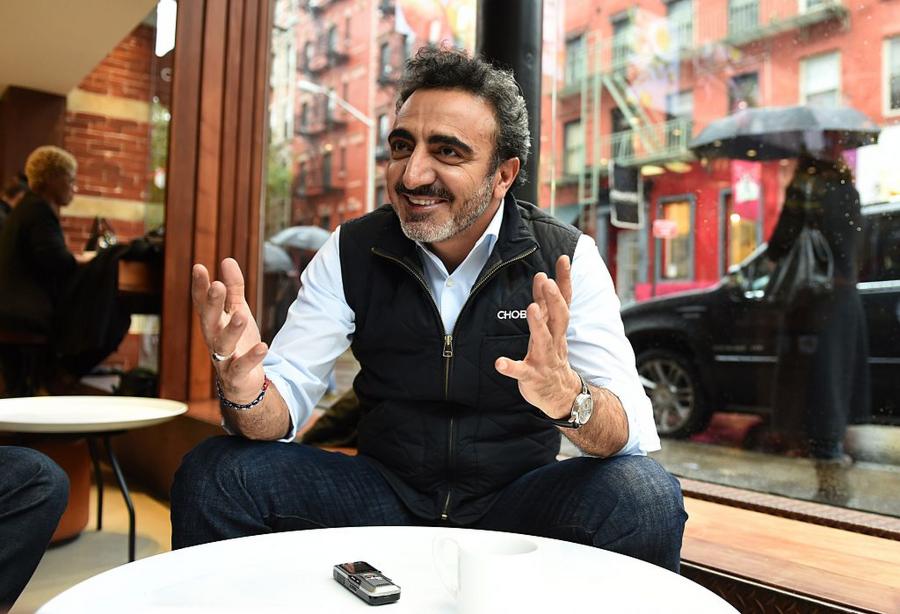
DON EMMERT/Getty Images
From Yogurt Startup To $20 Billion Company
Over the next decade, Chobani continued to expand its footprint and product lineup. The company introduced oat milk, dairy creamers, and other health-focused offerings, positioning itself as more than just a yogurt brand.
Ulukaya also made strategic moves outside the core business. In 2015, he invested in La Colombe Coffee Roasters, eventually bringing the company fully under the Chobani umbrella. The acquisition helped diversify the brand while reinforcing its premium, quality-driven image.
Today, Chobani generates billions in annual revenue and is widely estimated to be worth around $20 billion. The company has remained private, allowing Ulukaya to maintain tight control over its strategy and operations.
An $11 Billion Fortune—And Still In Control
Unlike many founders who dilute their ownership over time, Ulukaya has held onto a large majority stake in Chobani. He is believed to own roughly 70% of the company, making him one of the rare entrepreneurs who still fully controls a business of this scale.
That ownership translates directly into his wealth. With Chobani valued in the tens of billions, Ulukaya’s net worth is estimated at around $11 billion.
It also gives him the freedom to run the company differently.
He has implemented employee equity programs, giving shares to workers. He has pushed for higher wages at his manufacturing plants. And he has consistently prioritized long-term growth over short-term profits.
Business Success With A Broader Mission
Ulukaya’s story doesn’t end with financial success.
He has become one of the most prominent advocates for refugee employment in the corporate world. In 2016, he founded the Tent Partnership for Refugees, an organization that works with global companies to create job opportunities for displaced people.
He has donated millions to humanitarian causes and signed the Giving Pledge, committing to give away the majority of his wealth.
Inside Chobani, that philosophy shows up in tangible ways, from hiring practices to employee compensation. Ulukaya has often said that businesses should be judged not just by profits, but by how they treat people.
The Bigger Picture
What makes Hamdi Ulukaya’s story so compelling isn’t just the size of the outcome, though turning an $800,000 loan into an $11 billion fortune is remarkable on its own.
It’s how he did it.
He didn’t invent yogurt. He didn’t rely on massive venture capital funding. He didn’t follow the traditional corporate playbook.
He took a forgotten factory, applied a better product idea, and executed relentlessly.
Along the way, he didn’t just build a company. He reshaped an entire category of food that millions of Americans consume every day.
(function() {
var _fbq = window._fbq || (window._fbq = []);
if (!_fbq.loaded) {
var fbds = document.createElement(‘script’);
fbds.async = true;
fbds.src=”
var s = document.getElementsByTagName(‘script’)[0];
s.parentNode.insertBefore(fbds, s);
_fbq.loaded = true;
}
_fbq.push([‘addPixelId’, ‘1471602713096627’]);
})();
window._fbq = window._fbq || [];
window._fbq.push([‘track’, ‘PixelInitialized’, {}]);


