It’s a startling reality that a significant number of former athletes face financial ruin shortly after retiring. While the exact statistic has been a topic of debate for years, the often-cited figures of 80% or even 60% going broke are exaggerated.
According to a 2015 study conducted by the National Bureau of Economic Research, which examined bankruptcy court records for NFL players drafted between 1996 and 2003, approximately 16% of these athletes filed for bankruptcy within 12 years post-retirement. Though not as high as rumored, this percentage is still troubling, highlighting a persistent issue.
The cycle is clear: substantial earnings lead to an extravagant lifestyle. Once the paychecks cease, the lavish living continues, compounded by poor investments. Consequently, many athletes swiftly find themselves in financial peril.
The NBA offers several stark examples. Antoine Walker, who amassed about $108 million during his career and celebrated a championship win with the Miami Heat, declared bankruptcy in 2010, not long after leaving the sport. Similarly, Derrick Coleman, the top pick in the 1990 NBA Draft, who earned approximately $87 million, also filed for bankruptcy in 2010 due to failed real estate investments and mounting debts. Darius Miles, with earnings exceeding $60 million, declared bankruptcy in 2016. Vin Baker, a four-time All-Star and Olympic gold medalist, not only lost significant sums through poor investments but also struggled with alcoholism. His journey back included sobriety, coaching, and even working at Starbucks.
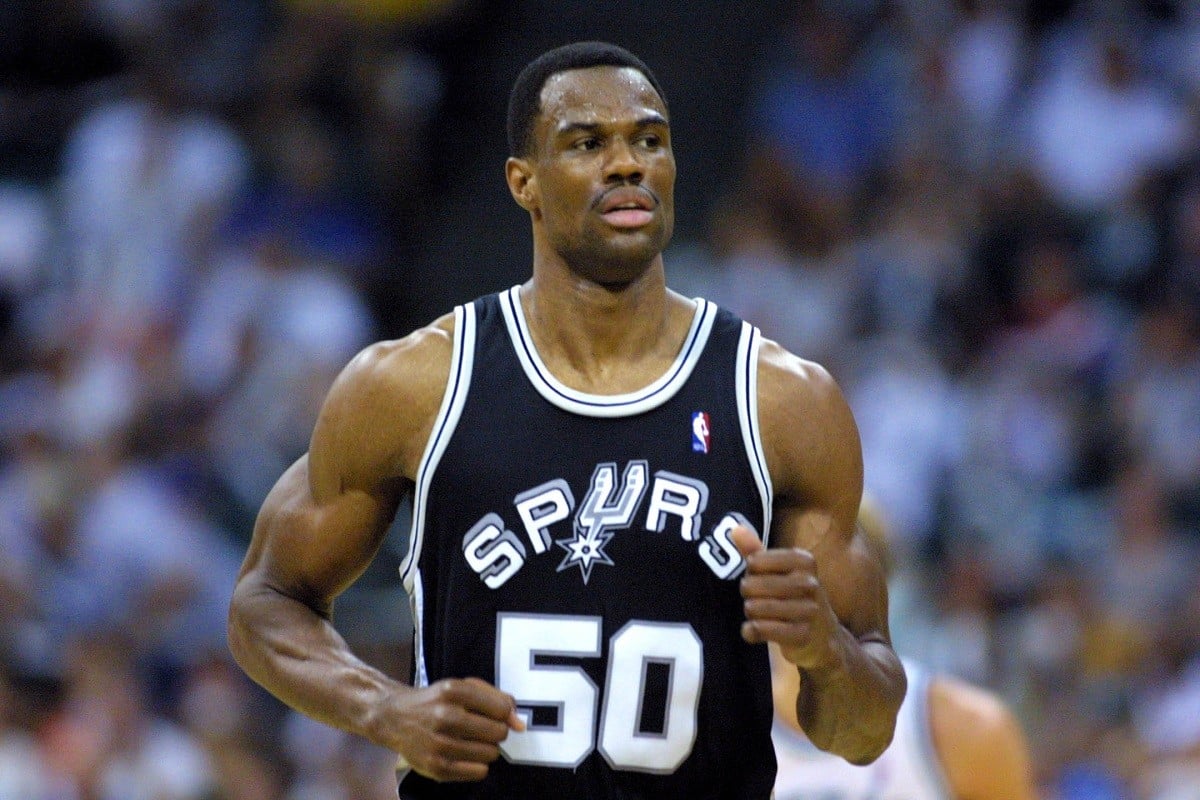
David Robinson is the other side of that story.
Contrasting these stories is David Robinson, a former San Antonio Spurs icon. Over a 14-season career, Robinson secured two NBA championships, was a 10-time All-Star, earned the 1995 MVP award, and won two Olympic gold medals, solidifying his legacy as one of basketball’s greatest centers. Financially, he was equally successful, earning approximately $116 million in salary during his NBA tenure. With endorsements potentially adding another $50 million, his career earnings could have reached around $166 million. After accounting for taxes, management fees, and other expenses, his net was likely reduced to $80-90 million, still a substantial sum ensuring a luxurious retirement without the need for further work.
That easily would have afforded David an extremely luxurious and comfortable post-retirement life without ever having to do another ounce of work.
But that’s not what David did.
After retiring from the NBA in 2003, David Robinson did not spend the next two decades playing golf, reading on the beach, or chasing lame vanity investments. Instead, he took his NBA wealth, his famous discipline, and his pristine reputation and quietly built an institutional private equity and real estate empire.
(Photo by Ronald Martinez/Getty Images)
The $26 Million Rookie Contract That Started It All
David Robinson’s financial story started in one of the strangest draft situations in NBA history.
The San Antonio Spurs selected Robinson with the #1 overall pick in the 1987 NBA Draft. Normally, that would have meant an immediate leap into the league. Robinson was different. Because he had attended the United States Naval Academy, he owed the Navy active-duty service before he could begin his NBA career.
Originally, Naval Academy graduates typically faced a five-year active-duty commitment. But Robinson’s case was unusual. He entered the Academy at around 6’7″ and kept growing, eventually reaching 7’1″. That made it difficult, if not impossible, for him to serve in many traditional Navy roles aboard ships or submarines. As a compromise, he was commissioned in the Naval Reserve as a Civil Engineer Corps officer and served a two-year active-duty obligation at Naval Submarine Base Kings Bay in Georgia.
That delay gave him unusual leverage.
At the time, if a drafted player did not sign within a certain window, he could eventually re-enter the draft. The Spurs knew that if they tried to play hardball, Robinson could fulfill his Navy obligation, re-enter the draft, and potentially land with another team.
So San Antonio made sure that did not happen.
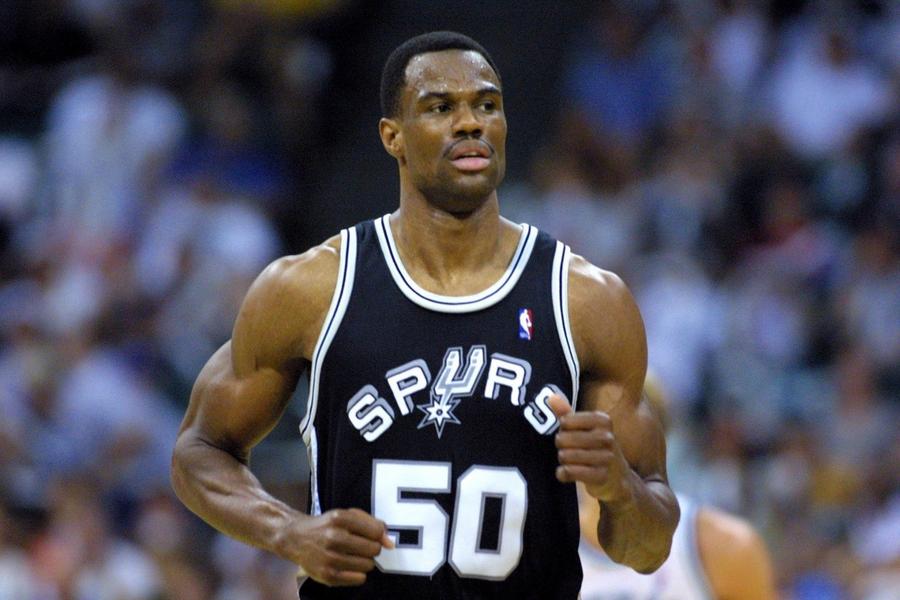
Before Robinson had played a single NBA game, the Spurs signed him to an 8-year, $26 million contract. For the late 1980s, that was an enormous rookie deal. Even more impressively, Robinson reportedly became the first player in NBA history to negotiate a true no-trade clause into his contract. It was a sign that David’s financial career was going to be anything but ordinary.
Ronald Martinez/Allsport
The School That Sparked A Private Equity Firm
The origin of David Robinson’s private equity empire was not a real estate deal. It was a school.
In 2001, while still playing for the Spurs, Robinson donated $9 million to create the Carver Academy in San Antonio to provide high-quality education to inner-city children. Around that time, he connected with Daniel Bassichis, a former Goldman Sachs investment banker. Bassichis helped Robinson develop a long-term strategic plan for the school, a process that exposed a larger issue: a one-time donation can build a school, but a sustainable economic engine is required to fund social impact work for decades.
That realization led the duo to launch Admiral Capital Group in 2007.
From the start, Admiral had a dual mission: generate strong institutional investment returns while dedicating 10% of its profits to lower-income communities and education. It was not a typical athlete vanity project. Robinson and Bassichis proved their financial chops early, raising $115 million for their first major fund, backed by serious institutional support, including a $50 million commitment from USAA Real Estate and $15 million from the Teacher Retirement System of Texas.
From $115 Million to $3.3 Billion
Admiral’s strategy was simple but rigorous: chase inefficiency, not glamour.
The firm targeted capital-deprived assets in high-growth corridors with supply-demand imbalances—markets like Texas, Phoenix, and Seattle. They looked for under-improved properties that larger investors might overlook, bought them, and improved their value through better management, renovations, and new financing structures.
One illustrative deal occurred in 2015 when Admiral bought Waters Edge Apartments, a 304-unit complex in Kent, Washington, for around $40 million. The firm renovated the property, upgraded interiors and amenities, and sold it less than two years later for $56.5 million.
Over the years, Admiral expanded far beyond its original fund. By the time the firm rebranded as Vero Capital in late 2022, the platform had deployed $656 million in equity across transactions valued at a staggering $3.3 billion.
Today, the firm’s real estate footprint spans 81 assets, including:
- 17,432 multifamily units
- 3.2 million square feet of office space
- 385,000 square feet of industrial space
- 792,000 square feet of retail space
- 901 hotel keys
Beyond real estate, the firm diversified into private equity, getting involved with partnerships and investments connected to Academy Sports + Outdoors, United Talent Agency, Centerplate, and Blaze Pizza.
In November 2022, Admiral Capital Group announced that it was rebranding as Vero Capital.
The investment platform, funds, and team would be managed under the Vero name, with Bassichis leading as managing partner. Robinson, meanwhile, would step back from day-to-day operations and focus more heavily on social impact, philanthropy, and mentoring athletes.
The name “Vero” means truth. According to the firm’s own explanation, the name was inspired by Corda Vero Street in Israel, where Bassichis’ grandfather had started over after leaving Poland in the 1930s to escape the Nazi invasion. In the 1950s, his grandfather bought beachfront property in a depressed area that later became a thriving neighborhood. Bassichis wanted the firm to reflect that kind of long-term, visionary investing.
A New Legal Complication
There is one important new wrinkle in the story.
In December 2025, Robinson, Admiral Capital Group, and affiliated entities filed a lawsuit against Daniel Bassichis and Vero-related entities. The lawsuit accused Bassichis of misappropriating more than $30 million, including allegations tied to refinancing proceeds and funds used to support Vero-related operations.
Bassichis denied wrongdoing and characterized the matter as an isolated business dispute related to the wind-down of certain assets. Within days, Robinson and Bassichis issued a joint statement saying they were in constructive discussions and working toward a resolution.
The dispute also raised an important question about the relationship between Admiral Capital and Vero. The 2022 announcement described Admiral as rebranding into Vero, but Robinson’s legal team later asserted that Admiral remained a separate entity with no change in ownership structure. According to legal filings, Robinson owns 51% of Admiral Capital, while Bassichis owns the remainder.
The Spurs Stake
While building his firm, Robinson made one incredibly lucrative personal investment. In 2004, a year after retiring, he purchased a 1.88% minority stake in the San Antonio Spurs. At the time, the franchise was valued around $280 million, implying a purchase price of roughly $5.2 million. Today, the Spurs are valued at around $4.5 billion, pushing the value of Robinson’s stake to roughly $85 million.
The Mechanics of a $3.3 Billion Portfolio
When you read that David’s firm has $3.3 billion in transaction value, it doesn’t actually mean that David owns a huge chunk of a $3.3 billion portfolio.
First, “transaction value” includes bank debt. If Vero Capital buys a $100 million office building, it might borrow $65 million from a bank.
Secondly, the actual cash—or equity—the firm deployed across its portfolio was $656 million. That $656 million is not Robinson’s personal money; it is capital raised from institutional investors like pension funds and insurance companies.
Private equity firms make their money managing that capital through a structure commonly known as “2 and 20.” The firm charges a management fee (usually around 1.5% to 2% of the assets) to cover salaries, offices, and operations. But the real wealth is generated by the “20”—the carried interest. When Vero buys an apartment complex, improves it, and sells it for a profit, the firm keeps 20% of the profits after the initial investment, and a baseline return is paid back to the investors.
To see how this scales, imagine Vero achieves a 2.0x return on that $656 million deployed. That means they doubled the investors’ money, generating $656 million in pure profit. The firm takes its 20% cut of those profits, which equals $131.2 million. Because Robinson owns 51% of the firm, his gross cut of that performance fee is roughly $67 million. After subtracting his 10% philanthropy pledge, his take-home from the carried interest alone is around $60 million. He also earns his share of the annual management fee profits and the returns on his own personal capital invested alongside his limited partners.
When you total it all up, the career earnings, his Spurs investment, and his business empire, today David Robinson’s net worth is $300 million. He also likely is earning around $8 to $10 million per year in distributions.
The 10% Mandate
The most unusual part of the Admiral/Vero story is that philanthropy was built into the firm from the beginning.
Robinson and Bassichis pledged to donate 10% of profits to lower-income communities and education. That commitment tied the investment platform directly to Robinson’s broader mission. The goal was not simply to make money and then think about giving some away later. The giving mechanism was part of the structure.
Carver Academy became the clearest example of that mission. In 2012, the school partnered with IDEA Public Schools and became IDEA Carver, a tuition-free public charter school. The move allowed Robinson’s original educational vision to reach more students than a single private school could serve on its own.
Robinson has also been involved with Blueprint Local, an organization focused on raising capital for underserved and rebuilding communities.
This is the part of Robinson’s financial story that makes it different from a standard athlete-business profile. He did not simply become rich, then richer. He built an investment platform partly because he wanted a bigger engine for philanthropy.
(function() {
var _fbq = window._fbq || (window._fbq = []);
if (!_fbq.loaded) {
var fbds = document.createElement(‘script’);
fbds.async = true;
fbds.src=”
var s = document.getElementsByTagName(‘script’)[0];
s.parentNode.insertBefore(fbds, s);
_fbq.loaded = true;
}
_fbq.push([‘addPixelId’, ‘1471602713096627’]);
})();
window._fbq = window._fbq || [];
window._fbq.push([‘track’, ‘PixelInitialized’, {}]);