
Vincent Astor was a 20-year-old Harvard undergraduate when tragedy abruptly reshaped his life. In April 1912, his father, John Jacob Astor IV — the wealthiest passenger aboard the Titanic — died when the ocean liner sank in the North Atlantic. Vincent’s stepmother, Madeleine, survived the disaster, but John Jacob’s body was recovered from the freezing water days later. Among the items found with him was a gold pocket watch, held in place by his life jacket. The watch was later given to Vincent, who kept it for the rest of his life — a deeply personal reminder of the day he inherited not only extraordinary wealth, but also the burdens of one of America’s most prominent family names.
The Astor fortune was already the stuff of legend. Its roots stretched back nearly 100 years to John Jacob Astor I, a German-born immigrant who first grew rich in the fur business before expanding his fortune through Manhattan real estate. When he died in 1848, his estate was valued at $20 million — a sum so vast for its time that, measured against the size of the U.S. economy, it would be comparable to about $121 billion today. That wealth established the Astors as New York’s original real estate powerhouse and secured their place among the most influential families in the United States.
John Jacob Astor IV carried that empire into the modern era. He developed the St. Regis Hotel, moved in elite social circles and controlled an estate valued at $85 million — a fortune that, when compared with the U.S. economy of the period, would equal roughly $60 billion today. His death on the Titanic instantly made Vincent, his only son, one of the richest young men in the world. But the reserved Harvard student was suddenly forced into a position for which he had little training: overseeing a vast property empire, managing the expectations attached to the Astor name and deciding how he would use the immense fortune now in his hands.
Inheriting a Massive Fortune
Vincent’s inheritance was enormous. He received $69 million in cash — carrying a modern economic weight of nearly $48 billion — along with the St. Regis Hotel and extensive New York City real estate holdings. Almost overnight, he became one of the wealthiest people alive. He had been devoted to his father, who was known to be affectionate toward him, and the sudden transfer of responsibility was profound. Perhaps feeling the pressure, Vincent soon sold the St. Regis to Benjamin Duke, though he would reacquire the hotel in 1935 and personally guide its modernization.
Despite his quiet and reserved nature, Vincent remained closely connected to the upper ranks of society. He developed a strong friendship with Franklin D. Roosevelt, the future president, and was known to offer him informal counsel. That relationship helped shape Vincent’s broader civic interests and linked him to public affairs in a way that set him apart from his father.
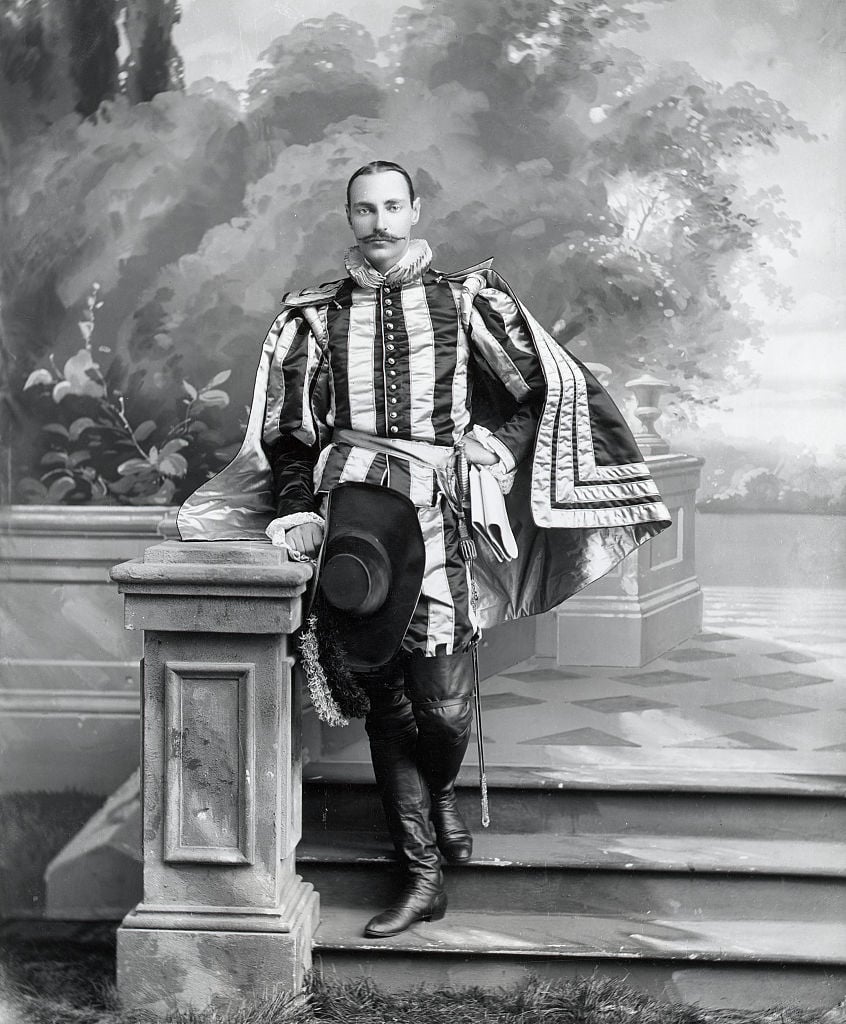
John Jacob Astor IV (via Getty).
Building His Own Empire
Real estate continued to form the foundation of Vincent’s fortune. He owned several residences, including an expansive townhouse stretching between East 80th and East 79th streets, as well as a 23-room penthouse at 120 East End Avenue. But his influence extended well beyond his private homes. In Manhattan, he began transforming rows of aging brownstones into apartments designed for young professionals and artists. On the Lower East Side, he invested in affordable housing for working-class immigrant families.
Those developments were not merely business opportunities. Vincent made a conscious effort to distance himself from the Astor family’s long-standing association with substandard tenement housing. Over the years, he sold many of those older properties and redirected money into projects that included playgrounds, shared community areas and youth centers. He came to believe that great wealth brought a duty to serve the public — a conviction shaped in part by his own difficult childhood with a mother often described as cold and emotionally distant.
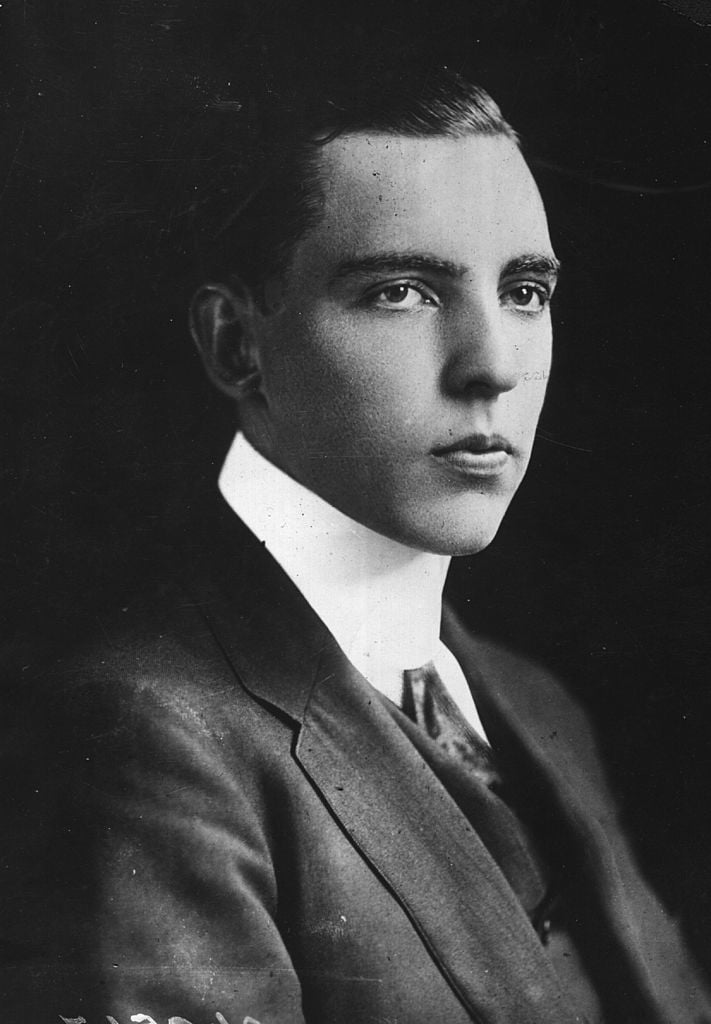
Vincent Astor (Photo by Topical Press Agency/Getty Images)
Philanthropy
Determined to transform his family’s image, Vincent invested millions into causes that directly improved New Yorkers’ lives. He built playgrounds in Harlem and the Bronx, funded the American Red Cross, and supported youth programs at New York Hospital. He donated land, financed children’s projects, and helped expand opportunities for underprivileged communities.
In 1948, he established the Vincent Astor Foundation with the guiding motto “the alleviation of human misery.” The foundation became the centerpiece of his philanthropic vision, ensuring that much of his fortune would eventually flow to public causes.
Other Endeavors
Beyond business and philanthropy, Vincent loved the sea. He commissioned a new yacht, the Nourmahal, a 264-foot vessel with 11 staterooms and a crew of 42, which he used for global voyages. He donated tortoises and other rare animals collected on these trips to the Bronx Zoo. During World War II, he turned the yacht over to the U.S. Navy for military use.
Vincent also made a mark in publishing. In 1937, he merged Today magazine with the failing Newsweek, creating a rival to Time. As chairman, he guided the magazine until his death.
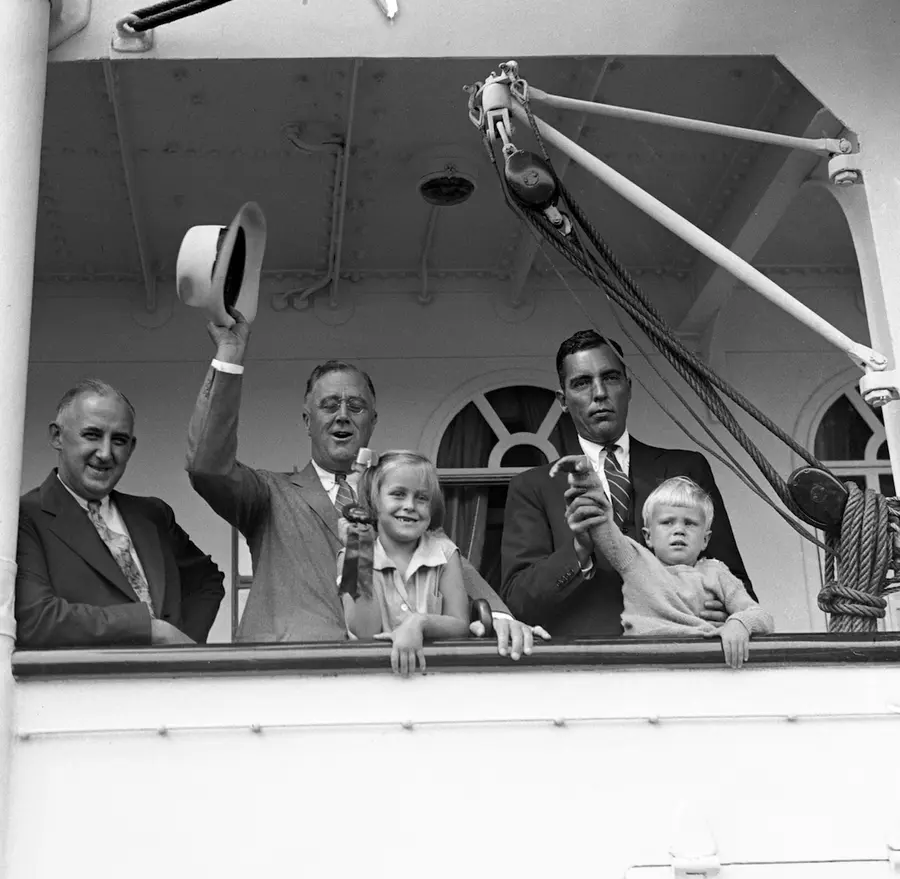
FDR with his grandchildren and Vincent Astor (right). (Photo by Bettmann Archive/Getty Images)
Final Years and Legacy
In 1953, Vincent married Brooke Astor, his third wife, who would go on to become one of the most celebrated philanthropists of her generation. Together, they cemented the Astor legacy not as slumlords but as benefactors.
Vincent died of a heart attack in 1959 at the age of 67. In a twist of fate, his first heart attack occurred years earlier as he walked into a theater to watch “A Night to Remember,” a film about the Titanic disaster. At his death, his fortune had grown to about $200 million (around $2 billion today). Brooke inherited $67 million, much of which she gave to charity.
Over the following decades, through both Vincent’s foundation and Brooke’s tireless philanthropy, billions of today’s dollars were poured into New York institutions — from the library and zoo to neighborhood literacy programs and parks. By the time Brooke died in 2007, the Astor fortune had largely been transformed into public good.
From an heir burdened by tragedy to a benefactor determined to right his family’s wrongs, Vincent Astor’s life was defined by the Titanic disaster — and by his effort to ensure that his inheritance ultimately uplifted others.
(function() {
var _fbq = window._fbq || (window._fbq = []);
if (!_fbq.loaded) {
var fbds = document.createElement(‘script’);
fbds.async = true;
fbds.src = ”
var s = document.getElementsByTagName(‘script’)[0];
s.parentNode.insertBefore(fbds, s);
_fbq.loaded = true;
}
_fbq.push([‘addPixelId’, ‘1471602713096627’]);
})();
window._fbq = window._fbq || [];
window._fbq.push([‘track’, ‘PixelInitialized’, {}]);


