
Share this @internewscast.com
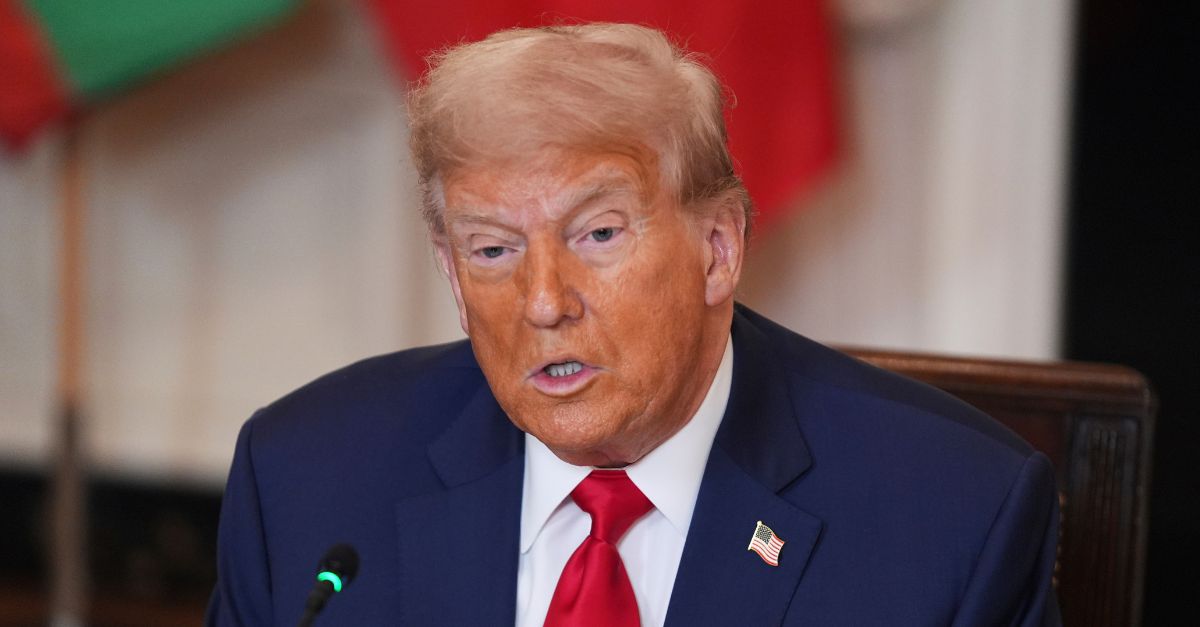
President Donald Trump speaks during a lunch with African leaders in the State Dining Room of the White House, Wednesday, July 9, 2025, in Washington (AP Photo/Evan Vucci).
A federal judge has denied the Trump administration’s attempt to expedite proceedings and pause the discovery phase in an ongoing lawsuit concerning budget cuts to the U.S. Agency for International Development (USAID).
The lawsuit involves more than two dozen anonymous current and former USAID employees and contractors who have filed a case against Elon Musk. They claim that Musk’s role as head of the Department of Government Efficiency (DOGE) contravenes the U.S. Constitution’s Appointments Clause and violates the separation of powers principle.
In March 2025, the plaintiffs achieved a partial victory when a preliminary injunction was issued. This injunction prevents Musk and DOGE from further reducing USAID’s budget without explicit approval from an authorized agency official. The judge also suggested that attempts to weaken the agency might be an “unconstitutional shutdown.”
In August 2025, the defendants were granted a motion to dismiss claims against President Donald Trump, though the rest of the lawsuit continued.
Then, in October 2025, the Trump administration sought to elevate the case to the appellate court by certifying the district court’s decision on the motion to dismiss, labeling it as involving several “controlling questions of law.”
In October 2025, the Trump administration moved to certify the district court’s opinion and order on the motion to dismiss, effectively a bid to move the case up to the appellate level over what it termed several “controlling questions of law.”
On Thursday, in an 18-page memorandum opinion, U.S. District Judge Theodore Chuang, a Barack Obama appointee, rejected efforts by the Trump administration to speedily move forward with the appeals process and pause discovery in the case.
The heart of the government’s request is for the court to certify the motion to dismiss so the U.S. Department of Justice (DOJ) can file an interlocutory appeal and sidestep the plaintiffs’ still-valid claims.
“This Court should certify the case for interlocutory appeal,” the government argued. “And the Court should stay further proceedings while the case is on appeal as a matter of judicial and party economy, given that a favorable ruling for Defendants would obviate any need for further proceedings or discovery.”
The court, in no uncertain terms, rejected these requests.
At the outset, Chuang took issue with the idea that the plaintiffs’ standing to sue in the first place was a controlling question of law.
The court’s analysis begins with an application of the analytical framework widely known by legal scholars as “conservative standing doctrine.”
This judicial theory was created in two cases from the 1920s by conservative judges who sought to restrain the use and limits of constitutional redress. In other words, standing doctrine was created — and has over time been honed and sustained — to limit lawsuits against the government. While technically procedural in nature, as opposed to relying on the underlying merits arguments in a dispute, standing arguments tend to be fact-intensive.
To hear Chuang tell it, the U.S. Department of Justice has not “identified a pure question of law arising from the Court’s ruling that Plaintiffs have pleaded sufficient facts to demonstrate standing.” Rather, the court says, the standing dispute “instead requires an application of law to the facts of this specific case.” The judge goes on to say that a win for the government here would also likely drag the process out for longer.
“[A]ny adverse appellate ruling on standing would have little impact on advancing the termination of this case because Plaintiffs would have a substantial basis to seek, and the Court thus would almost certainly have to grant, leave to amend to insert the additional facts that would more conclusively demonstrate standing,” Chuang writes.
The government also argued the dispute is more contract-like in nature and therefore grounded in certain types of law that should necessarily divest a district court of jurisdiction over the matter.
Again, the judge was not at all convinced.
“The Court finds that its rulings on Defendants’ mandatory channeling arguments did not involve a pure question of law and instead consisted of the application of settled law to the particular facts of this case,” the ruling goes on.
In other words, the court says the government’s arguments have been ruled on in accordance with the law in the district and are simply not “appropriate” for interlocutory appellate review.
At essence, Chuang is saying the government has failed to identify any case law the would-be appellate court could even cite to show that the prior denial of the motion to dismiss was wrongly decided.
This understanding is particularly salient on the merits, the judge says.
From the opinion, at length:
The Court’s ruling that Plaintiffs have stated a viable Appointments Clause claim was not predicated on a contrary legal principle; rather, the Court concluded that the factual allegations support the inference that Plaintiffs’ injuries were the result of specific actions by Musk for which there was no evidence of any ratification by an authorized official. The Court thus concluded that as to the Appointments Clause claims, “additional factual development through discovery is necessary” to determine the “identity of the actual decisionmakers for any exercises of significant authority.”
“Where the issue of whether unauthorized decisions were later ratified by authorized decisionmakers is a fact-based inquiry that requires discovery, not a pure question of law, this issue is entirely inappropriate for interlocutory appeal,” the opinion continues.
In similar fashion, the judge says the separation of powers claim cannot be decided “quickly and cleanly” but “instead depends on an individualized analysis of the specific allegations.” And, once again, this takes the earlier ruling beyond a pure question of law.
After all this, the discovery request is a fait accompli.
“Because the Court will not certify the identified questions for interlocutory appeal, it necessarily will deny the request for a stay of discovery,” Chuang’s analysis concludes.