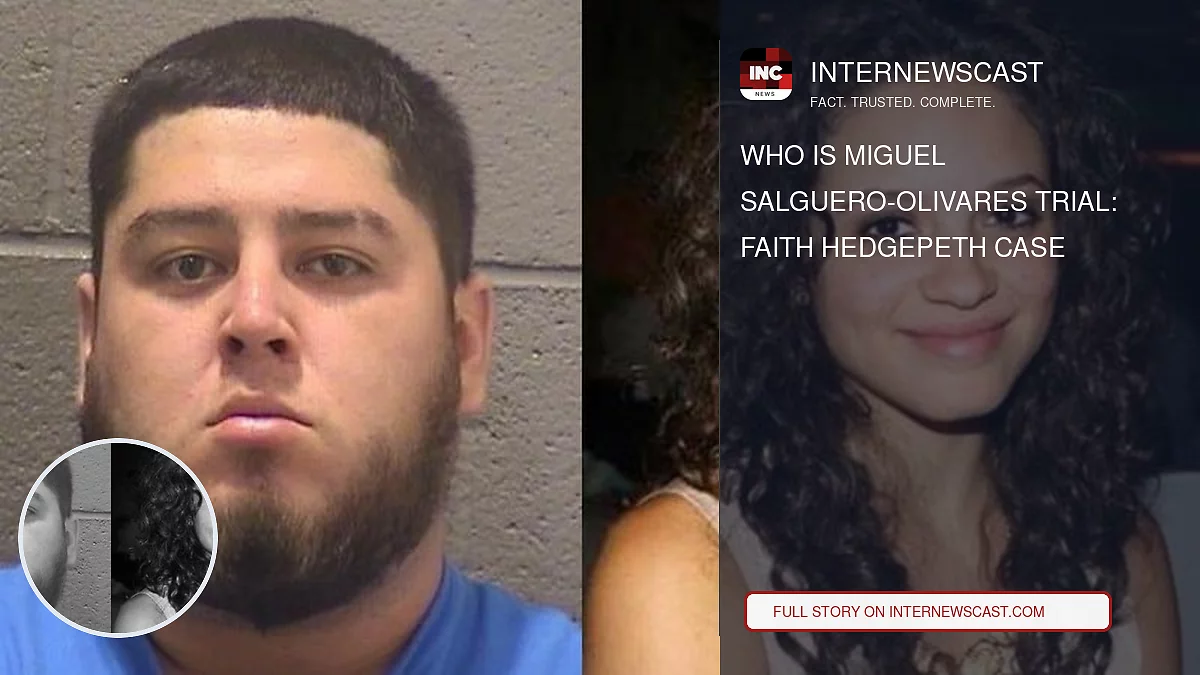

The murder trial of Miguel Salguero-Olivares began in Durham, North Carolina, on October 7, 2026, more than 14 years after University of North Carolina at Chapel Hill student Faith Hedgepeth was found beaten to death in her apartment. Salguero-Olivares has pleaded not guilty to first-degree murder, first-degree burglary, first-degree rape and first-degree sexual offense.
The prosecution says DNA evidence links Salguero-Olivares to the crime scene, the alleged murder weapon and evidence found near Hedgepeth’s body. The defense argues that the investigation was incomplete and that the physical evidence does not prove who killed her. As of October 8, 2026, testimony was still underway and no verdict had been reached.
What happened to Faith Hedgepeth?
Faith Hedgepeth was a 19-year-old UNC-Chapel Hill sophomore and a member of the Haliwa-Saponi American Indian community. She lived in an off-campus apartment in Chapel Hill with her roommate, Karena Rosario.
On the night of September 6, 2012, Hedgepeth and Rosario went out before returning to their apartment in the early morning hours. Rosario later left the apartment. When she returned on September 7, she and another friend found Hedgepeth dead in her bedroom.
Investigators determined that Hedgepeth had been killed violently. The case drew widespread attention because police had no immediate suspect and the investigation remained unresolved for years. A handwritten message found on a fast-food bag near the body also became a central piece of evidence and public discussion.
The details of the killing are deeply disturbing. Court proceedings have included graphic evidence, and some potential jurors were excused during jury selection after expressing concerns about viewing crime-scene photographs and video.

Who is Miguel Salguero-Olivares?
Miguel Enrique Salguero-Olivares is a Durham, North Carolina, man who was arrested on September 16, 2021, nine years after Hedgepeth’s death. He was initially charged with first-degree murder.
Prosecutors later amended the indictment. By 2024, the case included charges of first-degree burglary, first-degree rape and first-degree sexual offense in addition to murder.
Salguero-Olivares has remained in custody while awaiting trial. The charges are allegations, not findings of guilt. The jury must decide whether prosecutors have proved each element of the offenses beyond a reasonable doubt.
How did investigators identify Salguero-Olivares?
The investigation eventually focused on DNA recovered from evidence connected to the killing. Investigators used genetic genealogy to develop a lead after years without an identified suspect. That process compares crime-scene DNA with broader genetic information to identify possible family connections.
Police then pursued Salguero-Olivares as a person of interest and obtained a later DNA comparison that prosecutors say matched material recovered in the case. Reports about the investigation have described biological evidence on or near a rum bottle, on a fast-food bag and inside Hedgepeth’s body.
Prosecutors also say a palm print connected Salguero-Olivares to the investigation. The significance of each item, how it was collected and whether it was properly preserved are matters for the jury to evaluate during the trial.
What evidence is the prosecution presenting?
In opening statements, prosecutors portrayed the killing as an attack by a stranger who entered Hedgepeth’s apartment and left a trail of DNA. The state’s case is expected to rely heavily on forensic evidence rather than an eyewitness account of the killing.
According to the prosecution’s opening presentation, DNA attributed to Salguero-Olivares was found:
- On a rum bottle covered in blood, which prosecutors say may have been used as the murder weapon.
- On a fast-food bag found at the scene.
- Inside Hedgepeth’s body.
The prosecution has also presented testimony about the condition in which Hedgepeth was found and the events surrounding the discovery of her body. Her former roommate, Karena Rosario, was the first major witness to testify after opening statements.
Rosario described returning to the apartment and finding Hedgepeth in the bedroom. Her testimony focused on the morning of September 7, the layout of the apartment and her relationship with Hedgepeth.
What is the defense arguing?
The defense has not disputed that Hedgepeth was murdered. Its position is that the state has not established Salguero-Olivares as the killer beyond a reasonable doubt.
Defense attorney James Rainsford argued in opening statements that the evidence does not fit together as prosecutors claim. The defense has pointed to evidence that investigators allegedly lost, failed to test or did not preserve in a way that would allow a complete analysis.
The defense is also expected to challenge how DNA reached the items described by prosecutors and whether the presence of biological material proves when or how it was deposited. A DNA match can be powerful evidence, but the jury must still consider the circumstances surrounding the sample, the chain of custody and whether alternative explanations are supported by the evidence.
A judge ruled before trial that the defense could not broadly argue that Rosario was responsible for Hedgepeth’s death without first addressing the issue outside the jury’s presence. The defense can still question witnesses and challenge the prosecution’s account, but the ruling limits how third-party guilt may be presented to jurors.
What is the current status of the Faith Hedgepeth murder trial?
Jury selection began in late September 2026 and took more than a week. Twelve jurors and four alternate jurors were selected before opening statements began on October 7.
The prosecution presented its opening statement first, followed by the defense. The state then began calling witnesses. Rosario’s testimony concluded the first day of witness evidence, and the defense was expected to begin cross-examination when proceedings resumed on October 8.
The trial is expected to last several weeks because of the age of the case, the number of witnesses and the volume of forensic and investigative evidence. No conviction, acquittal or sentencing decision had been announced as of October 8, 2026.
Why did the case take so long to reach trial?
Hedgepeth was killed in 2012, but investigators did not arrest Salguero-Olivares until 2021. The delay reflects the difficulty of identifying a suspect in a case that initially lacked a clear perpetrator and the time required to develop and test forensic leads.
After the arrest, the case involved additional evidence disputes, pretrial motions and arguments over what jurors should be allowed to hear. Prosecutors and defense attorneys also disputed whether certain filings should remain public before trial.
The length of the process has been frustrating for Hedgepeth’s family and supporters. At the same time, the delay does not lower the state’s legal burden. Prosecutors must still prove the charges using admissible evidence presented in court.
What happens next in the trial?
The prosecution is expected to continue presenting witnesses and forensic evidence. Those witnesses may include investigators, medical and forensic specialists, people connected to the apartment and individuals involved in the DNA investigation.
After the state rests, the defense will decide whether to present evidence or call witnesses. Salguero-Olivares has the constitutional right not to testify, and jurors may not treat that choice as proof of guilt.
The case will then move to closing arguments and jury deliberations. The final result could be a conviction, an acquittal or a decision on some charges but not others. Until the jury reaches a verdict, Salguero-Olivares remains legally presumed innocent.
Frequently Asked Questions
-
Who was Faith Hedgepeth?
Faith Hedgepeth was a 19-year-old UNC-Chapel Hill student who was found beaten to death in her off-campus apartment on September 7, 2012.
-
Who is on trial for Hedgepeth’s murder?
Miguel Enrique Salguero-Olivares is on trial. He faces charges of first-degree murder, first-degree burglary, first-degree rape and first-degree sexual offense.
-
When did Miguel Salguero-Olivares go on trial?
Opening statements and the first witness testimony began on October 7, 2026, in Durham, North Carolina.
-
How was Salguero-Olivares linked to the case?
Investigators developed a lead through genetic genealogy and later obtained DNA evidence that prosecutors say matched material connected to the crime.
-
What evidence is central to the prosecution’s case?
The state has highlighted DNA evidence allegedly found on a blood-covered rum bottle, on a fast-food bag and inside Hedgepeth’s body, along with other forensic evidence.
-
What does the defense say?
The defense argues that the evidence does not establish guilt and has raised questions about missing, untested or poorly preserved evidence from the investigation.
-
Has Miguel Salguero-Olivares been convicted?
No. As of October 8, 2026, the trial was still in progress and no verdict had been announced.
-
Could the case end before the jury reaches a verdict?
It could, but no such resolution had been announced. The case remains active unless the parties reach a plea agreement, the court dismisses charges or the jury issues a verdict.
The Faith Hedgepeth murder trial is now testing a case built over more than a decade of investigation. Prosecutors say DNA and related forensic evidence identify Salguero-Olivares as the attacker. The defense says investigators failed to account for gaps and alternative explanations. The jury, not public speculation, will decide whether the evidence proves the charges beyond a reasonable doubt.


