Share this @internewscast.com
The recent attack has raised numerous questions, including how the perpetrators managed to evade the scrutiny of security agencies while amassing such an arsenal, and how the government is addressing antisemitism.
As we approach the 48-hour mark since the incident, here are the answers we’ve gathered to some of these pressing questions.
In particular, Naveed, one of the individuals involved, had been under investigation for six months. However, authorities ultimately determined that he did not pose a significant threat.
“He was assessed due to his associations with others,” Prime Minister Anthony Albanese stated yesterday.
“The conclusion was that there was no evidence of any ongoing threat or indication that he would engage in violence,” Albanese added.
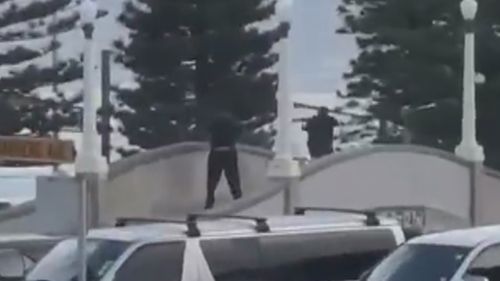
Currently, Naveed remains hospitalized in critical condition but is expected to face charges related to the attack in Bondi.
Naveed is currently in hospital in a critical condition but is expected to be charged over the Bondi attack.
The older gunman, 50-year-old Sajid Akram, was killed during the shooting.Â
He had arrived in Australia in 1998 on a student visa, transferred to a partner visa three years later, and was on a resident-return visa at the time of the attack.
He was not on authorities’ radar.
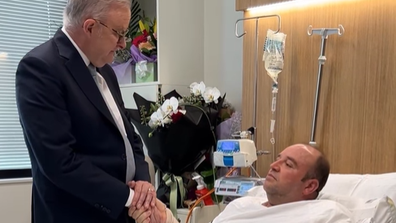
Prime Minister visits terror attack hero
How did they get access to guns?Â
A member of a gun club, Sajid Akram held an AB licence â which covers single-shot rifles and shotguns, as well as some higher-powered firearms â and legally owned the guns used in the attack.Â
All six of the firearms linked to his licence have now been seized by police.
Sajid was first approved for a gun licence in 2015, but that application lapsed because he didn’t get a photo taken for it.
He then applied again in 2020 â after ASIO began investigating his son over ties to IS â and the licence was eventually issued in 2023.
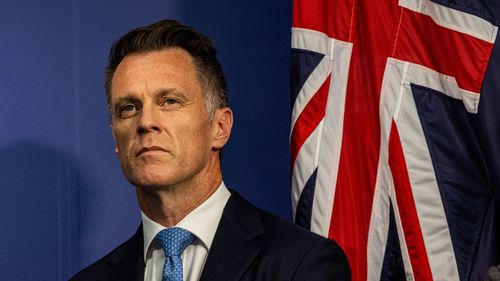
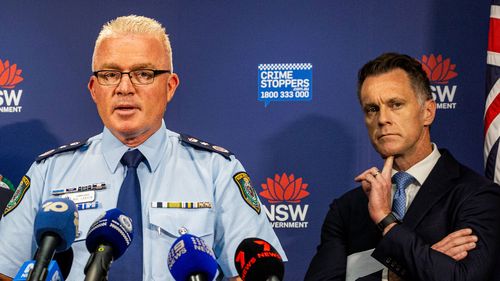
NSW Premier Chris Minns said this morning it is “too early” to say whether there was an intelligence failure that led to that gun licence being granted.
Why wasn’t there more security at the event?Â
While there was a police presence at the Chanukah by the Sea event targeted by the shooters, authorities have been questioned whether that was adequate, given the rise in antisemitic attacks in Sydney and across Australia since October 7, 2023.
Police were on the scene in five minutes and took down the shooters in nine.
The police response is being examined in a critical incident investigation, but Commissioner Mal Lanyon has defended the staffing levels at Bondi.
“We base our policing response on the threat that exists at the time,” he said.Â
“A lot of work is done between ourselves and the Jewish community.Â
“Bondi Beach is a large and public area. We regularly patrol that area as we did on that day.”
Both he and Minns have acknowledged that the presence would have been larger had there been intelligence about an attack.
“I don’t think there’s any doubt that if we had our time again, of course we would do things differently,” the premier said.
“I can’t take back Sunday. Nobody can,” he added.Â
“But what we can do is ensure that, in the future, we are putting security in place so that we rebuild trust with the Jewish community.”
Minns did, however, strongly defend the actions of police, saying officers acted with “bravery and integrity”.
“They engaged the gunman on the footbridge with handguns,” he said.Â
“The offenders had long-range rifles, and NSW Police officers were responsible for killing one of them and shooting the other one and, as a result, saving many, many people’s lives.Â
“There are two officers in critical care in New South Wales hospitals. They weren’t shot in the back as they were running away. They were shot in the front.Â
“I’m sorry to be graphic about it, but if there’s any suggestion that NSW Police didn’t live up to their responsibilities to the people of this state, it should be rejected because it’s not consistent with the facts.”
Why didn’t the government act on antisemitic advice given to them months ago?Â
The federal government has been criticised for not doing enough to combat the rise in antisemitism over the last two years, including by special envoy Jillian Segal, Opposition Leader Sussan Ley and former prime minister John Howard.
“(Prime Minister Anthony Albanese’s) greatest failure is not to provide the moral leadership that a prime minister can in denouncing antisemitism,” Howard said, while stressing the people responsible for the attack were the two shooters.
“The impression I had was that every time he got onto the subject, he would equate it with discrimination generally.”
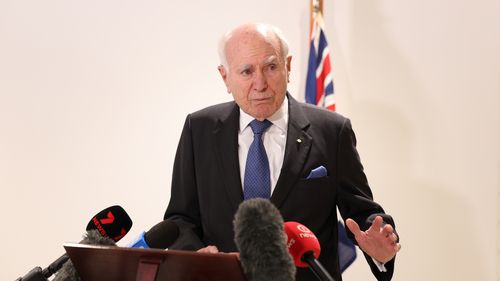
“The leadership has not been there for Jewish Australians,” Ley said.
The government has defended its actions.Â
While it hasn’t yet formally adopted Segal’s recommendations, Albanese pointed to several that it has acted on, including banning the Nazi salute and hate symbols, criminalising doxxing, and millions of dollars in education funding.
Home Affairs Minister Tony Burke also pointed to the deportation of people with antisemitic views as action the government has taken.
“We have acted and will continue to act on the implementation of the plan⦠we’ll continue to work at the levels with the envoy, including a number of the recommendations for state governments to implement as well,” Albanese said.
The matter has been complicated by the heavy criticism Segal’s recommendations received, in part for relying on a controversial definition of antisemitism.
“The blueprint falls short in a range of areas essential to good public policy,” human rights expert Louise Chappell said after their release.Â
“This is due to its biased arguments, weak evidence and recommendation overreach.”
Can we stop this from happening again?Â
Both the federal and NSW governments have promised legal reform in response to the shooting, particularly around stronger gun controls.
Investigations into the attack â at least an inquest is likely, and there are already calls for a royal commission â will provide recommendations on how to prevent future incidents.
However, it’s worth noting that ASIO has been warning about the threat posed by lone wolf attacks for years.
This was Director-General Mike Burgess at the start of 2024:
“ASIO remains concerned about a lone actor moving from talk to action without warningâ¦
“ASIO remains concerned about lone actors, though â the potential for an individual or small group under the radar of authorities to use readily available weapons to carry out an act of terrorism.Â
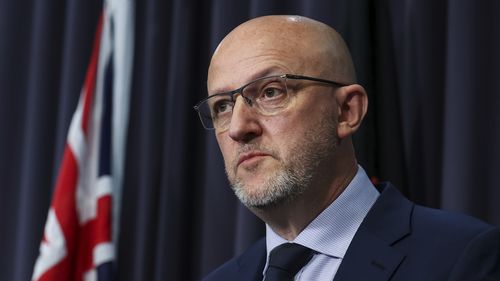
“And this is a concern across the spectrum of motivations â religious and ideological.”
And this was Burgess early this year:
“The most likely perpetrator of a terrorist attack is a lone actor, from a family previously unconnected to extremismâ¦
“All (terror matters investigated last year) were lone actors or small groups.Â
“Almost all the individuals were unknown to ASIO or the police and it is fair to say they allegedly moved towards violence more quickly than we have seen before.”
It’s also crucial to note that ASIO is effective at detecting and stopping terror attacks.
But the reality is they cannot monitor every person in the country.
“They do a marvellous job: ASIO, the AFP, their state ministry counterparts,” former home affairs secretary Mike Pezzullo said yesterday, who added that “not every cell is intercepted” by authorities.
“They can’t be everywhere. And frankly, if they were, we’d be a police state.”
If you have been impacted by the terror attack in Bondi there is support available.
To contact Lifeline Australia, call 13 11 14 or text 0477 13 11 14.
For people under 25 years old, you can contact Kids Helpline at 1800 55 1800.
Both of these are available on a 24/7 basis.