Share this @internewscast.com
Deeper than the Bass Strait, Lake St Clair is Australia’s deepest lake, but the underwater landscape has been largely a mystery — until now.
For years, people speculated the lake — which marks the end of the internationally renowned Overland Track, a multi-day hike in the Tasmanian Wilderness World Heritage area — might be as deep as 215 metres. But a CSIRO team believes they’ve finally put that mystery to rest.
The team spent nine days mapping the lake with technology that, according to hydrographic surveyor Augustin Déplante, let them see it “as though they’d emptied the lake and were walking around” inside it.
“I was really keen to find what the deepest point of the lake was,” Déplante said.
“There’s been some wild numbers around and I could never find what that was referring to, whether it was just the depth of the lake on that day because it had rained a lot, or whether it was attached to an actual height datum.”

After much anticipation, the true depth of the lake has been unveiled, with its deepest point reaching slightly over 163 meters. This remarkable discovery provides a fresh perspective on the lake, thanks to the detailed mapping conducted by CSIRO.
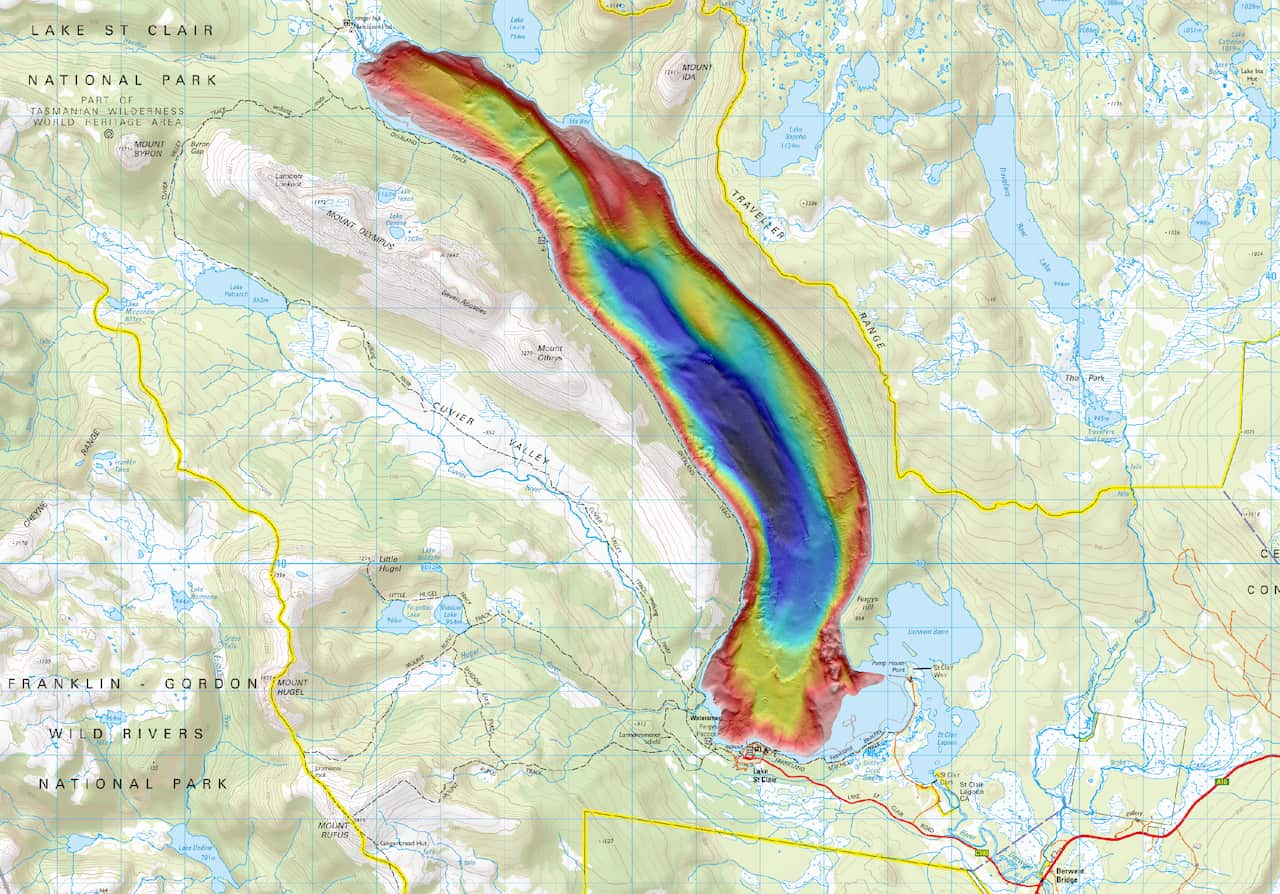
Topographical map of central Tasmania overlaid with high resolution mapping of Lake St Clair

Newly released imagery, courtesy of CSIRO, offers an impressive visualization of the lake’s topography, showcasing its true depth for the first time. The high-resolution mapping, which overlays a topographical map of central Tasmania, has uncovered fascinating details about Lake St Clair.

The deepest point is located towards the south on the western side of the lake, nestled in a corner that has clearly been sculpted by glacial activity. As one expert noted, “We can almost see how the glacier would have really ground through that corner.”

This groundbreaking discovery was made possible by a multi-beam device mounted on the CSIRO vessel, RV South Cape. As the vessel journeyed across the lake, it emitted pulses of sound to accurately measure the water’s depth, providing an unprecedented view of the lake’s underwater landscape.

Using advanced multibeam sonar and Light Detection and Ranging (LIDAR) technologies, the team has created a 3D map of the lake bed and shoreline.

A multi-beam was mounted onto CSIRO vessel RV South Cape as it travelled up and down the lake, using pulses of sound to measure the water depth, revealing a view of the lake never seen before.
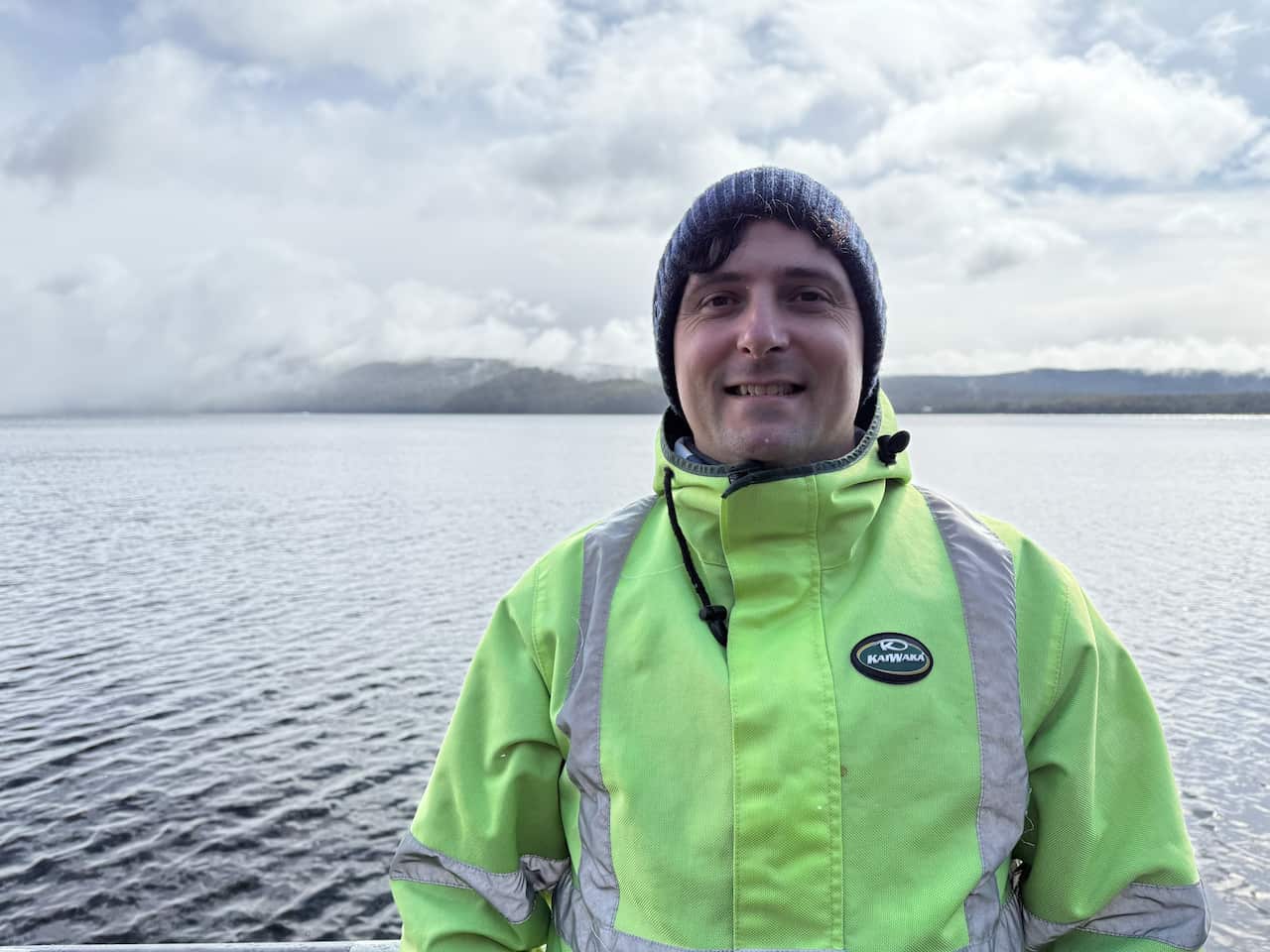
augustin deplante.jpg

CSIRO hydrographic surveyor Augustin Déplante was part of the nine-day expedition. Source: SBS News / Kerrin Thomas

“Seeing the sharp cliffs on the edges of the lake, we can clearly see some areas that have been carved by the glacier,” Déplante said.

“You can see the deposits of the glacier where it would have stopped receding and dropped a lot of rocks and sediments and so on, and then kept going.”
The underwater features can be clearly seen on the 3D image.
“We can see the input of fresh water basically coming into the lake from the mountains and its carving through the lake floor so we have these waterfalls basically coming down into the lake and then reaching the cliffs, it’s pretty incredible to look at.”
A multi-beam and LIDAR was mounted on a remotely-operated vessel called the Otter to survey the shoreline.

“It can go really shallow into regions, less than less than two meters, even less than a meter as well as long as there’s no hidden rocks or anything underneath the surface,” CSIRO research engineer, Dr Hui Sheng Lim, said.
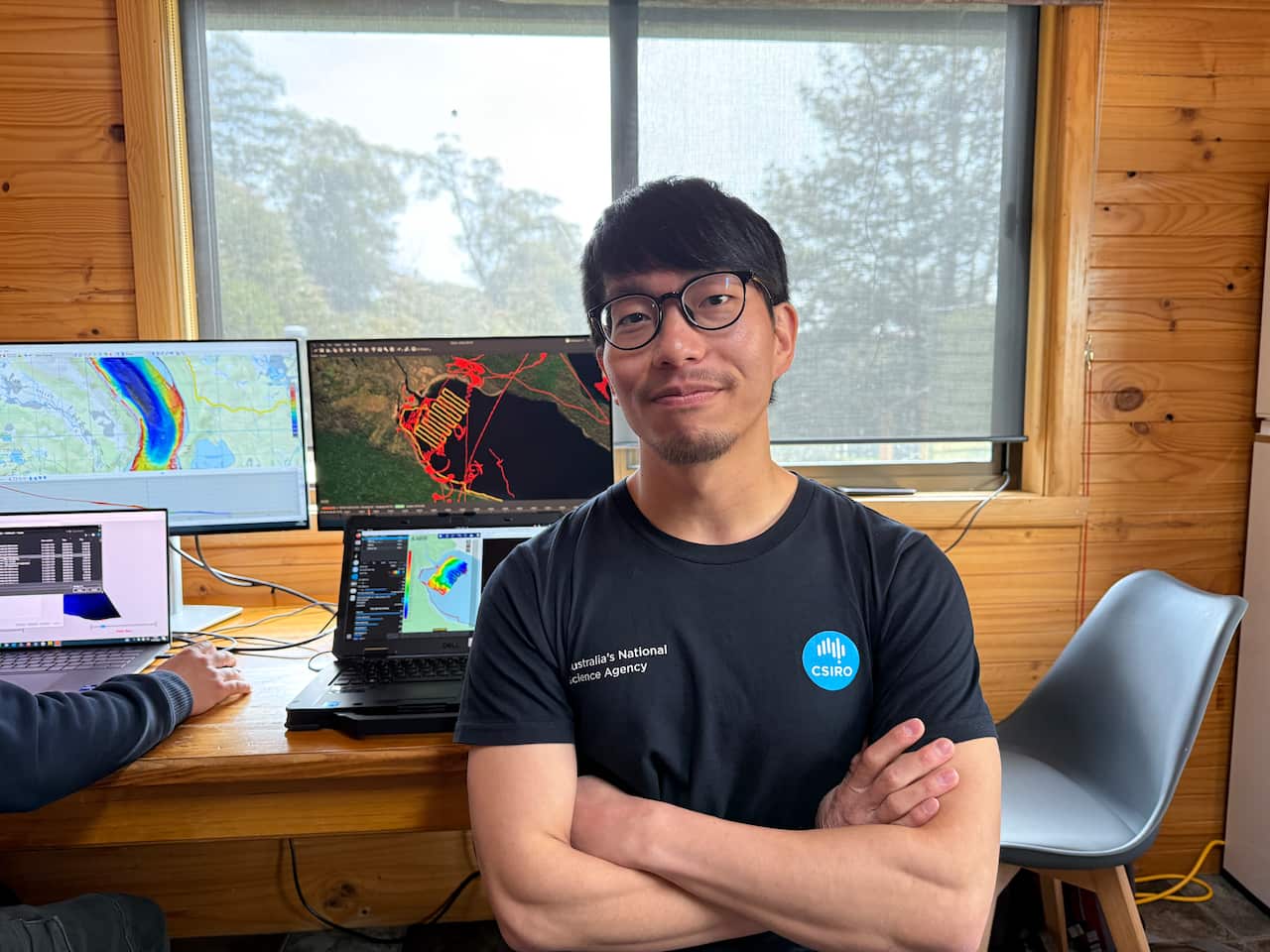
An Asian man with glasses with his arms crossed and smiling. He's seated in front of computers showing maps and diagrams of a lake.

Dr Hui Sheng Lim was among the CSIRO researchers who mapped the lake. Source: SBS News / Kerrin Thomas

“So those are the areas where the big vessel won’t be able to get to.”

The Otter revealed areas close to shore with sharp drop-offs.
“You’ll see how quick that actually dropped from the shoreline, all the way down to 50 meters,” he said.

“You can see a meter here, and then next moment you are in a 10-metre zone, and next moment you’re already 30 metres, 50 metres deep.”
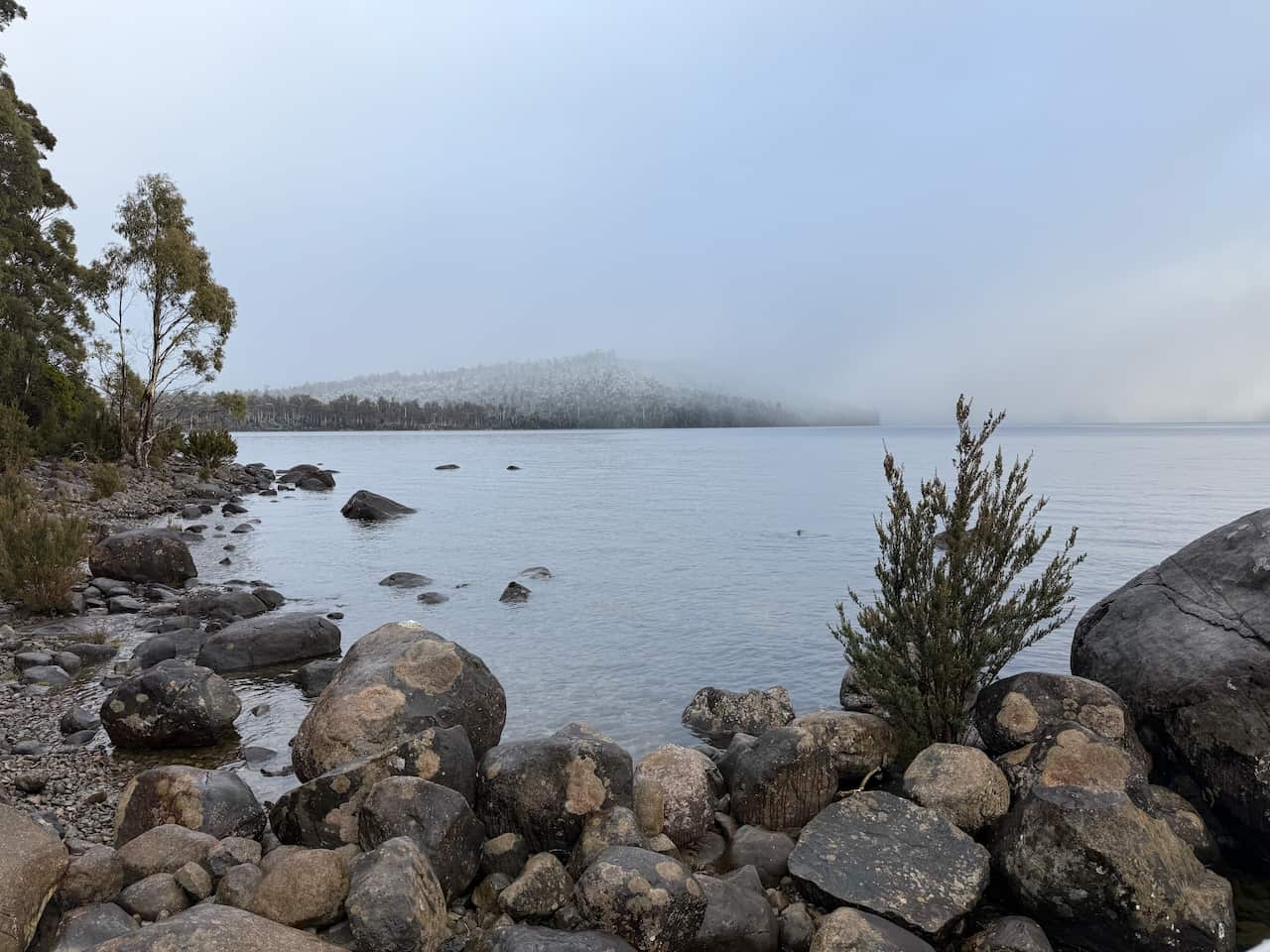
A rocky shoreline and lake. In the distance, clouds and snow can be seen on hills.

The area is known for its strong winds and unpredictable weather. Source: SBS News / Kerrin Thomas

Otter can also operate autonomously, following a precise, pre-planned path.

“One of the most useful features is we will be able to autonomously find gaps and find the best way to cover those missing gaps in our data sets,” he said.

‘Most peaceful place on this planet’

Michael Croghan has been running Lake St Clair Lodge at the southern end of the lake for almost 20 years.
“Personally, I would describe the lake as my church,” he said.
“It is the most peaceful place on this planet. I may be biased, but so many other people are also saying the same thing. It’s visually stunning, never the same two days in a row.

“It’s the most phenomenal place to swim, because it’s the cleanest air and the cleanest water in the world.”
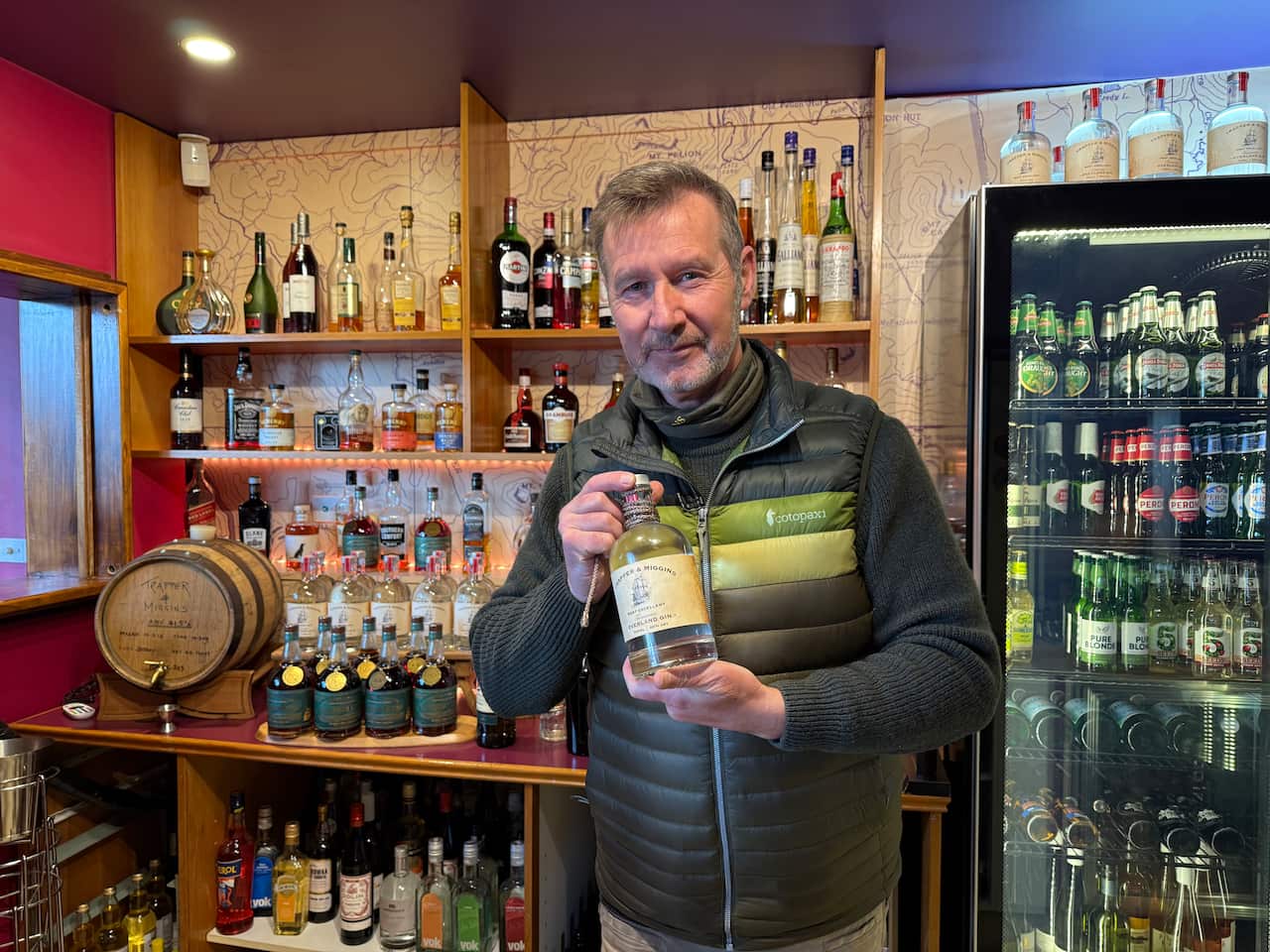
A middle aged white man holding up a bottle of gin. Behind him is a bar with various alcoholic drinks.

One of Michael Croghan’s most prized possessions is a bottle of gin lowered to the bottom of the lake. Source: SBS News / Kerrin Thomas

One of his prized possessions is a bottle of gin a team of researchers lowered to the bottom of the lake a few years ago.

“Just for giggles one night I said to them, would you take a bottle of gin, put it on the bottom of the lake and take a photograph? And they’re like, Yeah, sure. So I’m like, okay, great. So they did.”
The bottle is always close at hand behind the bar.

“It’s now been depth tested I think that was to about 120 metres,” he said.

Snow, wind and swell

Tasmania’s wilderness is known for its unpredictability and the team encountered snow, big swells and blustery winds as they undertook their work.
“It’s been amazing: it’s so wild all around the lake so you’re very much amongst the elements all day long,” Déplante said.

“Being on a small boat, like South Cape, sometimes I felt like I was in the Southern Ocean, basically.”
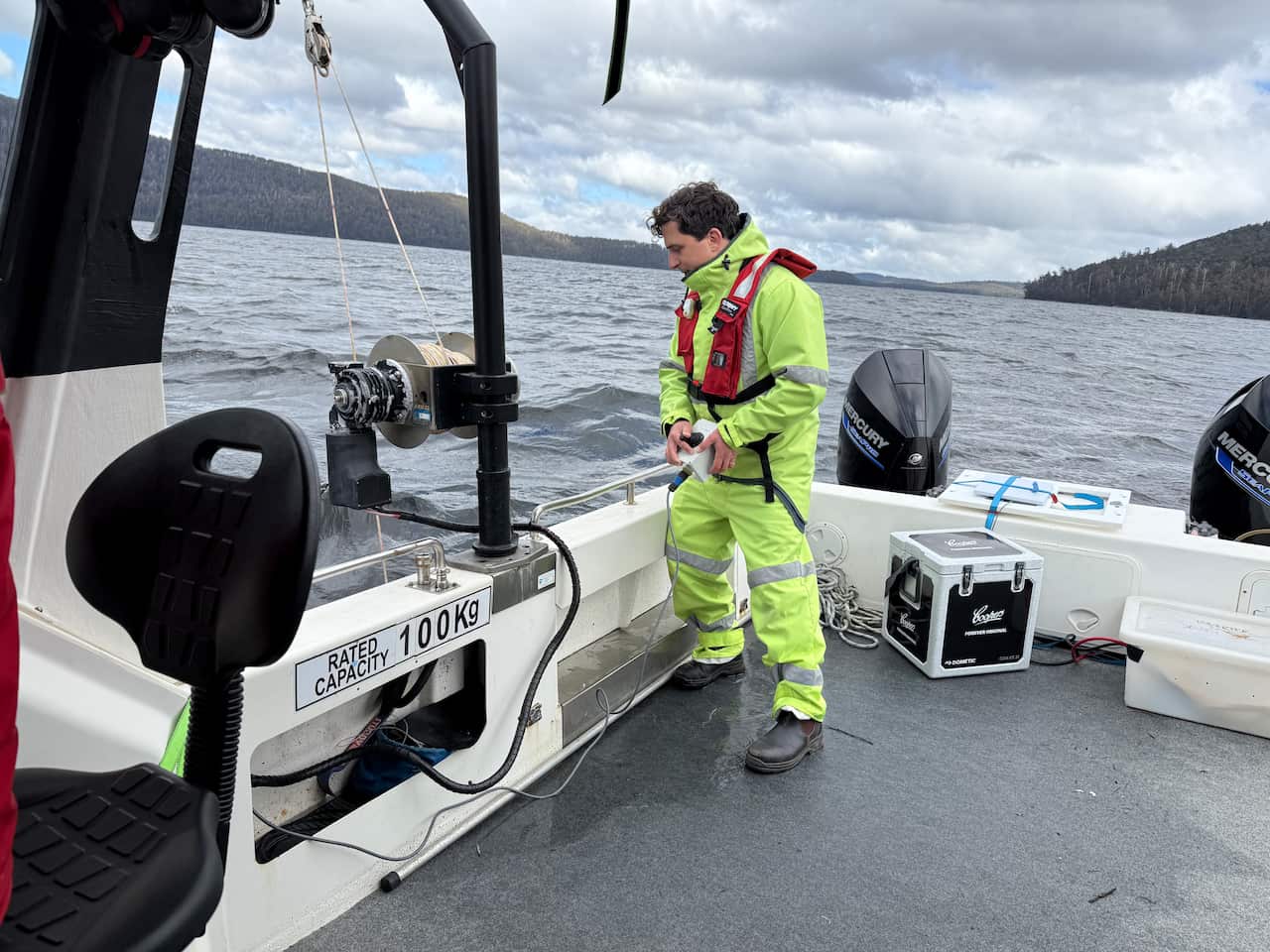
A man wearing a high yellow vis jump suit on a boat in a lake

The team encountered snow, big swells and blustery winds as they conducted their research. Source: SBS News / Kerrin Thomas

The detailed data collected will be made public, providing an important resource, it’s hoped will fuel further study of Lake St Clair.

“When I saw that the deepest lake in Australia had never been surveyed with the multi-beam I was very surprised but I guess if it was easy to do it would have already been done,” Déplante said.
And while the lake is known as a home for platypus, it’s not known if something bigger lurks under the surface.
“No weird monsters or anything, yet.”

Share this @internewscast.com
You May Also Like

Government Stalled: Public Outcry as Critical Reforms Remain Unaddressed

The government is facing pressure to axe “dangerous” reforms to Australia’s freedom…

Why Recent Interest Rate Cuts Aren’t Lowering Sky-High Home Prices: The Surprising Truth Revealed

Key Points Home prices rose ! per cent in November, lifting Australia’s…

Devastating Southeast Asia Floods Claim Over 600 Lives: Ongoing Relief Efforts Struggle to Cope

More than 600 people have been killed in floods and landslides across…
Hanson addresses immigration rally in Melbourne

Breaking News: Hanson Speaks Out at Melbourne Rally – Unveiling Her Stance on Immigration

Pauline Hanson, the leader of One Nation, recently led an anti-immigration protest,…

Australia Steps Up: Tackling Fiji’s HIV Crisis with Urgent Support

While Australia is considered to be on track to virtually eliminate HIV…
Dozens arrested in Port of Newcastle climate change protest

Mass Arrests at Port of Newcastle as Climate Activists Rally for Change

In a bold display of civil disobedience, climate change activists have once…
A 26-year-old Waterloo man was arrested, police will allege he is the leader of the group.

Four Individuals Charged in Connection with Global Criminal Network Allegations

Warning: This article contains sensitive content that may be distressing for some…
Someone holding a handful of Australian cash.

Urgent Alert: Millions of Australians at Risk of Losing Thousands by Year-End – Here’s What You Need to Know

Millions of Aussies have no idea they could lose thousands of dollars…

Nationwide Passport System Glitch Strands Thousands: What Travelers Need to Know Now

Travellers going through Australian airports were temporarily delayed on Sunday after a…

Trump Shuts Down Venezuelan Airspace Amid Rising Tensions: What It Means for Global Relations

US President Donald Trump has warned that the airspace above and near…
President Nicolás Maduro of Venezuela greets his supporters during a rally to commemorate Indigenous Resistance Day on October 12, 2025 in Caracas, Venezuela.

Trump Urges Caution: Advises Treating Venezuelan Airspace as Off-Limits

President Donald Trump on Saturday said that the airspace “above and surrounding”…
Former Ernst & Young partner Leonard Nicita (pictured) lost his breach of contract case after being warned over inappropriate behaviour at a Miami Vice-themed office Christmas party

Aussie Workers Alerted: Christmas Party Misconduct Can Cost You Big, Warns Sacked EY Executive’s $1.3M Lesson

The dismissal of a high-ranking Ernst & Young partner has become a…