
Share this @internewscast.com
Warning: Spoilers Ahead for “Marshals” Season 1, Episode 2 — “Zone of Death”

Sonja Flemming/CBS
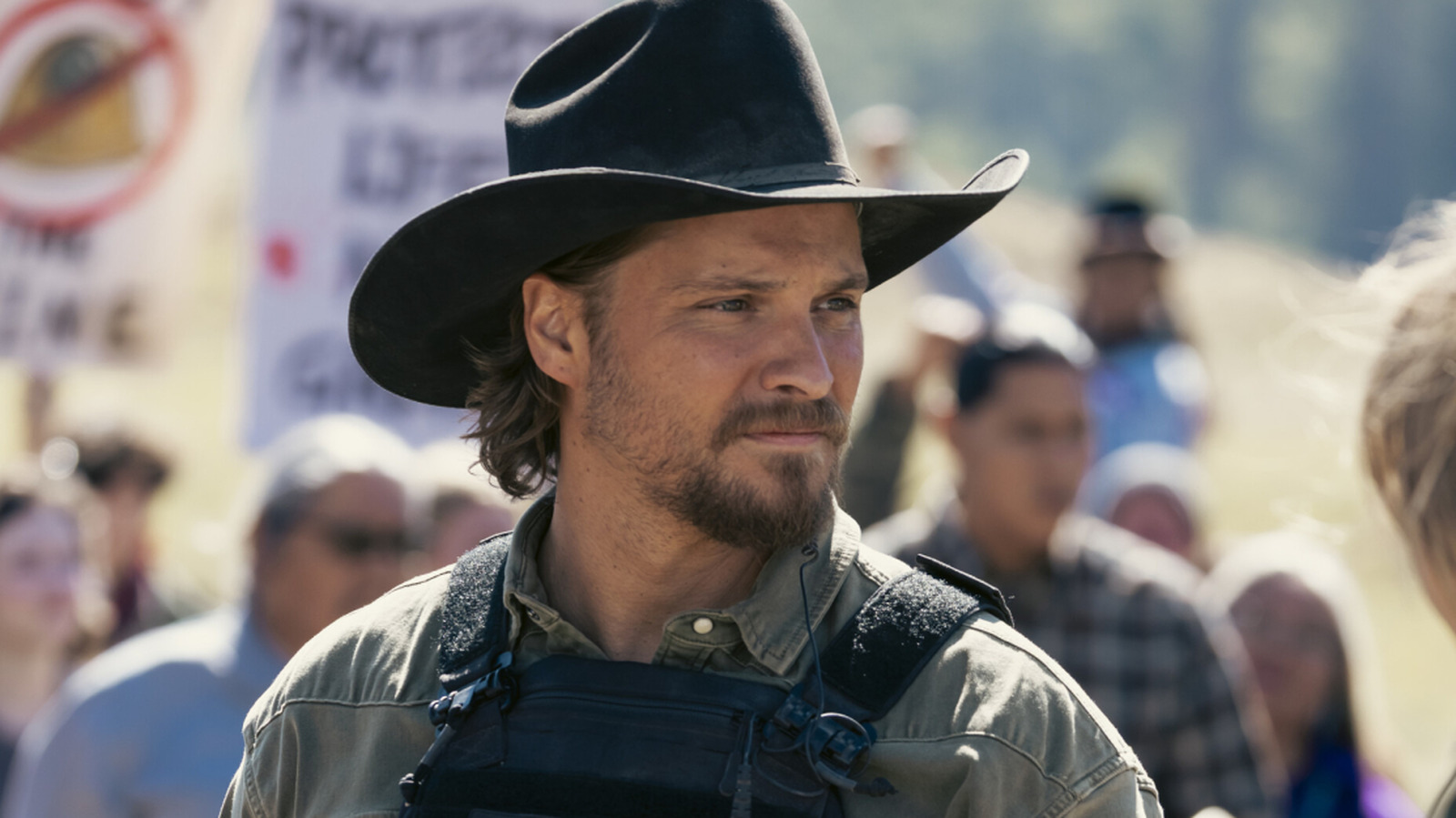
In the gripping second episode of “Marshals,” titled “Zone of Death,” Kayce Dutton, portrayed by Luke Grimes, is forced to confront the shadows of his past. A chilling terror attack propels his team into the infamous Zone of Death, a location that “Yellowstone” fans will instantly recognize. The Dutton family refers to it simply as the train station—a desolate spot straddling the border between Montana and Wyoming, notorious for being the final resting place of their adversaries.
This canyon has long served as a legal loophole for the Duttons, a place where they dispose of their foes without fear of legal repercussions due to its ambiguous jurisdiction. Kayce is well aware of the grim history tied to this place, including the unsettling knowledge that his late father, John Dutton (Kevin Costner), and other family members, have left behind numerous bodies there, among them his adopted brother, Jamie Dutton (Wes Bentley).
The prospect of returning to such a haunting site is unsettling for Kayce, to say the least. His new colleagues, however, seem to be clued in on the dark lore. Andrea Cruz, played by Ash Santos, directly questions him about Jamie’s mysterious disappearance. Kayce fibs, claiming ignorance, but Cruz presses, suggesting she wouldn’t rest if her brother were missing. Luckily, the subject soon shifts, allowing Kayce to demonstrate his loyalty and deliver justice. Yet, the weight of his knowledge about the train station continues to hang heavily over his new life with the U.S. Marshals.
Kayce has always approached his enemies differently than his siblings. While he once considered taking someone to the train station on “Yellowstone,” he ultimately chose mercy. In Season 2’s “Blood the Boy,” Walker (Ryan Bingham) uncovers Jamie’s dark secret: the murder of investigative reporter Sarah Nguyen (Michaela Conlin), who had pried too deeply into the Duttons’ affairs. Jamie enlists Rip Wheeler (Cole Hauser) for help, and they attempt to disguise the crime as a kayaking mishap, but Walker sees through their ruse.
Rip, aiming to eliminate Walker, offers to escort him to the train station under the guise of releasing him from the ranch. Kayce, however, steps in, ensuring Walker’s safety. Their heartfelt exchange about human nature ends with Kayce granting Walker his freedom. Later, Rip discovers Walker performing in a local bar and, rather than ending his life, brings him back to the Dutton Ranch.
The Train Station continues to haunt Kayce’s life

Paramount Network
Kayce isn’t as hands-on as his siblings when it comes to his enemies — he nearly takes one man to the Train Station during his time on “Yellowstone,” but ends up showing his victim mercy instead. In Season 2’s “Blood the Boy,” Walker (Ryan Bingham) quickly figures out that Jamie murdered Sarah Nguyen (Michaela Conlin), an investigative reporter who has learned too much about their dirty dealings from Jamie’s loose lips. Walker does the driving when Jamie calls in Rip Wheeler (Cole Hauser) to help him clean up the crime. Rip and Jamie stage a kayaking accident, but are unable to bamboozle Walker into believing their journey is an innocent one.
Rip decides to get rid of Walker by telling him he can leave the ranch and offers to euphemistically have him taken to the train station. Kayce intervenes when he hears that and takes Walker to safety. The two men have a sincere conversation about human nature and Kayce lets Walker go on his way. Rip later finds Walker playing music in a local bar and brings him back to the Dutton Ranch instead of killing him.
At the moment, Kayce’s secret remains safe. He even ends up becoming a part of the team officially and is given a badge. But the truth continues to lurk out there — along with Jamie’s body.