

Static Media
The best submarine movies are often shaped by experts who help filmmakers get the details right, from naval combat tactics to the engineering of the vessels themselves. That preparation is usually easy to spot. When a film makes the audience feel trapped beneath the waves alongside its crew, there is a good chance the production team did its research.
Of course, technical precision alone cannot rescue a dull movie. Some filmmakers adapting real events become so focused on honoring the historical record that they lose sight of the need to tell a compelling story. This ranking, therefore, focuses on acclaimed submarine films based on true stories — movies that combine authenticity with genuine dramatic impact.
The films are presented from the lowest-rated to the highest-rated according to Letterboxd users. A few take considerable creative liberties and still rank above more strictly factual productions. Every entry sits well above the site’s average score, although some have proved more divisive than others. We’ve considered both their reception and the reasons behind it as we count down the top five true-story submarine movies.
If you’re still looking for more underwater suspense after this countdown, return afterward for our selection of the five greatest submarine movies ever made.
5. K-19: The Widowmaker
National Geographic
Years before making “The Hurt Locker,” Kathryn Bigelow moved away from oversized action spectacles and toward fact-based thrillers with this account of one of the Cold War’s most harrowing episodes. “K-19: The Widowmaker” takes place in 1961, when the Soviet Union’s growing nuclear capability led the United States to position nuclear submarines near Moscow and Leningrad. The USSR answered by sending its first nuclear-powered ballistic-missile submarine into the North Atlantic, close to Greenland and within range of New York and Washington, D.C.
The vessel had been built in a hurry as the Soviets raced to match the Americans. Several workers died during construction, while early tests exposed serious flooding and mechanical problems. Even after the submarine entered service, the danger continued. When a reactor coolant leak threatened a nuclear meltdown, the crew had to repair it while enduring extreme radiation exposure. Cut off from Moscow, they had almost no hope of receiving help in time.
It is an extraordinary true story, but Bigelow’s film only partially captures its power. The movie earned mixed-to-positive reactions on Letterboxd and just managed a fresh score on Rotten Tomatoes, helped by strong reviews from critics including Roger Ebert. The major events remain intact, but the sailors are represented through fictional composite characters, and several harsher realities were softened for a mainstream Hollywood drama.
The film can be an exhausting watch, and even its title points to a manufactured version of history: the submarine was actually nicknamed “Hiroshima,” not “The Widowmaker.” That change hints at the darker story the movie leaves aside. Nevertheless, Harrison Ford and Liam Neeson make an appealing command team, giving the film the feel of a solid, old-fashioned Sunday afternoon thriller.
4. Kursk
EuropaCorp Distribution
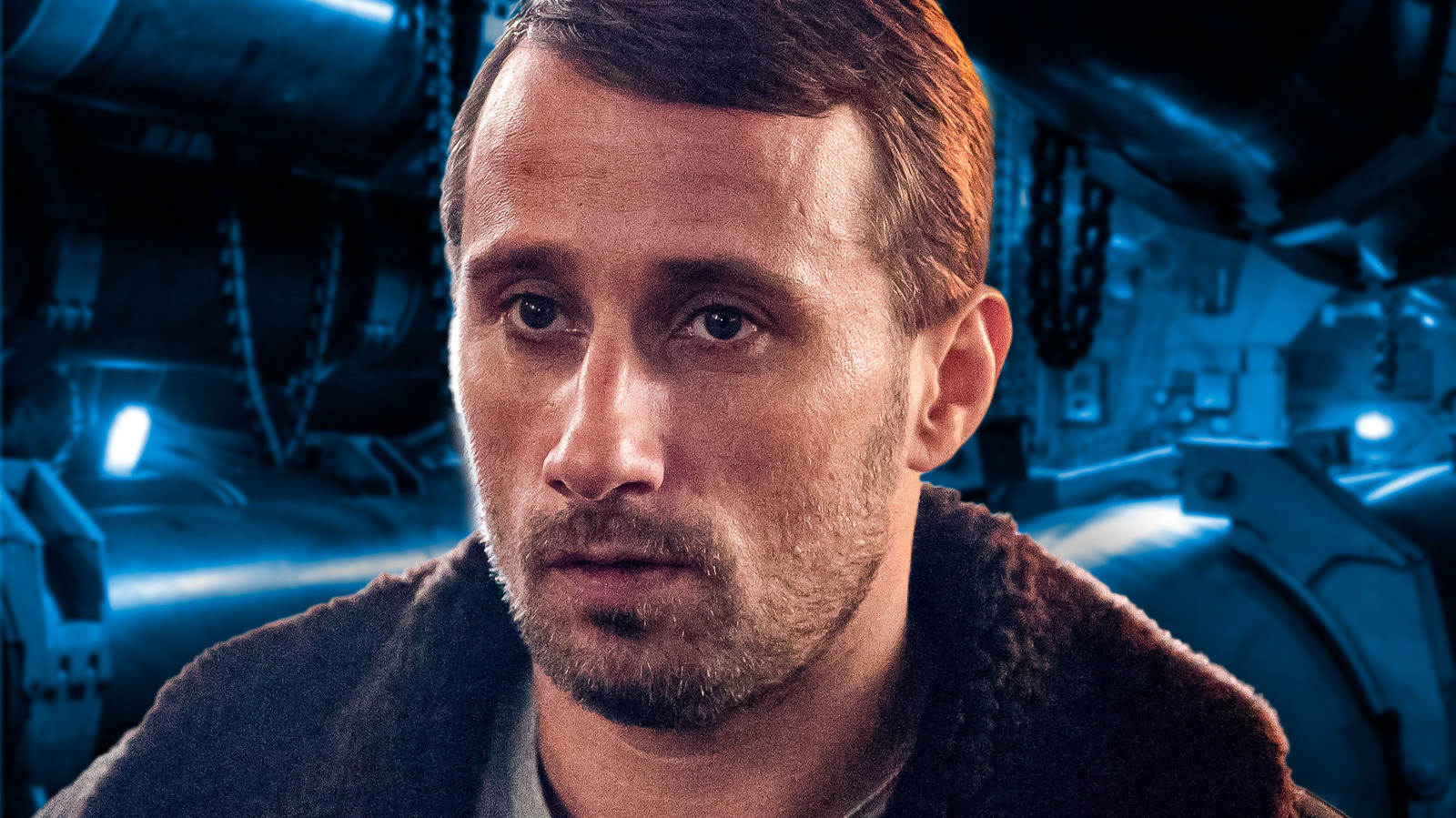
It is not difficult to see why “Kursk” struggled commercially, earning substantially less than its reported $40 million budget. None of the 118 sailors aboard the Russian submarine survived the 2000 disaster, and director Thomas Vinterberg follows the institutional failures surrounding the tragedy. The film also builds its emotional weight through the desperate efforts of the crew’s families and foreign naval teams, all of whom try — unsuccessfully — to secure a rescue.
Although the characters are composites, the disaster itself and the events inside the submarine are portrayed with considerable accuracy. A dummy torpedo began leaking high-test peroxide, causing an initial blast and a fire that eventually set off the remaining torpedoes. The film’s procedural structure emphasizes the agonizing delay between the explosion and the wider realization that the crew needed immediate assistance. Journalist Robert Moore, whose book inspired the movie, and former Royal Navy commodore David Russell both served as advisers to improve its realism.
Much of that approach is effective, but the film leaves out a crucial part of the story: Vladimir Putin. The Russian president was away on holiday for several days as the crisis unfolded, and the government’s response became his first major scandal in office. By removing that central political obstacle, Robert Rodat’s screenplay fails to present the full picture of why rescue efforts stalled. What remains is a tense and deeply uncomfortable portrayal of the disaster inside the submarine, but the incomplete account of events on shore keeps “Kursk” from reaching its full potential — a view reflected in its modest 3.2 Letterboxd average.
3. U-571
Universal
Jonathan Mostow’s “U-571” is by far the least historically reliable film on this list. Its inaccuracies were so pronounced that they sparked a minor diplomatic controversy between Britain and the United States. The movie takes a daring British naval operation during World War II and recasts it as a mission carried out by American sailors.
Former British Prime Minister Tony Blair condemned the film as an “affront” to the veterans who risked their lives to capture a German U-boat and recover its Enigma code machine. In the movie, however, that achievement belongs to a US crew led by Matthew McConaughey and Bill Paxton. Co-writer David Ayer later admitted that he regretted changing the history, explaining that the decision was made to appeal to American audiences and promising he would not distort events in the same way again.
Despite those glaring alterations, Letterboxd ratings suggest that audiences have largely separated the film’s entertainment value from its historical record. “U-571” delivers the essentials of a gripping submarine thriller: detailed naval procedures, nerve-shredding close-quarters action and a steady sense of danger. It launches with an intense set piece and rarely lets the pressure drop. The historical distortion demands a major disclaimer, but once that is acknowledged, the movie remains highly effective Hollywood entertainment.
2. Above Us the Waves
GFD
Based on the nonfiction book by British Royal Navy commander C. E. T. Warren, “Above us the Waves” recounts two successive missions intended to destroy the Tirpitz, a German battleship concealed in the Norwegian fjords. Producer William MacQuitty was passionate about submarines and acquired the adaptation rights before Warren’s book became a bestseller. An experienced diver himself, MacQuitty took an active role in making sure the underwater sequences reflected both the technology and the history of the wartime operations.
It’s an approach that makes it easy to overlook the minor creative changes (such as renaming a torpedo carrier), as screenwriter Robin Estridge and director Ralph Thomas largely follow the source material’s arc, right down to documenting the many missteps and errors made on the mission. The procedural structure is catnip for naval thriller fans, and struck a chord with British audiences who were reliably making homegrown WWII blockbusters into hits (“The Dam Busters” was the UK’s highest grossing movie in 1955).
Unfortunately, it has since become the most obscure title on this list, with only 481 total user ratings on Letterboxd. It deserves to be rediscovered by any fan of the genre. As reviews on the site point out, the slow-burning, process-driven narrative explodes into a tense and claustrophobic second half, set entirely within the confines of the tin can floating in the North Sea. It’s as stripped down as a submarine movie can get but no less thrilling for it, especially considering how faithful it remains to the facts.
1. Das Boot
Colombia Pictures
The number one on this list was never in doubt, with an average rating on Letterboxd an entire star higher than second place. “Das Boot” boasts an impressive 4.3 compared to the 3.3 of “Above Us the Waves.” Director Wolfgang Petersen’s anti-war epic needs little introduction. It’s a gold standard not just for submarine movies, but those adapted from real events, taking journalist Lothar-Günther Buchheim’s semi-autobiographical novel as the starting point for a more authoritative account of life below the surface.
If you do need further assurance of why this is considered the best in the genre, look at Petersen’s painstaking attention to period detail in building replicas of the commissioned submarines, with the assistance of real crew members to ensure accuracy when it comes to capturing life on board these claustrophobic cans. It was the most expensive German movie in history at that time, and every last deutsche mark went to good use.
Of course, “Das Boot” resonates far beyond the dedicated audience of submarine obsessives, and has been routinely commended for generations for its grueling depiction of life at war, with servicemen low on supplies and morale before the biggest existential threats to their lives make themselves known. This is the reason many still proclaim it to be the most realistic submarine movie ever made. Even outside of wartime, veterans can recognize the truth in its depiction of the monotonous routine while stuck inside, even without the tension ratcheted up to such uncomfortable levels. It’s one of the most realistic accounts of the lives of servicemen during WWII, not just one of the truest to reality submarine films.


