
Warner Bros
The Western has always been more than a movie genre. At its best, it carries the feel of folklore — stories retold across generations, reshaped like legends passed around a campfire under a wide-open sky. That tradition has made Westerns especially ripe for remakes. From “The Magnificent Seven” and “3:10 to Yuma” to “True Grit” and beyond, Hollywood has repeatedly found new ways to saddle up familiar tales for fresh audiences. In the film business, a durable Western title is hard to leave buried, particularly when studios see the commercial value in reviving a recognizable name.
Because Western remakes have been part of Hollywood’s playbook for decades, there is little reason to believe the trend will slow down. Naturally, that invites speculation about which classic Westerns could benefit from a contemporary reimagining. Five films, in particular, stand out as strong candidates — not because the originals are failures, but because their stories, themes or production limitations leave room for a compelling modern interpretation. Some remain sharply relevant to today’s cultural climate, while others could gain new power from current filmmaking tools and perspectives.
Whatever the motivation, these five Westerns have the kind of staying power that could translate into memorable remakes. After all, the history of the genre already proves that revisiting the frontier can produce something far more meaningful than a simple retread.
The Wild Bunch
Warner Bros. Pictures
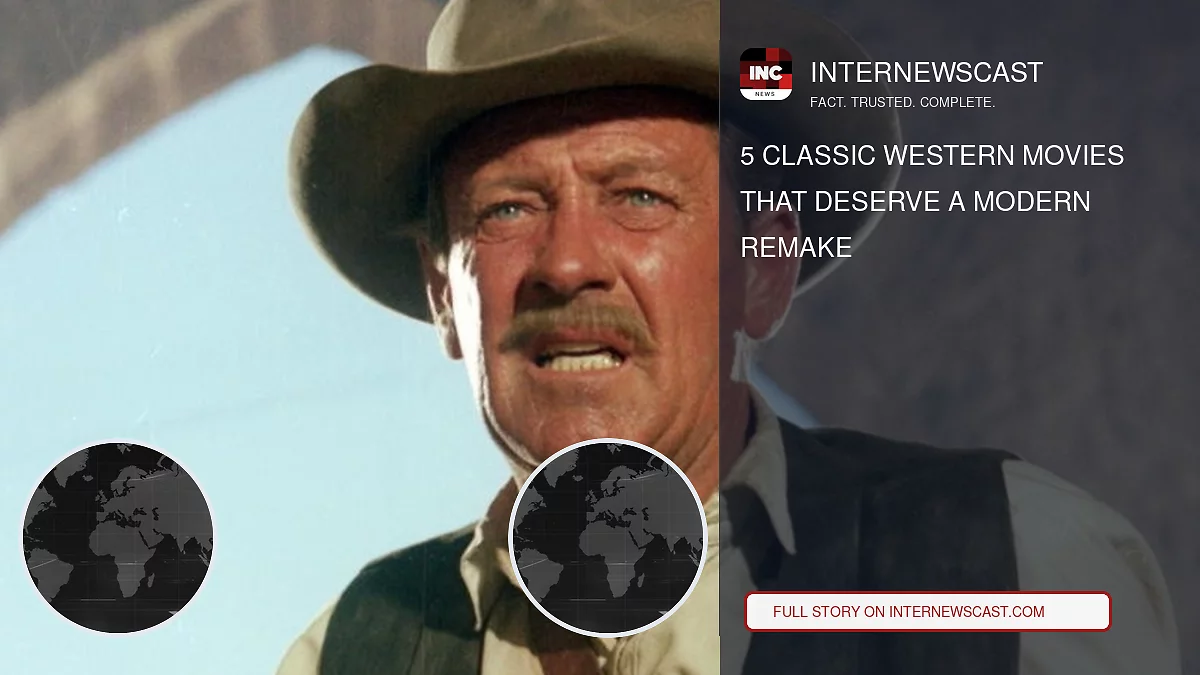
Sam Peckinpah’s “The Wild Bunch” is one of the defining Westerns of its era, a brutal, genre-shaking film that helped rewrite what audiences expected from screen violence and moral ambiguity. Its reputation remains formidable, including an infamous sequence that has long fueled debate over just how far the film was willing to go. That legacy has not stopped Warner Bros. Pictures from repeatedly trying to mount a remake. At one point, Mel Gibson was attached to direct, a pairing that almost certainly would have leaned into the material’s blood-soaked potential. Another version reportedly had Will Smith involved in a contemporary update that would have transported the story into the modern day.
Warner Bros.’ continued interest suggests that a new version of “The Wild Bunch” may be only a matter of time. And, handled correctly, that idea is not inherently misguided. The original is a landmark, but it is not without elements that have aged poorly, including a deeply uncomfortable scene involving two drunken men and three women. A remake could confront those flaws rather than simply repeat them. More importantly, placing the material in the hands of a bold modern filmmaker such as Karyn Kusama or Vera Drew could give a 2020s “Wild Bunch” the same dangerous, taboo-breaking energy that made Peckinpah’s film impossible to ignore.
This is not a project that should be handed to a generic action director. A successful remake would need someone with a willingness to challenge audiences, unsettle the comfortable and create images that feel genuinely transgressive. Filmmakers like Kusama and Drew have demonstrated that kind of instinct, making them the sort of voices who could turn a new “The Wild Bunch” into more than an exercise in brand recognition.
Bad Day at Black Rock
MGM
“Bad Day at Black Rock” remains one of the great Western-adjacent thrillers of the 1950s, despite being set firmly in the 20th century — specifically in 1945. Directed with remarkable control by John Sturges, the film follows John J. Macreedy, played by Spencer Tracy, as he arrives in the isolated California desert town of Black Rock. His search centers on the disappearance of Komoko, a Japanese-American man whose fate exposes a horrific hate crime committed by local residents. With a cast that includes Robert Ryan, Walter Brennan and Ernest Borgnine, the film turns a small-town mystery into a devastating portrait of prejudice and collective guilt.
There is no artistic emergency demanding a remake of “Bad Day at Black Rock.” The original still works beautifully. What makes the film feel newly viable, however, is the disturbing endurance of its subject matter. Its focus on racist violence, communities protecting bigots, the vilification of those who expose injustice and hostility toward immigrants remains painfully current. A modern version could easily reframe the story around a character played by Zoey Luna or Trace Lysette, arriving in a small town to investigate a hate crime covered up by ICE officers. That approach would preserve the original’s moral urgency while making its anger unmistakably contemporary.
The same way 1955’s “Bad Day at Black Rock” impactfully spoke to then-modern American atrocities (including references to the internment of Japanese-American citizens) could be repeated in a new work confronting 2020s inequalities. To boot, the ensemble cast of “Black Rock” could give killer opportunities for modern character actors (like Dale Dickey or Keith David) to unforgettably flex their stuff.
Ride Lonesome
Columbia Pictures
Director Budd Boetticher was a go-to Western filmmaker in the 20th century, and his prolific output in the genre ensured he was attached to some widely lauded Westerns, including “Seven Men from Now” and “Comanche Station.” Another notable Boetticher title he helmed was the 1959 film “Ride Lonesome.” Though not quite as good as the 10 best movies of the 1950s, “Ride Lonesome” has endured as a tremendously praised movie. This enterprise followed bounty hunter Ben Brigade (Randolph Scott) bringing prisoner Billy John (James Best) to California. This mission ends up involving a whole bunch of betrayals and secret agendas, including Brigade’s plans to arrest John’s brother, Frank (Lee Van Cleef).
Pairing Boetticher with Lee Van Cleef, the star of one of the best Western war movies of all time, meant “Ride Lonesome” was a collaboration between all kinds of Western cinema veterans. However, that specific identity doesn’t outright eliminate the possibility of “Ride Lonesome” being ripe for a remake. On the contrary, the film’s brevity (as evidenced by its 73-minute runtime) could provide a perfect skeleton for a more expansive remake to build off of. Meanwhile, the colorful personalities littered across the ensemble cast could offer up chances for a bevy of memorable turns from great modern performers.
Functioning as a vessel for colorful acting alone could justify giving “Ride Lonesome” the remake treatment. A talented creative team building upon the feature’s slimmed-down form to create something idiosyncratic further amplifies this remake’s potential.
The Last Outlaw
RKO Radio Pictures
People love movies about redemption. Characters going from cowardly or ambivalent to heroic have been the cornerstone of countless cinematic classics, from “Casablanca” to “Good Will Hunting” to “Schindler’s List,” among many others. “The Last Outlaw” (1936) was an early example of redemption fueling cinematic goodness, as the film followed incarcerated bandit Dean Payton (Harry Carey) getting released from prison, who discovers a wholly new world waiting for him outside his jail cell. Struggling to find his place in this fresh status quo, Payton decides to help bring a new criminal mastermind, Al Goss (Tom Tyler), to justice. Payton’s committed many unspeakable sins, but maybe now he can bring justice into the world.
“The Last Outlaw” concerns many plot elements (namely, morally complicated characters finding redemption) that never go out of style. Themes that profoundly resonated with people in 1936 could still be impactful to modern audiences via a 2020s remake. Even better, giving “The Last Outlaw” a cinematic update wouldn’t be as sacrilegious as giving “Citizen Kane” or “The Godfather” a remake. After all, this 1936 “Last Outlaw” was itself a remake of a 1919 silent short of the same name. There’s already an ancient precedent for “The Last Outlaw” getting updated for a new era of cinematic storytelling.
Plus, “The Last Outlaw” isn’t quite as famous as other 1930s Westerns, like “Stagecoach.” Without a massive cultural reputation to evade, it’d be much easier to get modern audiences on board with whatever creative vision this new “Last Outlaw” cooks up.
The Winning of Barbara Worth
United Artists
Many of the 25 most famous John Wayne movies of all time are Westerns, and those titles have come to define the entire genre. Wayne, a star who ascended to fame once “talkies” were deeply ingrained in the cinematic scene, is the face of the movie Western. For many, it’s hard to even imagine what Westerns looked like before he and sound pictures came along. However, the Western had a rich history in the silent cinema era that included the groundbreaking motion picture “The Great Train Robbery.” This genre has always had a place in the American cinema domain, dating back to the earliest days of dialogue-free storytelling.
One of these titles is the 1926 feature “The Winning of Barbara Worth,” which starred Gary Cooper (in a breakthrough role for the actor), Ronald Colman, and Vilma Bánky, working under director Henry King. The plot concerned a love triangle between Colman’s and Cooper’s characters competing for the heart of Bánky’s character. Today, “The Winning of Barbara Worth” has garnered a warm reputation and a notable place in film history for propelling Gary Cooper to further work. Given that the film was created before sound and color were common in cinema, though, there’d be plenty of exciting new storytelling avenues for a “Barbara Worth” remake to explore.
Doing a new version of this title, leaning on crackling dialogue and sumptuous colors, would immediately imbue distinctiveness into a new take on a vintage Western.


