

Apple TV
The streaming landscape can be unpredictable. Some movies arrive with major expectations and fail to break through, while others quietly build an audience no one saw coming. Then there are titles like the 2025 thriller “Echo Valley,” which initially slipped past much of the conversation before suddenly finding new momentum a year later. Its resurgence may not be entirely mysterious: Sydney Sweeney, one of its stars, has become a constant presence in pop culture, whether through viral moments, high-profile ads, or the latest film and television projects keeping her name in the headlines.
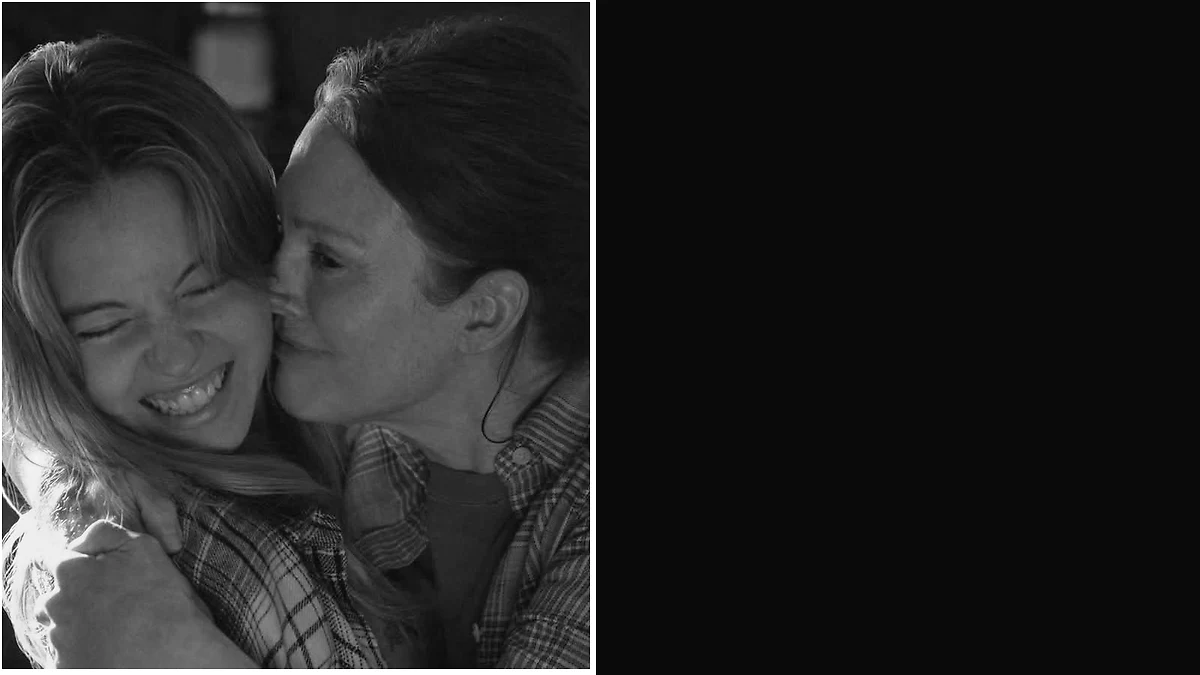
In “Echo Valley,” Sweeney plays Claire, a young woman battling addiction and personal turmoil. Those struggles have helped create a painful distance between Claire and her mother, Kate, played by Julianne Moore. But when Claire arrives at Kate’s home in a panic, covered in her boyfriend’s blood, Kate’s protective instincts take over. From that moment on, she is prepared to do whatever it takes to shield her daughter.
For viewers who have recently discovered “Echo Valley” and are looking for more films with a similar emotional charge, there are plenty of compelling options. Some examine the difficult bonds between mothers and their grown children, while others follow parents driven to extreme choices in the name of protecting their families, regardless of the legal or moral consequences. Each of the following films would pair well with “Echo Valley” for a tense and thought-provoking double feature.
The Lost Daughter
Netflix
Maggie Gyllenhaal has not appeared in an acting role in six years, focusing instead on filmmaking throughout the 2020s. Before moving into Gothic horror with 2026’s “The Bride!,” she made her screenwriting and directing debut with the 2021 psychological drama “The Lost Daughter.” It was an impressive first feature by any measure, earning a 94% Certified Fresh score on Rotten Tomatoes and an Oscar nomination for best adapted screenplay.
The film follows Leda, played by Olivia Colman, as she vacations alone at a seaside resort. There, she becomes fixated on a young mother, portrayed by Dakota Johnson, and her daughter, played by Athena Martin. As Leda tries to draw closer to the family — and for reasons that gradually become more unsettling — she secretly takes the child’s doll. What begins as an uneasy character study expands into a layered psychological drama, eventually forcing Leda to confront memories of her own difficult years as a young mother.
Much like “Echo Valley,” “The Lost Daughter” offers an unflinching look at motherhood, particularly the ways it can be emotionally complicated, isolating and painful for some women. It also explores damaged parent-child relationships in need of repair, though it approaches that dynamic from a very different and often more introspective angle.
The Deep End
Fox Searchlight Pictures
The key similarity between “Echo Valley” and “The Deep End” — a 2001 noir thriller starring Tilda Swinton — becomes evident pretty quickly. Swinton plays Margaret, a mother whose son (Jonathan Tucker) has seemingly murdered his lover (Josh Lucas). And just like the mother in “Echo Valley,” Margaret defaults to protecting her offspring from the consequences of the crime.
But the similarities don’t end there, as we come to find out that it wasn’t a simple case of murder — and Margaret discovers a lot more about her son and his life than she bargained for. Largely overlooked by audiences at the time and all but forgotten today, “The Deep End” deserves hidden gem status. Swinton is great as usual, but the rest of the cast also turn in strong performances, including some of Lucas’s best work. Also worth noting is the movie’s incredible look and visual touches, specifically called out by many critics and nominated for multiple cinematography awards.
The thriller genre is a crowded one indeed, and as with most genres, it’s often only the near-perfect thrillers that are remembered over time. But the great thing about looking for film recommendations is that it frequently leads you to lesser-known gems, and we hope that “The Deep End” gets the attention it deserves.
John Q.
New Line Cinema
Thus far, we’ve recommended slow-burn, cerebral types of thrillers. But there is definitely action and violence on display in “Echo Valley,” and you might be looking for another movie that has more of that. Enter “John Q.”, the 2002 action thriller starring Denzel Washington as a man who has been victimized by the United States’ broken healthcare system and resorts to desperate measures to get things to work in his favor.
More specifically, John Quincy Archibald (Washington) has a son who needs a life-saving heart transplant. The procedure costs way more than Archibald and his wife (Kimberly Elise) can afford — especially since they are already struggling to stay on top of their other bills as it is. John’s insurance won’t cover the surgery, due to no fault of his own, and he’s out of options. So he decides to take the hospital’s emergency room and its staff hostage until his son’s name is added to the transplant list and the surgery scheduled.
LIke “Echo Valley,” “John Q.” is another story about a parent who is willing to do whatever he can for his child, up to and including breaking the law and putting others at risk in the process. In both cases, the parent makes mistakes, and there can be some debate as to whether everything they do in the name of helping their child is acceptable. But there’s no denying that Margaret and John both have their hearts in the right place.
Mother (2009)
CJ Entertainment
A few years before filmmaker Bong Joon Ho broke through to Western audiences with the post-apocalyptic actioner “Snowpiercer,” he released what is still one of his best movies: “Mother,” the 2009 psychological thriller about a mom (Kim Hye-ja) who has to clear the name of her intellectually disabled adult son (Won Bin), who has been accused of murdering a girl.
Never given a name and credited only as Mother, the woman sets out to find out who actually killed the girl by enlisting the help of one of her son’s friends (Jin Goo). She challenges the police’s slapdash investigation and pushes against a legal system that isn’t always fair to those with disabilities, all while still having to provide her son with the nearly full-time care and supervision he requires. To say much more than that would be to give away what makes “Mother” so compelling to watch, as the movie goes in some very unexpected — and truly shocking — directions.
Though it is very much a psychological drama at its core, like most Bong movies, “Mother” is also frequently punctuated by moments of horror as well as dark comedy. It is certainly the only movie on this list that will make you laugh, so it’s a good one to consider if you are looking for a bit of catharsis on that front.
Prisoners
Warner Bros. Pictures
Up to this point, the children in these movies have been in only two very specific forms of peril. For “Echo Valley,” “The Deep End,” and “Mother,” that trouble was of the legal variety. In “John Q.,” it was a medical emergency. But in 2013’s “Prisoners,” two young girls are abducted, presumably by someone who is inflicting unimaginable horrors upon them.
When Keller (Hugh Jackman), the father of one of the girls, finds out that police have already released Alex (Paul Dano), the suspect they arrested in the kidnapping, Keller is convinced they let the perpetrator go. In his defense, he has pretty good reason to believe this — Alex whispered something incriminating to him about the girls during a confrontation outside the police station.
Since the detective on the case, Loki (Jake Gyllenhaal), didn’t hear what Alex said, he refuses to act on it. So Keller kidnaps Alex and holds him prisoner in an abandoned building, bringing in the father of the other kidnapped girl (Terrence Howard) to help him get Alex to confess and reveal where he’s hidden the girls.
“Prisoners” is utterly gripping, from its disturbing beginning to its sucker-punch ending. Any parent watching it can easily see themselves going through the lengths Keller goes through to find his daughter, even as he breaks numerous laws and treads in very morally gray territory. But that’s what makes movies like “Prisoners” and “Echo Valley” so effective — they get us to root for flawed protagonists who are committing questionable acts, because it’s for the right reasons.


