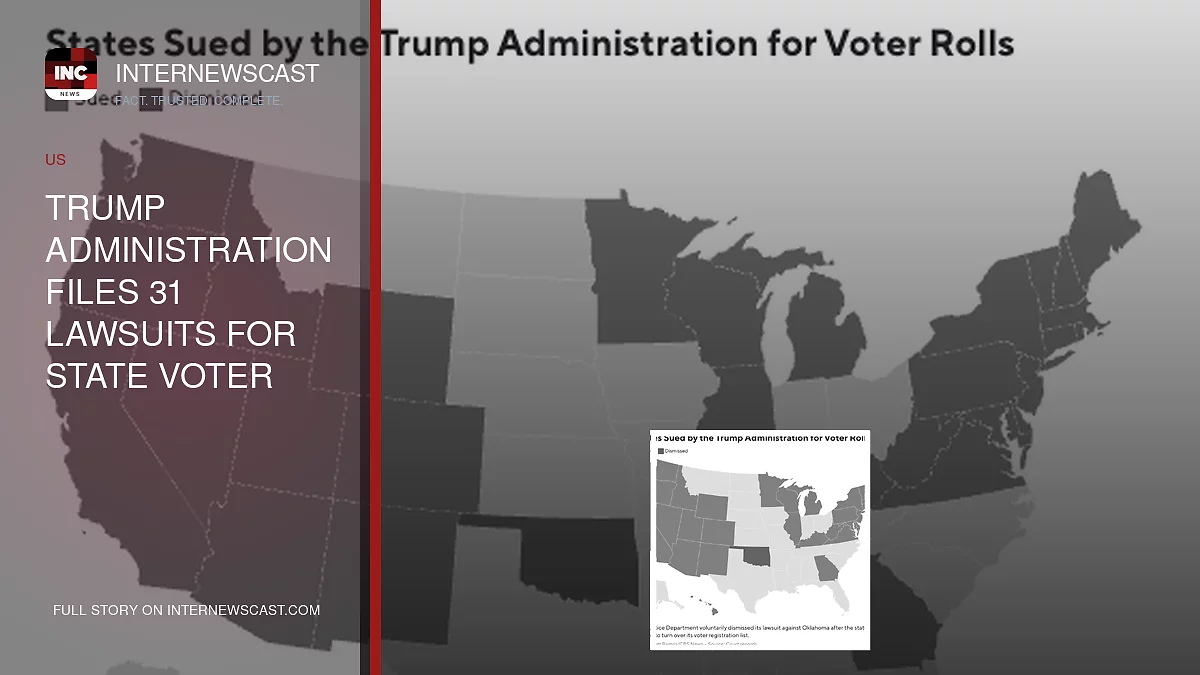

Washington — President Trump’s administration has launched a broad push across nearly every state to secure full voter registration rolls, seeking files that contain sensitive personal details about registered voters.
The Justice Department says the records are necessary to determine whether states are following two major federal election laws: the Help America Vote Act and the National Voter Registration Act. Both laws are designed to ensure states maintain accurate and up-to-date voter rolls.
Last year, the administration sent letters to most states requesting unredacted electronic copies of statewide voter registration lists. Those databases can include voters’ birth dates, home addresses, partial Social Security numbers and driver’s license numbers.
Several states have provided publicly available versions of their voter rolls but refused to release complete, unredacted files. The Justice Department has responded by suing 30 states and the District of Columbia, seeking court orders that would compel them to hand over the voter data.
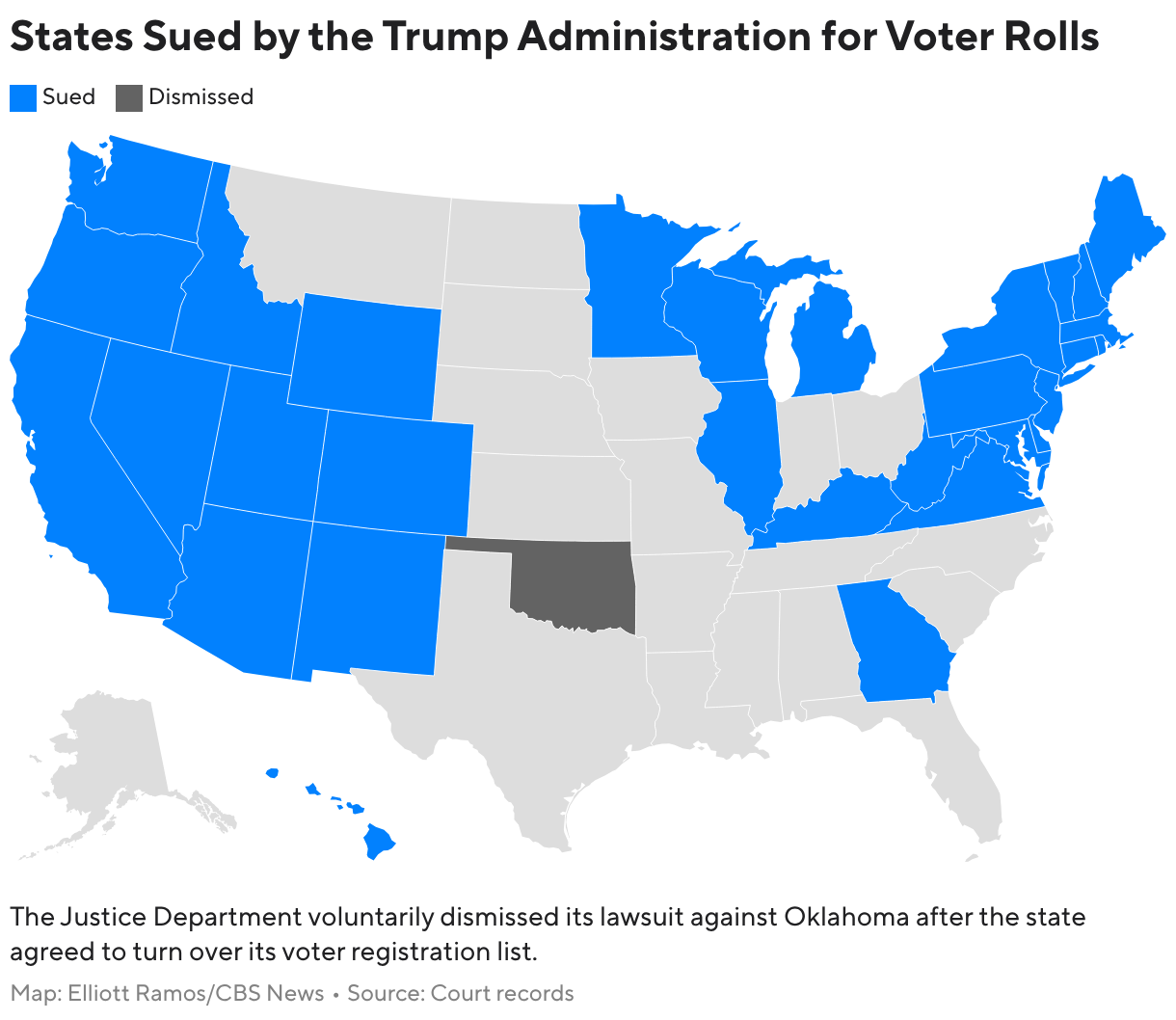
So far, the Trump administration has lost 20 of those cases, with federal judges rejecting the Justice Department’s attempts to obtain unredacted voter rolls.
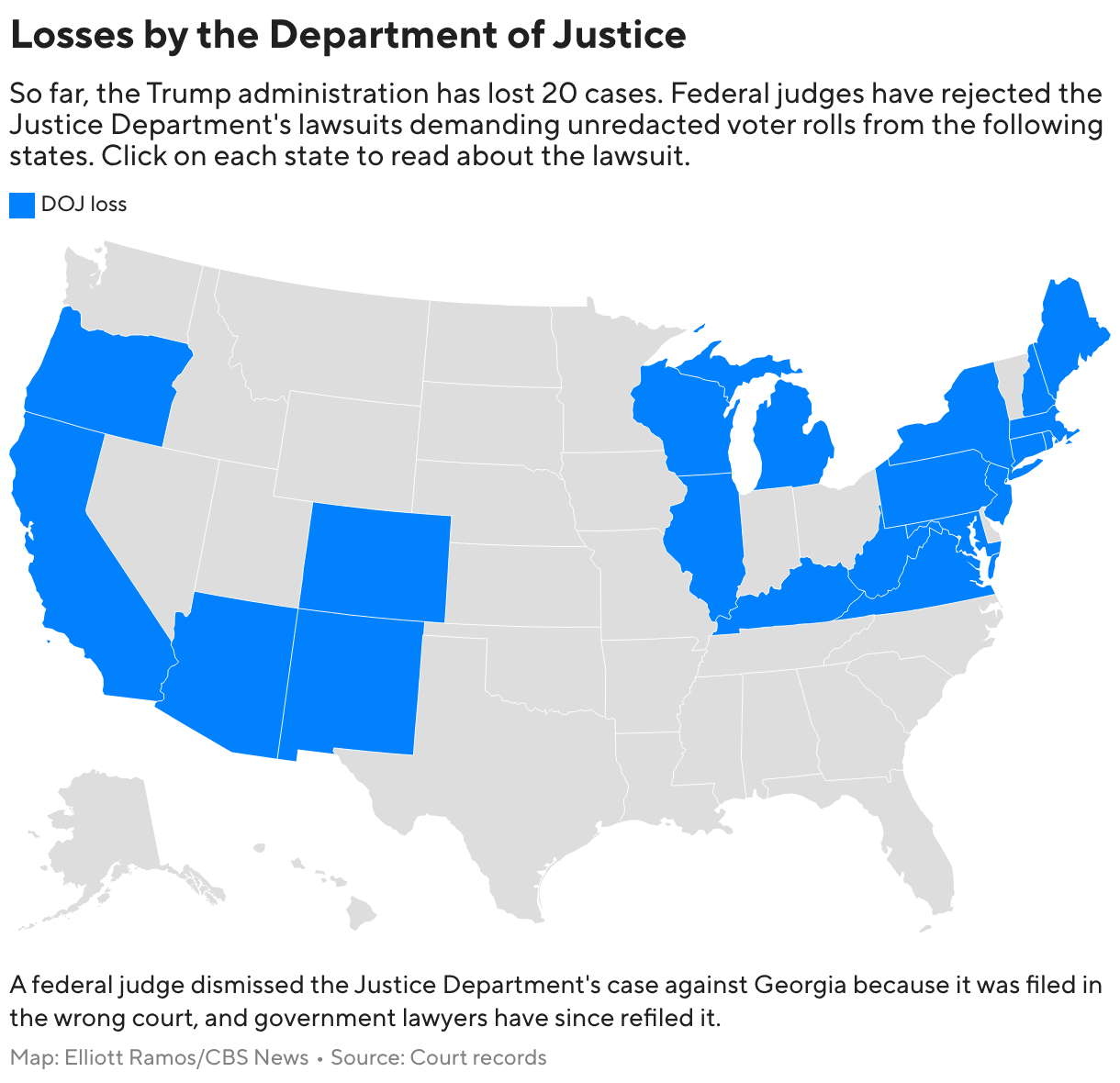
A federal judge threw out the Justice Department’s first case against Georgia because it was brought in the wrong court, though government attorneys have since refiled the lawsuit. The Justice Department voluntarily dismissed its case against Oklahoma after the state agreed to provide its voter registration list.
The remaining lawsuits are still pending in Delaware, Georgia, Hawaii, Idaho, Minnesota, Nevada, Utah, Vermont, Washington and Washington, D.C.
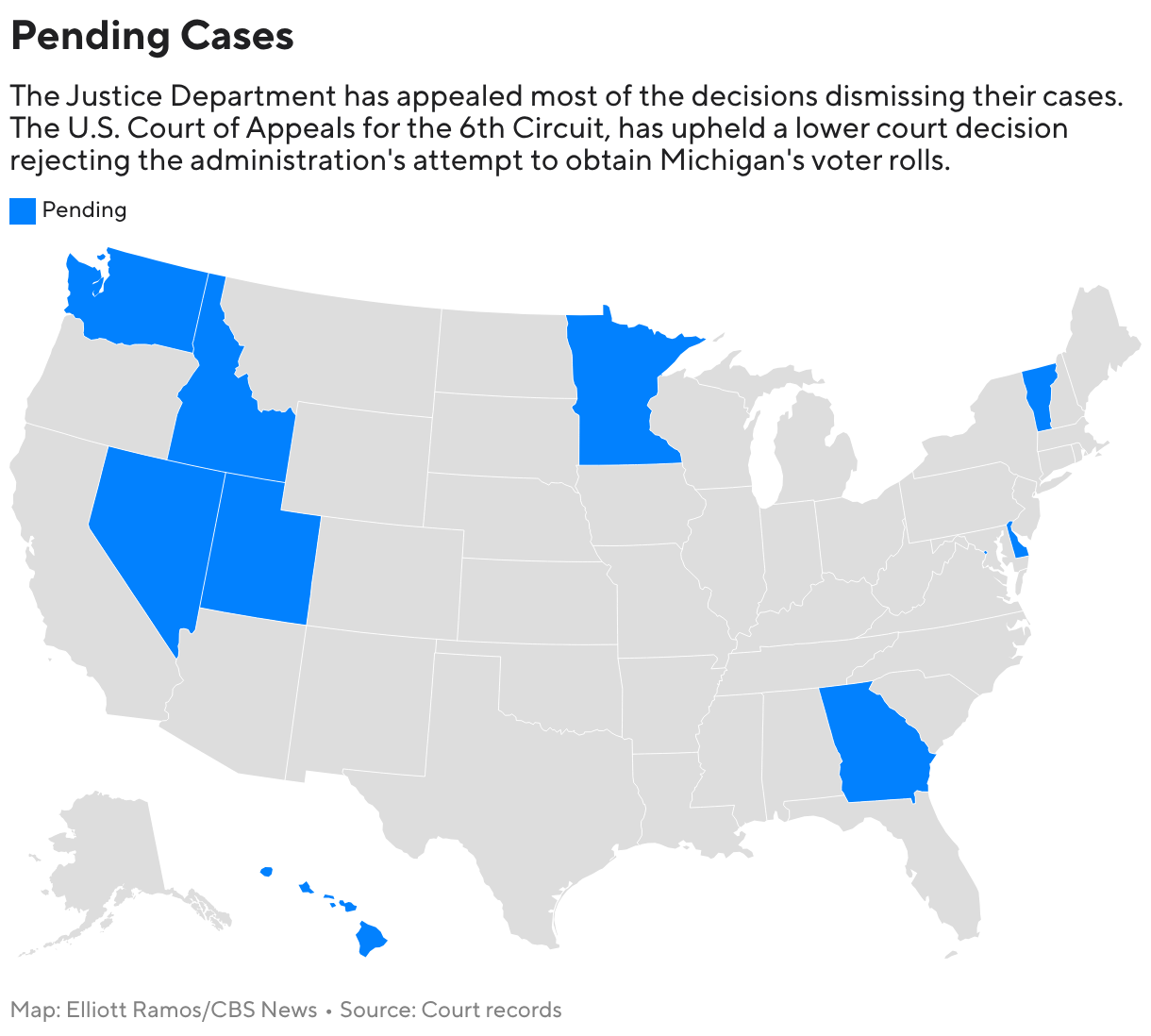
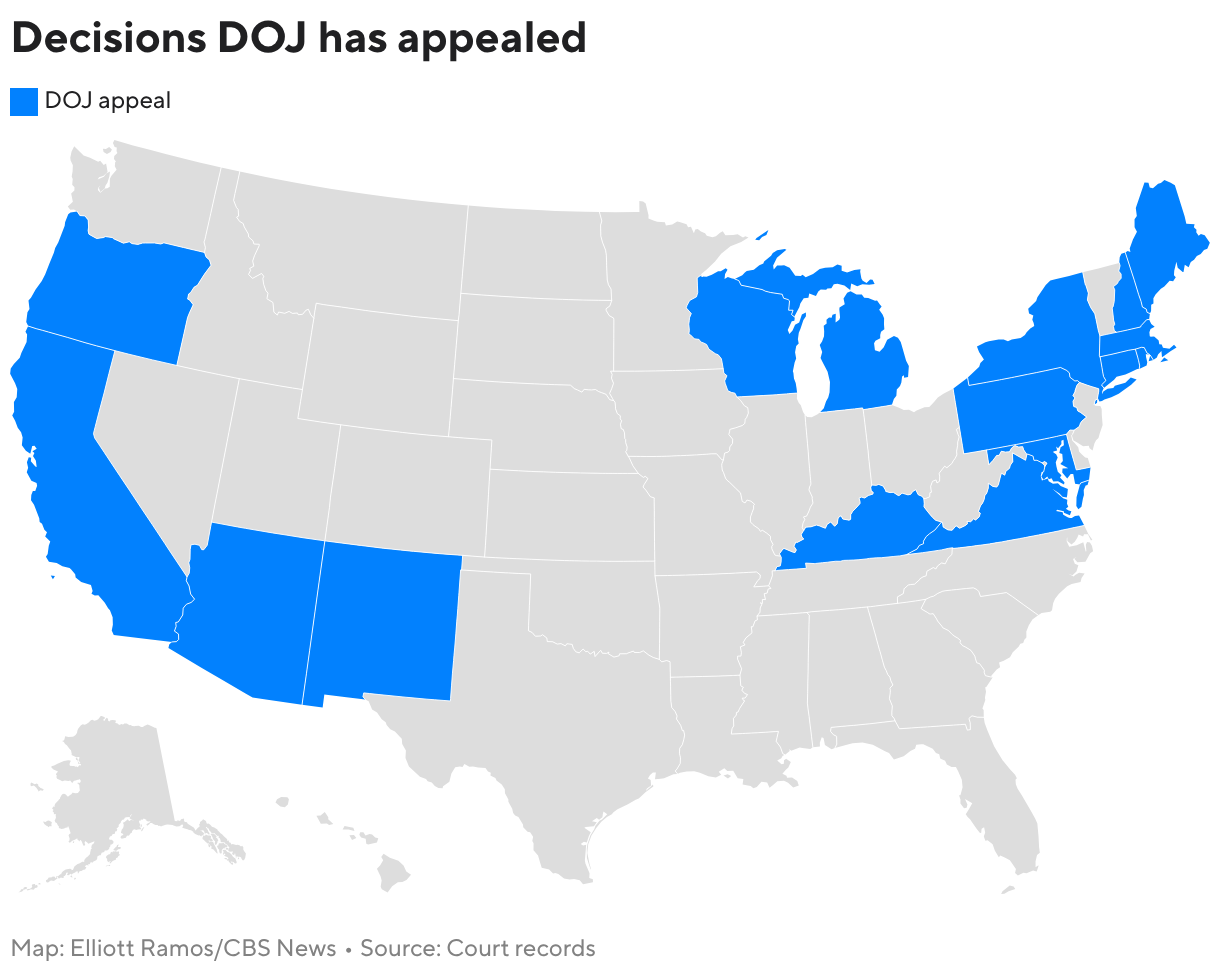
The Justice Department has appealed most of the rulings dismissing its cases. To date, one appeals court — the U.S. Court of Appeals for the 6th Circuit — has upheld a lower court’s decision blocking the administration’s effort to obtain Michigan’s voter rolls.
The Trump administration’s bids to gain access to states’ unredacted voter registration lists are part of the president’s efforts to exert more power over federal elections. Mr. Trump has signed two executive orders aimed at U.S. elections, though both have been blocked by the courts.
The first executive order, signed last year, would require documentary proof of citizenship in order to register to vote. The second, announced in March, tightens the rules for mail-in voting and requires the Department of Homeland Security and U.S. Postal Service to compile and maintain lists of U.S. citizens who are eligible to vote.
Mr. Trump is also pushing Congress to enact a package of voting regulations called the SAVE America Act, which would significantly curtail mail-in voting and impose new voter ID requirements.
The president has long taken aim at mail-in voting and claimed it leads to widespread fraud, though he has not put forth evidence in support of those claims. He has also claimed that Democratic states allow noncitizens to vote in U.S. elections. It is a federal crime for noncitizens to vote.


