

Even the most celebrated filmmakers eventually encounter a box-office setback. A director’s reputation may attract an audience, but star power and name recognition cannot guarantee that a film will connect, particularly when weak marketing or polarizing reviews shape public opinion before opening night. Even Christopher Nolan, whose career has been remarkably consistent, will likely face that inevitable sting at some point.
Here are five notable science fiction films that stumbled commercially despite coming from Hollywood legends. Some earned critical admiration without finding a wide audience, while others were so unconventional or ahead of their time that moviegoers did not know what to make of them. Several have since gained passionate supporters, and others seem destined for a major reevaluation. Whether you admire or dislike them, each movie reflects a vision that few filmmakers could have delivered.
The films are arranged chronologically, beginning with the earliest release. Once you’ve reached the end, explore more stories about movie box-office bombs, including the biggest failures in cinema history and our predictions for the films most likely to flop in 2027.
Strange Days
Kathryn Bigelow became the first woman to win the Best Director Oscar in 2010 for “The Hurt Locker,” although she was only the fourth woman ever nominated in the category. The victory cemented her reputation as one of Hollywood’s leading political filmmakers, a considerable shift from the pulpy genre work of “Near Dark” and “Point Break.” That transition began with 1995’s “Strange Days.”
The film unfolds in a dystopian Los Angeles during an alternate 1999, just before the millennium. Ralph Fiennes plays Lenny Nero, a dealer in an illegal technology that allows users to experience other people’s memories and emotions. His world changes when he receives a recording showing the brutal assault and murder of a sex worker. Alongside Mace, a determined bodyguard played by Angela Bassett, Lenny investigates a conspiracy unfolding amid the city’s escalating anti-police riots.
Now widely regarded as one of Bigelow’s finest films and a standout science fiction movie of the 1990s, “Strange Days” initially received mixed-to-positive reviews, including a four-star endorsement from Roger Ebert. Audiences stayed away, however, and the film earned only $7 million worldwide against its $42 million budget. Co-written by Bigelow’s former husband, James Cameron, the movie offered a pointed examination of police brutality and mass surveillance in the aftermath of the Rodney King beating. Its retro-futurist political commentary has only become more resonant with time.
Solaris (2002)
Steven Soderbergh entered the early 2000s at the height of his powers. In 2001, he earned two Best Director nominations for “Erin Brockovich” and “Traffic,” winning for the latter, before closing out the year with the hugely popular “Ocean’s Eleven.” With James Cameron producing and George Clooney leading a major science fiction adaptation, his 2002 film “Solaris” seemed positioned for success. Instead, it opened to an “F” CinemaScore and took in only $30 million worldwide against a $47 million budget.
The marketing helped create that mismatch. The trailer and poster suggested a sweeping space romance starring Clooney, while Soderbergh had made a quiet, philosophical adaptation of Stanislaw Lem’s challenging novel. Andrei Tarkovsky’s celebrated 1972 version leaned more heavily into psychological unease; Soderbergh’s film softens some of that paranoia in favor of a contemplative meditation on identity, loss, and existence.
Clooney portrays Dr. Chris Kelvin, a psychologist sent to a space station orbiting Solaris after its crew refuses to return to Earth. Several astronauts are dead, and those still alive are unwilling to explain what happened. Kelvin soon discovers the reason: His deceased wife, played by Natascha McElhone, has mysteriously reappeared, one of several uncanny manifestations generated by the planet.
Viewers expecting a conventional romance were understandably caught off guard by Soderbergh’s somber study of grief, memory, and the dangerous desire to recover what has been lost. Though the film was widely rejected on release, its restrained atmosphere and emotional depth have become easier to appreciate over time. Some viewers now consider this “Solaris” an even more compelling work than its revered predecessor.
Sunshine
Danny Boyle’s “Slumdog Millionaire” later revived his career after a pair of commercial disappointments. His family fantasy “Millions” made little impact at home or abroad, and “Sunshine,” which reunited Boyle with “28 Days Later” writer Alex Garland, performed only modestly as well. The ambitious space thriller ultimately failed to recover its $40 million production budget.
The story takes place aboard the cramped Icarus II, a spacecraft carrying a mission to rescue a dying sun and prevent Earth from freezing. Physicist Robert Capa, played by Cillian Murphy, leads the crew as they transport a bomb designed to reignite the star. Their mission is derailed when they intercept a distress signal from the long-lost Icarus I. Changing course damages their ship and intensifies the tension, suspicion, and fear among the crew.
Critics generally embraced “Sunshine” as an atmospheric blend of cerebral science fiction and space horror, often comparing it to “Alien” and “Event Horizon.” Its weak British box office performance carried an especially ironic explanation: The film opened during an unusually hot spell, a rare event during the U.K.’s spring months. Some international viewers objected to the film’s shift into slasher territory during the final act, with admirer Quentin Tarantino among those who felt the movie lost momentum.
Cloud Atlas
After “Speed Racer” stalled at the box office, the Wachowskis joined forces with German filmmaker Tom Tykwer for a 2012 adaptation of David Mitchell’s sprawling 2004 novel “Cloud Atlas.” The book moves across centuries and continents and was long considered nearly impossible to film. Yet the filmmakers had already turned the seemingly unfilmable “The Matrix” into a phenomenon, while an ensemble led by Tom Hanks and Halle Berry gave the project plenty of star appeal.
Made independently on a reported $147 million budget, “Cloud Atlas” was, at the time, the most expensive independent movie ever produced. Rather than compromise, its creators committed to one of the most audacious ideas of their careers. Even the first trailer ran for an astonishing six minutes, signaling that this would be anything but a conventional studio release.
A concise explanation of “Cloud Atlas” is almost impossible. Its interwoven narratives travel from the era of slavery to a post-apocalyptic Hawaii in the 24th century, while the principal cast members portray multiple characters across different time periods, genders, and ethnicities. The film’s belief that all lives are connected struck some viewers as inspiring and others as overly earnest, leaving very little room for indifference.
The movie appeared on both the best and worst films of 2012 lists. Although its $130 million global gross did not cover the enormous budget, reaching that figure with such a strange, uncompromising project was an achievement in itself. It never became another “Matrix,” but many fans have come to argue that “Cloud Atlas” is the Wachowskis’ more ambitious—and perhaps superior—film.
Megalopolis
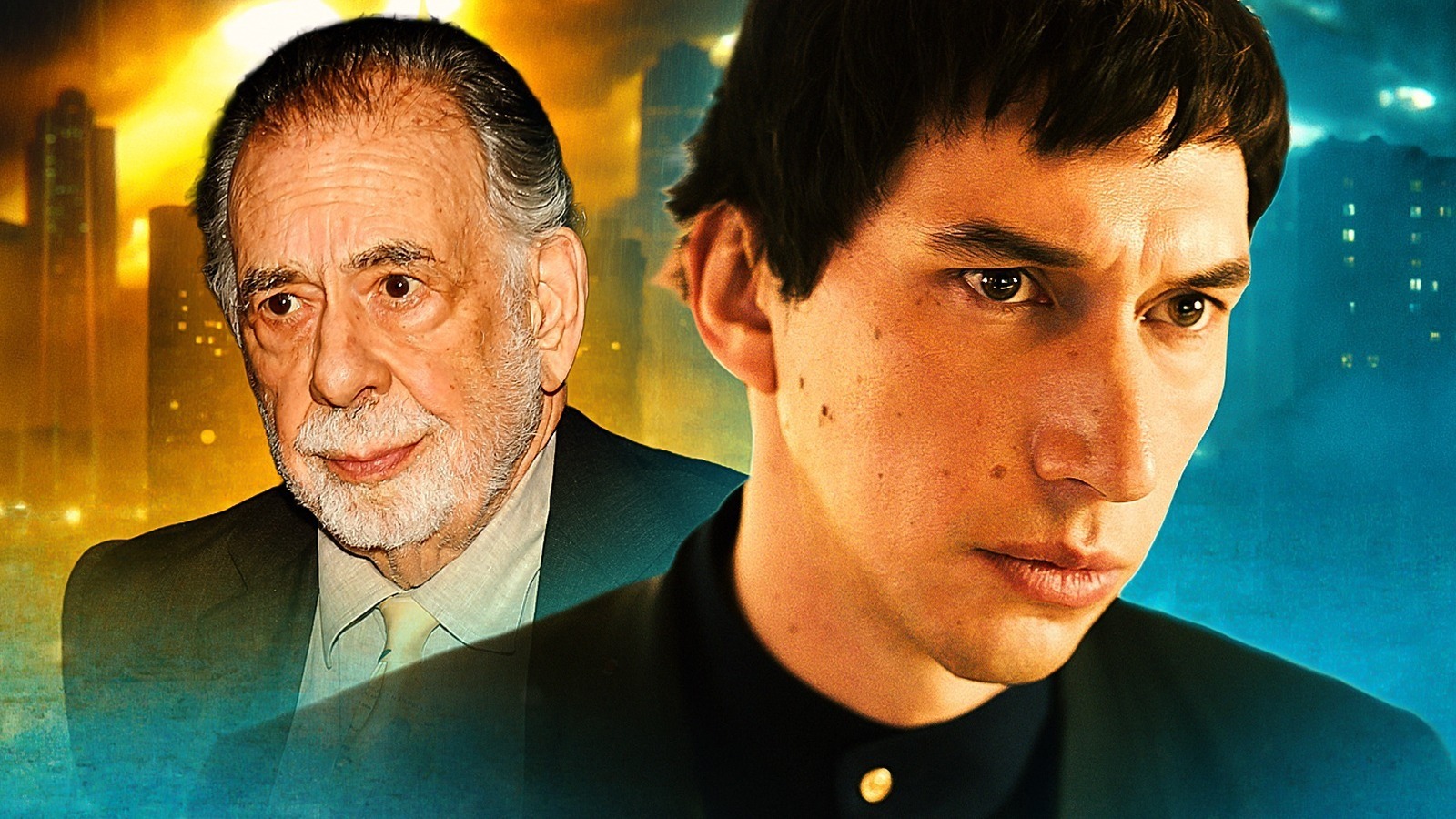
Few independent films have a more dramatic origin story than “Megalopolis.” Francis Ford Coppola reportedly sold his vineyard to fund the project after Hollywood studios rejected it for four decades. The result is a dazzlingly strange passion project: a dystopian New York modeled on the final days of ancient Rome, filtered through the theatrical grandeur of “The Fountainhead” and flashes of “Batman Forever.” From the opening minutes, its performers appear to be acting in entirely different films.
Adam Driver’s architect, Cesar Catalina, can move from solemn Shakespearean speeches to telling a romantic interest to “go back to the club” without missing a beat. Giancarlo Esposito plays the city’s mayor as a rigid, traditional antagonist, while Aubrey Plaza’s journalist Wow Platinum seems to understand the movie’s campier energy better than anyone else. The film can be deeply uncomfortable, particularly during a subplot involving a fabricated sexual assault allegation, yet it is also frequently inventive and bizarre. That combination makes it a strong candidate for a future critical and cultural reassessment.
That reappraisal has not arrived just yet, but there is something admirable about Coppola pursuing such an uncompromising experiment late in his career. The movie includes QR codes that unlock additional material and even features a planned interactive sequence in which audiences could ask Cesar questions during a press conference, though only a handful of screenings were able to stage it. “Megalopolis” became a major box-office failure, but its fearless excess may eventually inspire viewers to embrace its unapologetic madness.


