
Static Media
Contains spoilers for “Lanterns” Season 1, Episode 3 — “OutKast”
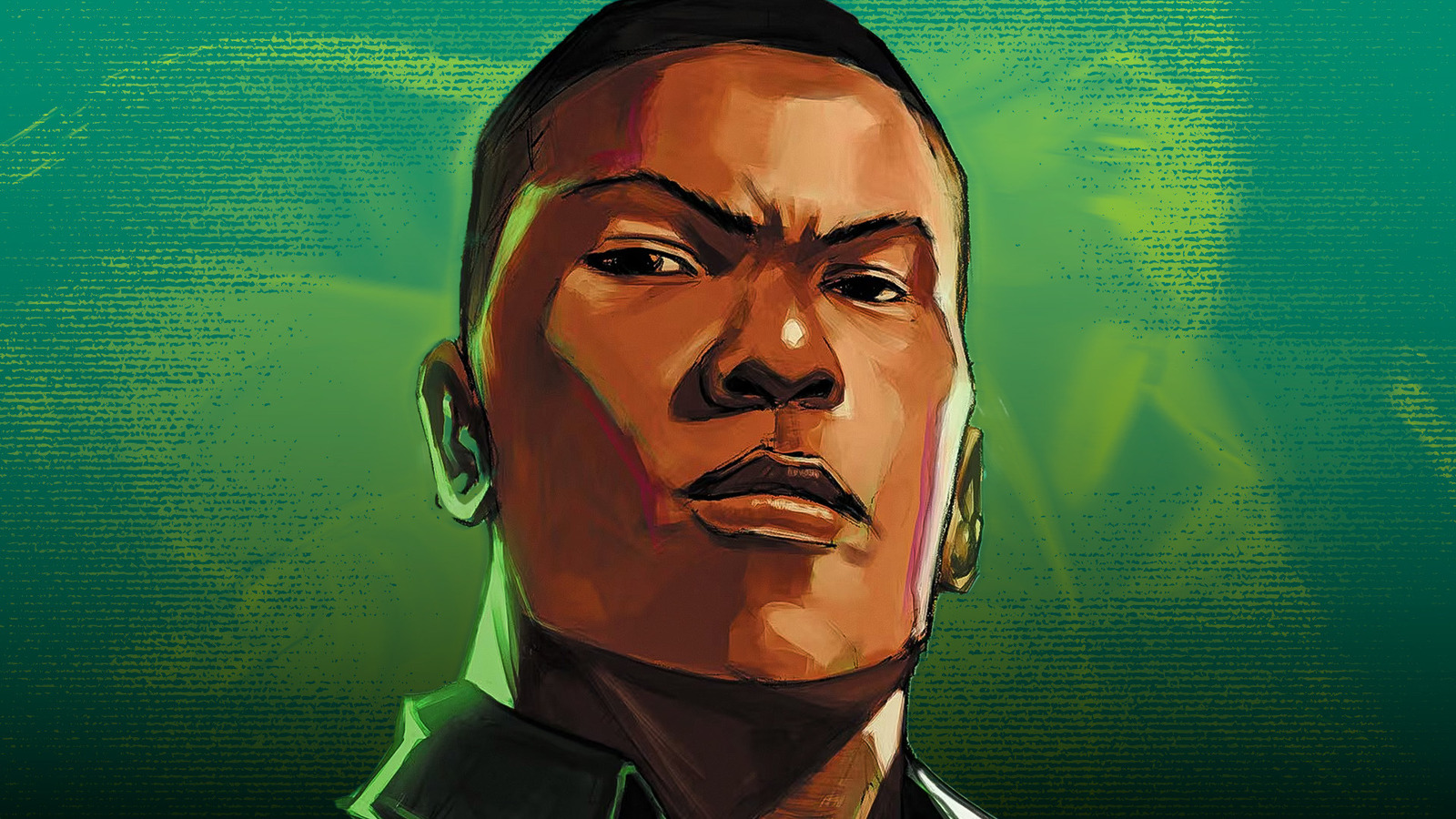
The opening moments of “Lanterns” began by turning the clock back to 1996, when Hal Jordan (Kyle Chandler, DC’s newest live-action Green Lantern) appeared on “60 Minutes” to recount the strange event that changed his life. At the same time, a young John Stewart watched from home, sneaking in as much of the broadcast as he could before his father returned. Hal’s origin, as described in the interview and later repeated to the adult John (Aaron Pierre), stays fairly close to the comics: he followed his pilot father into the skies, lost him at a young age, and was eventually summoned to a dying alien who entrusted him with a Power Ring. John’s upbringing, however, is where “Lanterns” begins to carve out its own mythology.
Before the series jumped forward to John and Hal’s present-day partnership, viewers saw John’s marine father drag him outside for a disturbing lesson in fearlessness. In the scene, he forces the boy to balance an apple on his head while he prepares to shoot it off, seemingly trying to drill the Green Lantern ideal of having no fear into his son. Episode 3’s extended flashback makes clear that the premiere’s cold open was intentionally deceptive, initially suggesting an abusive father whose obsession with superheroic toughness poisoned his home. The question left dangling was how he knew about the “no fear” requirement at all, since Hal did not reveal that detail publicly until the interview John was watching without him. This week’s standout third episode finally circles back to the 1990s and reveals how “Lanterns” has reshaped John Stewart’s origin story for the DCU.
John Stewart’s origin story in Lanterns
HBO
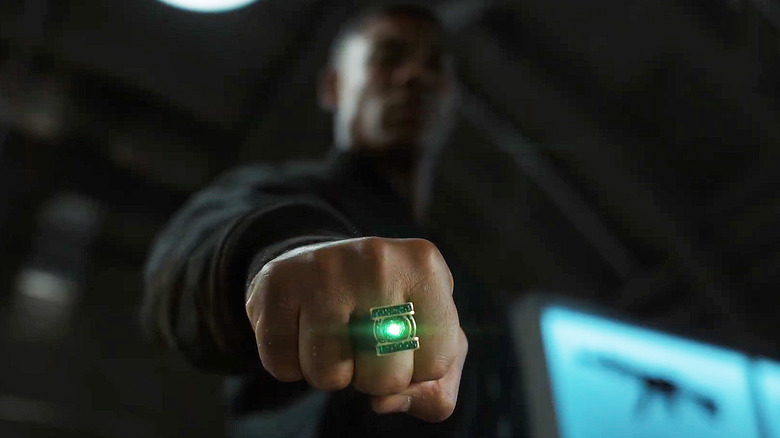
In most Green Lantern stories, the Guardians of the Universe do not exactly conduct recruitment interviews. “Lanterns,” however, reimagines their search as a series of secret evaluations designed to identify a future replacement for Hal Jordan. The clearest connection to the comics is the idea that the Guardians have been observing John Stewart for years. The major change is that John’s father, John Sr. (J. Alphonse Nicholson), was once taken by the Guardians himself and asked whether he was afraid. When he answered yes, he failed their test. Baby John witnessed the encounter from his crib, though he could not have understood it at the time. Years later, when Hal’s identity becomes public and he mentions being asked the same question before becoming Green Lantern, the revelation sends John Sr. spiraling. The episode also implies, in passing, that he has become an alcoholic, though the show stops short of making him the same kind of domestic abuser seen in some comic book versions.
The flashback deepens when a representative of the Guardians, played by “Ozark” star Laura Linney, arrives at the Stewart home to offer compensation for the harm caused. Her visit reveals a chilling disconnect: because of cultural differences, the Guardians failed to grasp that abducting a Black man and interrogating him without warning could inflict profound trauma in a country where unprovoked racial violence remains a brutal reality. During a conversation with John’s mother, Bernadette (Nicole Ari Parker), Linney’s character explains that the same qualities found in John Sr.’s DNA are present in his son. For young John to be considered a serious Green Lantern candidate, she says, he must be raised without fear. She promises the family that when the next opening among the Lanterns becomes available, John will receive a fair chance. That revelation completely reframes the premiere’s cold open and the Stewart family dynamic, making John Sr.’s extreme training less a product of pure cruelty than a misguided attempt to prepare his son for a cosmic future.
John Stewart’s various comic book origins
DC Comics
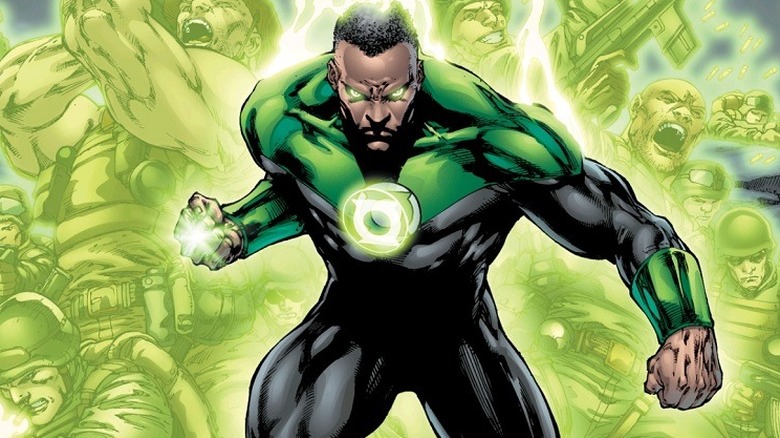
John Stewart first appeared in “Green Lantern” Vol. 2 #87, published in December 1971. In that debut, he was introduced as the only son of a single mother and an aspiring architect selected by the Guardians to serve as Hal Jordan’s backup after Guy Gardner was injured in the line of duty. The tense push-pull between John and Hal, a dynamic echoed in the HBO series, was present from the start. John’s first assignment involved protecting a racist politician from an assassination attempt, a mission that naturally clashed with his identity as a Civil Rights activist. Hal initially doubted him, but John soon proved the attack had been staged to advance a right-wing political agenda, earning Hal’s respect in the process.
DC later revised John Stewart’s backstory more than once during the New Earth era, particularly after “Crisis on Infinite Earths” and again after “Zero Hour.” Those versions gave him a more painful childhood. In one post-“Zero Hour” origin, his father was an alcoholic who routinely abused his wife. Across those retellings, John also shared an especially close bond with his Aunt Loretta, a character who has not appeared in “Lanterns” so far. Loretta played a formative role in pushing him toward activism and architecture. In one version, a 15-year-old John steals her car for a joyride and crashes into a drunk driver, an experience that helps convince him he wants to change his life and do something meaningful with it.
“Lanterns” appears to borrow more directly from the 2011 comics reboot, where John is established as a former marine. That detail actually originated in the animated series “Justice League Unlimited” before Geoff Johns gradually worked it into the comics in the late 2000s. Even so, the show makes significant changes. In that rebooted continuity, John frequently got into trouble with the police as a child and had a younger sister who died early in life. No one around him knew he was destined for a Power Ring, and while the Guardians monitored him, they tested him through an act of heroism rather than the show’s strange, interview-like selection process. “Lanterns” keeps many recognizable pieces of John Stewart’s comic book identity, but Episode 3 confirms that the DCU version has a childhood unlike any major incarnation that came before.
If you or someone you know is dealing with domestic abuse, you can call the National Domestic Violence Hotline at 1−800−799−7233. You can also find more information, resources, and support at their website.


