
Static Media
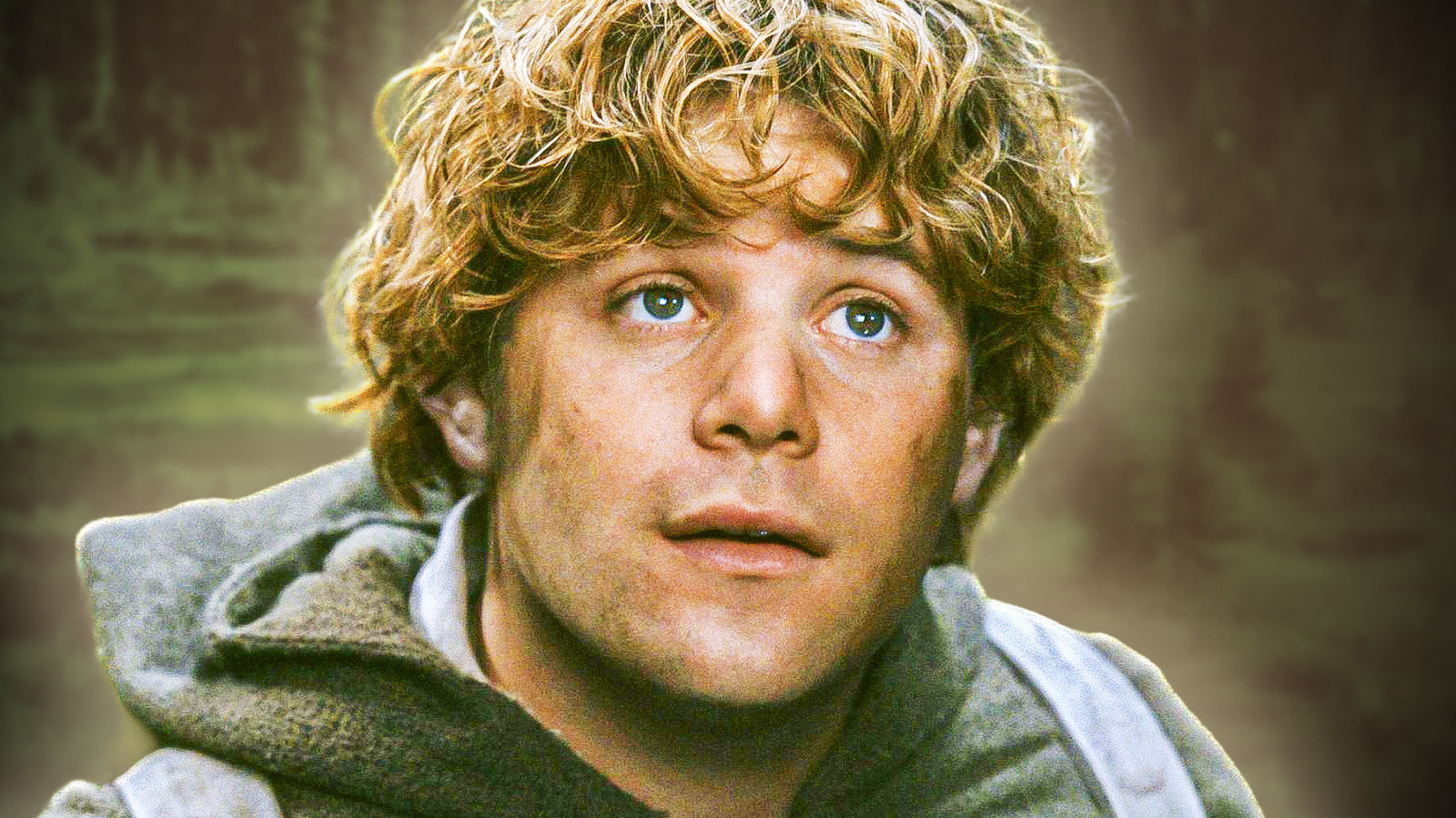
In both the film and the novel, “The Return of the King” closes on a deeply emotional note: Samwise Gamgee returns to Bag End after saying goodbye to Frodo and Bilbo, who sail into the West from the Grey Havens. But Tolkien’s story does not end there for Sam. Years later, the beloved hobbit also leaves Middle-earth, following the same westward path. The appendices to “The Return of the King” reveal that “Samwise passed the Towers, and went to the Grey Havens, and passed over Sea, last of the Ring-bearers.”
Tolkien never spells out Sam’s exact reason for leaving Middle-earth, but he leaves several strong clues. The clearest is Sam’s status as a Ring-bearer. In Peter Jackson’s film, Sam, played by Sean Astin, carries the One Ring on its chain after Shelob attacks Frodo, played by Elijah Wood. In J.R.R. Tolkien’s book, Sam’s connection to the Ring is even more direct: he actually puts it on for a short time before returning it to Frodo. That brief but crucial act places Sam in rare company and helps explain why he is eventually allowed the kind of passage normally associated with the Elves.
Frodo, Bilbo, and Sam are each marked by the Ring in different ways, and Tolkien repeatedly frames the journey into the West as a chance for healing from wounds that could not be fully mended in Middle-earth. In a September 1954 letter, Tolkien explained that the Undying Lands were meant for immortal beings, but that exceptions could be granted. He wrote that “certain ‘mortals’, who have played some great part in Elvish affairs, may pass with the Elves to Elvenhome. Thus Frodo (by the express gift of Arwen) and Bilbo, and eventually Sam (as adumbrated by Frodo).”
Sam has a rich life before he leaves Middle-earth at a ripe old age
Warner Bros.
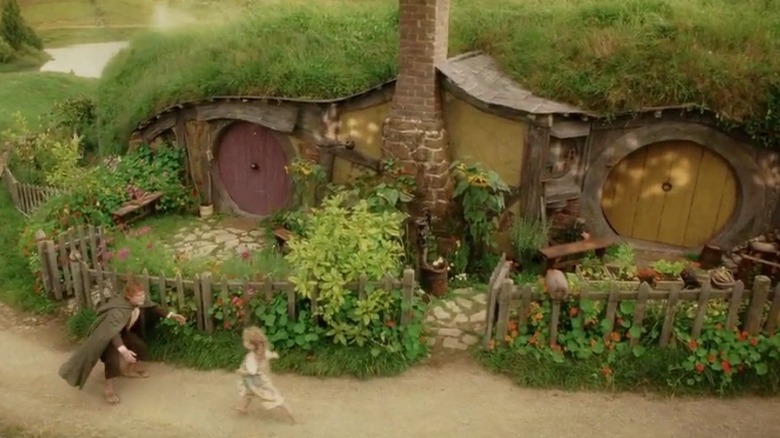
Sam does leave Middle-earth in the end, but not for many decades. Frodo departs when he is still in his 50s, while Sam returns to the Shire and builds an entirely different kind of legacy. After the War of the Ring, he turns away from adventure and toward public life, becoming one of the Shire’s most important figures. He serves as Mayor of the Shire for seven consecutive terms, with each term lasting seven years — a remarkable 49 years in office.
His personal life is just as full. Sam marries Rosie Cotton, and together they have 13 children. Over the years, he enjoys a long and meaningful life, and he even travels back to Gondor at one point. Eventually, Rosie dies of old age, and Sam appears to understand that his own time in the Shire has come to an end. A few months after her death, at the age of 102, he sets out for the Grey Havens with his eldest daughter, Elanor, who is connected to the continuing legacy of “The Lord of the Rings.”
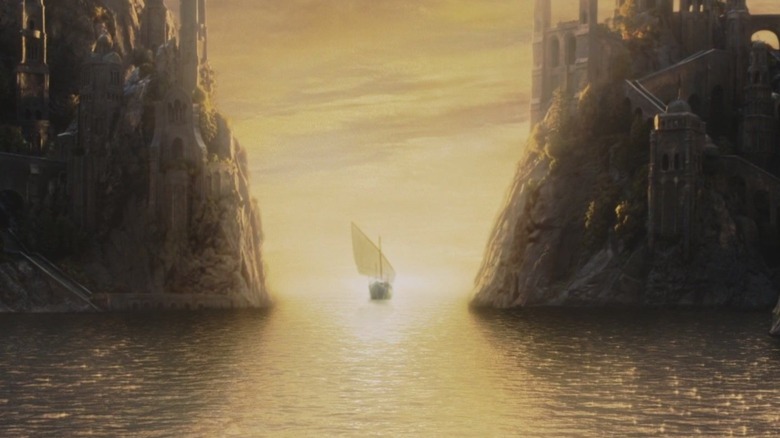
Before he goes, Sam entrusts Elanor with the Red Book, the treasured record containing the stories of “The Hobbit” and “The Lord of the Rings,” written and preserved by Bilbo, Frodo, and Sam himself. Elanor is the only known witness to her father’s final departure. According to the tradition recorded in Tolkien’s appendices, Sam sails over the sea, almost certainly seeking the same peace and healing that Frodo and Bilbo had found in the West.
Sam Gamgee probably doesn’t make it far once he gets to the Undying Lands
Warner Bros.
Yet Sam’s ending, beautiful as it is, should not be mistaken for immortality. Although he travels to the Undying Lands, he does not become undying himself. Tolkien made that clear in the same 1954 letter, explaining that this special permission to enter the West was not a permanent change in the nature of mortals. “For mortals,” he wrote, “since their ‘kind’ cannot be changed for ever, this is strictly a temporary reward: a healing and redress of suffering. They cannot abide for ever.”
Tolkien returned to the idea in another letter from 1971. Speaking of Frodo and other mortals who reached the Undying Lands, he wrote that they could remain there only “for a limited time -– whether brief or long.” Their stay, he said, was a kind of peaceful “purgatory,” a place of restoration and healing. In the end, they would still die, but freely and willingly, passing on to a fate beyond the knowledge of the Elves.
Tolkien points out in that same letter that this is a one-way ticket, saying, “There was no return. The Elves who took this road and those few ‘mortals’ who by special grace went with them, had abandoned the ‘History of the world’ and could play no further part in it.”
Whether Sam ever actually sees Frodo again is unknown. If he did, chances are he didn’t enjoy the reunion for long, since he would have been extremely old by that point. Still, it’s nice to know that Samwise Gamgee, whom Tolkien confirmed was the real hero of “The Lord of the Rings,” gets a restful reward for his heroics.


