Share this @internewscast.com
People seeking a booster shot of the COVID-19 vaccine may have noticed that there is only one option available: Pfizer Comirnaty JN.1.
With two COVID-19 variants circulating across the country, and only 1.9 million Australians having received a vaccine in the past six months, experts say choice is important when it comes to encouraging Australians to get the jab.

So why is there only one vaccine currently available?
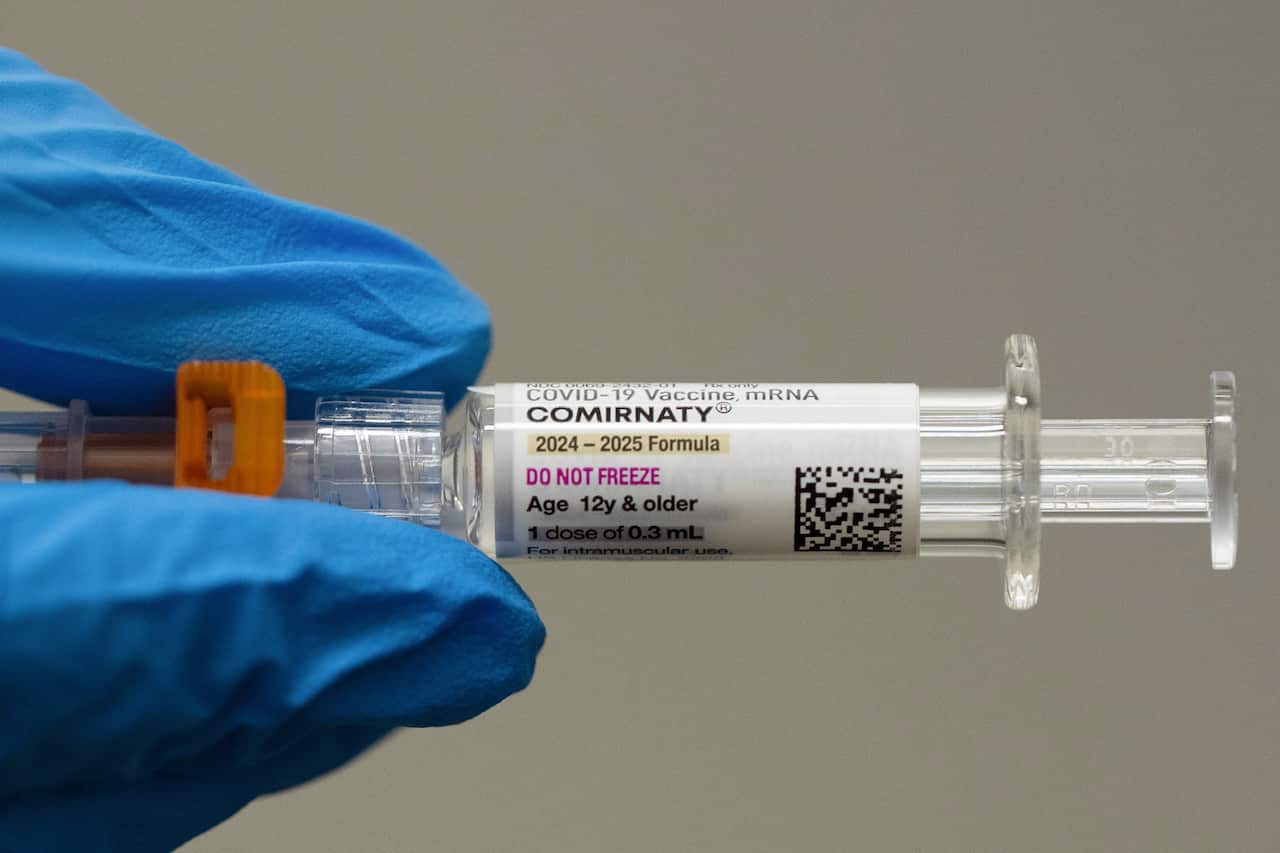
A blue glove on a hand holding a plastic syringe with writing on the label

Pfizer’s Comirnaty JN.1 vaccine is the dominant vaccine brand in Australia. Source: AAP / Jenny Kane

What happened to the other vaccines?

The main mRNA alternative to Pfizer is Moderna. Both companies have produced vaccines targeting the Omicron variant JN.1, which was dominant across Australia for much of 2023 and 2024.
Moderna’s JN.1 vaccine was approved for use in Australia in late 2024 by the Therapeutic Goods Association (TGA), the body responsible for approving medical products in Australia.
However, despite approval, in 2024 the Australian government decided not to replenish its supply.

This could change next year, however, as a newly built Moderna Technology Centre at Monash University in Melbourne is aiming to locally produce 100 million vaccines per year for COVID-19, influenza, and respiratory syncytial virus. It is expected to start production in late 2025.

Another mRNA vaccine, AstraZeneca, was recalled globally in 2024 after the company admitted it could cause adverse side effects.

Why isn’t Novavax available?

One mRNA alternative also not on our shelves is Novavax.
Its updated vaccine, Nuvaxovid XBB.1.5, did not receive TGA approval in Australia.

“It wasn’t that approval was revoked with any specific safety or efficacy concerns. It was just that the amount of data required for that approval to be met just wasn’t achieved,” Dr Paul Griffin, infectious diseases physician and clinical microbiologist at Brisbane’s Mater Health Services, said.
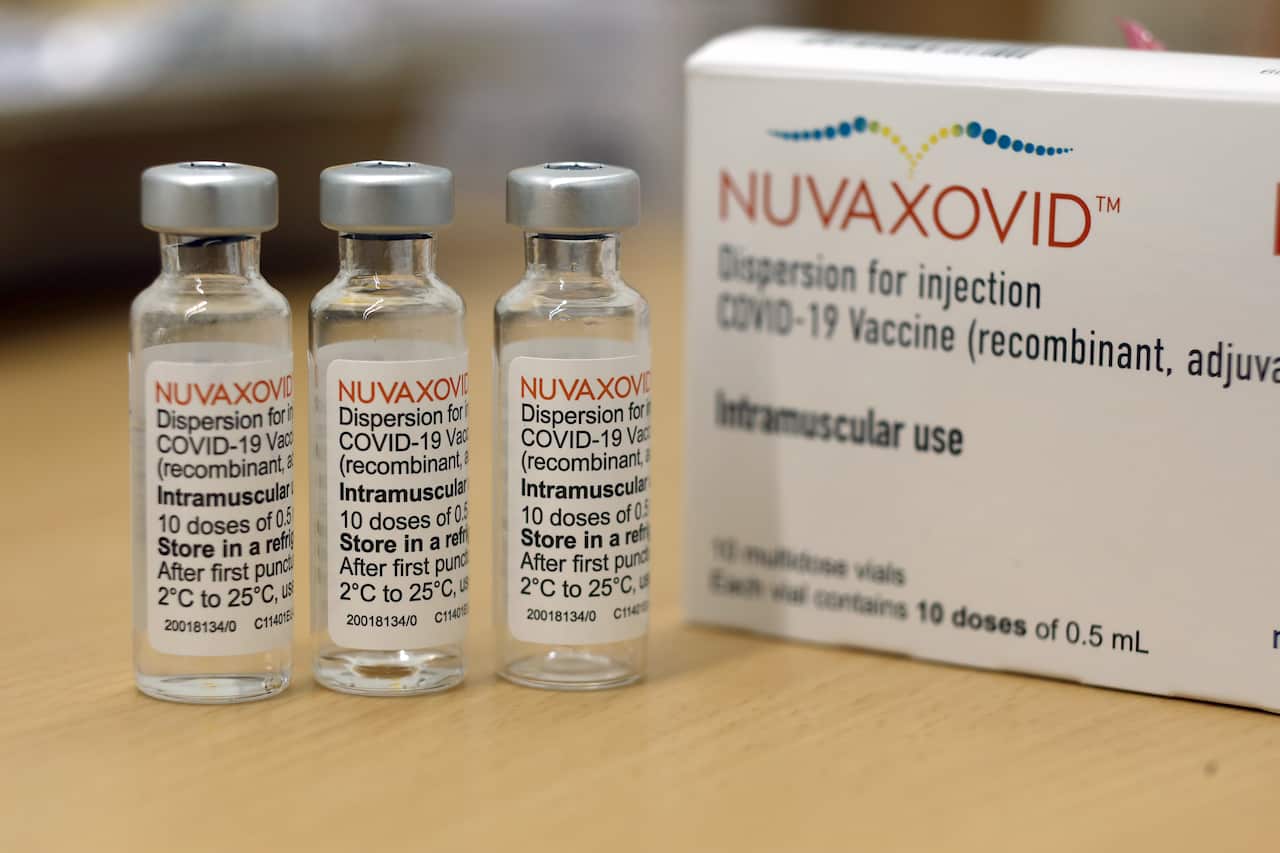
Three glass vials on a wood table, next to a cardboard packet

Novavax withdrew its updated vaccine for TGA approval in 2024 but says it is committed to making its vaccine available to Australians. Source: AAP / Matthias Bein

Novavax told SBS News it is committed to making the vaccine available to Australians and are working with the TGA to determine the best path forward. However, according to the TGA, Novavax withdrew its registration on 21 May 2024.

Professor Adrian Esterman, chair of biostatistics and epidemiology at the University of South Australia, said that low uptake in Australia may have been a factor in the company deciding not to renew its registration.
“It’s not so much that the vaccine doesn’t work, but it’s simply not commercially viable for them,” he said.
“Since then, they’ve developed a JN.1 vaccine which has been approved in several other countries, but they haven’t bothered with Australia.”

Esterman said this is not good news for people who relied on Novavax as an alternative to mRNA offerings.

Why do some people prefer Novavax?

Novavax is a protein subunit vaccine. Esterman said it’s made by taking the genetic material of the virus, the DNA, and putting it into the cells of a moth. This makes the moth produce spike proteins.
“They then add to that what they call an adjuvant, which is a substance they get from a soapbark tree, and that helps the body react to these spikes … and that’s what they inject in you,” he said.

An mRNA vaccine, by contrast, tells your body to make the spike proteins. Griffin said Novavax is preferred by some people who have had reactions to mRNA vaccines in the past.

“There are a whole host of people who have had reactions to mRNA vaccines, things like myocarditis, for example, and it’s thought that perhaps that’s a lower risk with Novavax. Or people who just don’t like the thought of a vaccine based on the mRNA technology.”

Why choice matters

Esterman explained that having a variety of vaccine options is about making sure you have the right tools for the job.
“It’s best to have several tools in your tool case. You wouldn’t have one type of hammer; what if it doesn’t work? You need something different. So it’s good to have a variety of vaccines, and most countries do that.”

It can also impact overall vaccination uptake, which both Griffin and Esterman say is currently low among vulnerable populations.

“There’s certainly a lot of people that aren’t opposed to being vaccinated who just don’t want, or can’t have, an mRNA vaccine, and so are likely to remain unvaccinated, which is a huge issue,” Griffin said.

“If we could get a proportion of those people to be boosted, it would certainly be beneficial. So I’d really like to see there be an option for an alternative.”

Are we still catching COVID-19?

The current dominant strain in Australia is NB.1.8.1 or the Nimbus variant. Another variant, XFG or Stratus, is growing in dominance overseas, with high rates of infection in India, Spain, the United Kingdom, and the United States.
Griffin warned that there are still risks between the waves, and it is important not to be complacent.
“Between those waves we see significant numbers of cases, and still see people in hospital from COVID-19…and that’s why we really need to keep the highest risk people regularly vaccinated to keep them protected.”
The Australian government recommends those in high-risk groups, such as the over-75s, aged care residents, or the immunocompromised, receive a booster shot every six months. For lower-risk groups, a booster shot every 12 months should suffice.

Share this @internewscast.com
You May Also Like

Lea Opens Up About Year-Long Rift with Sister: Age Gap Cited as Key Factor in Family Divide

Siblings often serve as our first companions and lifelong competitors. They are…

Pakistan Proposes Hosting Peace Negotiations Amid Continued Middle East Conflict

In brief Pakistan said it was preparing to host “meaningful talks” to…

Iran Deems US Peace Proposals ‘Unrealistic’ Amid Trump’s Threat to ‘Obliterate’ Oil Island

In Brief Iran said it had received US peace proposals via intermediaries.…

Unmasking the Beneficiaries: How Your Outrage Fuels Profit in the Digital Age

SBS respectfully recognizes the traditional custodians of the lands across Australia. I…

Controversy Erupts as Israel Restricts Cardinal’s Access to Jerusalem’s Holy Sepulchre on Palm Sunday

In Brief Israeli police said holy sites in Jerusalem’s Old City were…
Aerial still of the property where Dezi Freeman was shot, March 30, 2026.

Unveiling the Details: How the Police Operation Led to the Fatal Shooting of Dezi Freeman

It seemed straight out of a dystopian film. Dezi Freeman, who had…
Charges are expected to be laid today following the incident.

Sydney Daylight Stabbing Results in Attempted Murder Charges

In a dramatic turn of events in Sydney’s south-west, a man now…
Dezi Freeman's friend says he thought fugitive had died seven months ago

Shock Revelation: Fugitive Dezi Freeman Was Presumed Dead by Friends Seven Months Prior

One of Dezi Freeman’s close friends says he believed the fugitive was…
Trump threatens to wipe out critical Iranian island if deal isn't reached 'shortly'

Trump Issues Ultimatum: Iranian Island’s Fate Hinges on Swift Deal Resolution

US President Donald Trump has threatened widespread destruction of Iran‘s energy resources…
Card surcharge ban 'doesn't pass the pub test', AHA boss says

AHA Chief Criticizes Card Surcharge Ban: Fails to Meet Public Approval Standards

The Reserve Bank has announced an end to surcharges on bank card…
Study confirms parents' worst fears: vaping causes cancer

Groundbreaking Study Reveals Alarming Link Between Vaping and Cancer: A Wake-Up Call for Parents

Nicotine vapes and e-cigarettes have been linked to deadly cancers, according to…
The influenza virus as seen under a microscope.

Doctors Alert Public as Flu Cases Near 26,000 – Prepare for a Tough Season

Nearly 26,000 flu cases have already been reported in Australia in 2026,…