
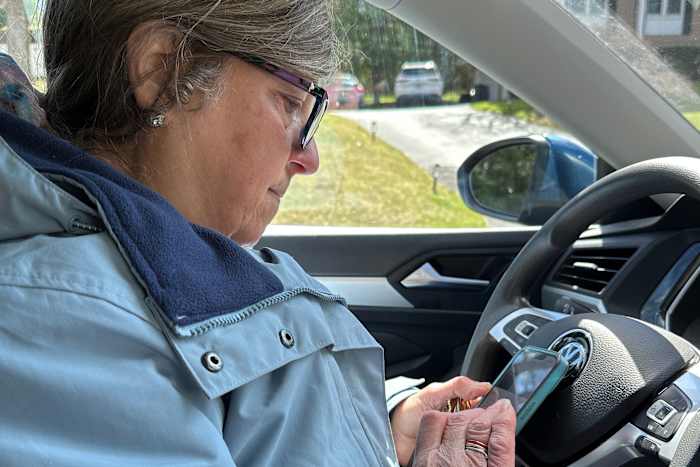
PLAINVIEW, N.Y. – As Stu Goldberg gears up for his evening Uber shift, he consults a notebook filled with handwritten notes. Among the reminders are directives like “No tickets. Full stops,” and “Careful backing up. Watch for pedestrians and bikes.”
Despite holding a Ph.D. in neuropsychology and having years of experience running his own business, Goldberg, now 74, didn’t anticipate driving strangers around in his retirement. However, unforeseen financial challenges led him to take up this role, shuttling passengers across New York City by night.
“I enjoy the freedom and flexibility it offers,” Goldberg shared. “Meeting new people is a perk, and occasionally, I get to engage in a meaningful conversation.”
Goldberg represents a rising trend of Americans who are coming out of retirement. Many, after long careers in sectors like healthcare, education, and corporate environments, find themselves needing to return to work due to a mix of inadequate savings, increasing living expenses, and a desire to remain active.
For some, this means turning to gig or contract work via apps and digital platforms. Jobs such as delivering passengers and packages, pet care, or even laundry services are appealing because they allow for flexible scheduling, giving individuals control over when and how much they work.
“With life expectancies increasing, people find themselves working longer to afford those additional years,” explained Carly Roszkowski, vice president of financial resilience at AARP. “The idea of retirement as a definitive end point isn’t realistic for most anymore.”
Goldberg wanted to teach after winding down his software and telemarketing company. But he needed to earn more money than what the occasional adjunct professor job teaching statistics would pay.
“Uber came up, and it was not a bad choice for me because I was comfortable driving people,” he said. “I felt it could be a good way to make money and keep most of it.”
About 1 in 5 Americans over age 50 who are not retired say they have no retirement savings, according to a survey the AARP conducted in January 2025.
Retirees and employment experts say gig work has advantages and downsides, including limited job protections and wages that may be insufficient to cover on-the-job expenses that can’t be written off as tax deductions. Here are some factors to consider.
Stay active, but know your limits
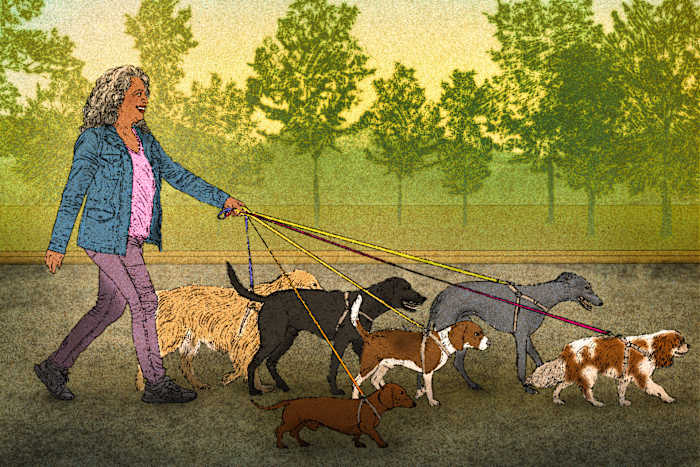
Barbara Baratta, 72, retired as a pediatric nurse in 2018. But she got restless after a few years and signed up with the pet care app Rover, which connected her to jobs walking dogs and using her nursing skills to administer medications to cats.
The work keeps her active. “I get my steps in and do hill climbing,” she said.
In a leafy New Jersey suburb, Baratta set out to coax Barley, a mix of pit bull, beagle and shepherd, into the afternoon air with a wind chill pushing the temperature down into the 20s.
“Barley, if you turn this way, the wind will be blowing behind you,” she said gently, leading the dog down a wide street.
Baratta likes the physical nature of dog walking. She ran two half-marathons in the past year but notices that “being older and not having knees that are totally great” makes steep or uneven terrain a challenge even for her. She advises people in her age group to be careful about which pets they agree to walk.
“Some dogs are big and strong, which can be an issue, a lesson I learned very early on,” Baratta said. “An 80-pound dog, … they’re going to pull, they’re going to run away.”
Driving can be hard on the back and legs, and the challenge of finding restrooms to use on the go becomes difficult to deal with as you age, Goldberg cautioned.
A social buzz
Days can feel long and lonely after one retires. Working part-time can provide social interaction.
Baruch Schwartz, 78, was a wedding photographer for decades until the work became too physically demanding to do full-time. He started driving for Uber and Lyft and derives satisfaction from feeling needed. “I feel like I’m on a mission,” he said after taking a passenger home from a kidney dialysis appointment.
Driving for Uber gives Goldberg a chance to meet a variety of people. One night he spoke with a Scottish historian about the movie “Braveheart.” Another time a passenger asked him how to know whether it was the right time to propose to his girlfriend.
“I’m amazed at what people will tell me about their relationships,” Goldberg said.
Flexibility — for a price
One of the draws of working for gig platforms is the ability to set your own hours. Baratta’s schedule allowed her to babysit her grandchildren.
Goldberg appreciated the flexibility of setting his own hours when there was a recent death in his family. But between that unplanned trip and a root canal, and no vacation or sick days offered by his job, he went several days without income.
“When that happens, even though you have the flexibility, which you like, and you don’t have to call anybody and say ‘I’m not driving today,’ you still don’t make the money that day. And you’re still paying insurance,” Goldberg said.
Make sure the work is worth it
Before investing time into gig work, research what percentage the company takes from workers’ earnings.
“The house always wins, so the amount of money you are going to get as a driver or delivery worker is very much controlled by the platform,” said Alexandrea Ravenelle, a sociologist and gig economy researcher at The University of North Carolina at Chapel Hill. “There are no workplace protections, so if you get injured on the job, if you have any types of problems, if you have a car accident, for instance, you are entirely out of luck.”
Goldberg hit three nasty potholes in three weeks, paying $144 each time to replace the tires. He lost money those weeks, despite working, he said.
“I’d say most drivers are not happy with the money that they’re making, unless they’re working more hours than I’m willing to do,” Goldberg said. “You have to put in the hours, and that is what a lot of people don’t anticipate.”
LisaKay “LK” Foyle, 64, of Orange, Texas, found a way to maximize her earnings on Poplin, an app which connects her with clients who need help with laundry. She has seniority among workers on the app so chooses to accept express orders, which pay the highest rate, and declines lower-paying jobs.
Foyle marvels at the state of some families’ dirty laundry: “all the socks are inside-out, all the underwear is in the pants, and you’ve got to check every single pocket, or you’re washing marbles or frogs or the snacks they had that day.”
Baratta’s dog-walking income supplements several small pensions and Social Security benefits. She charges $20 for a half-hour walk, not including her driving time to and from the location. Rover keeps about 20%, she said. The $1,000 to $2,000 she makes per month helps pay the bills, she said.
“The dogs and cats are delights,” Baratta said. “I’m not becoming rich doing this, … but I’ve met a lot of great families doing it.”
___
Copyright 2026 The Associated Press. All rights reserved. This material may not be published, broadcast, rewritten or redistributed without permission.