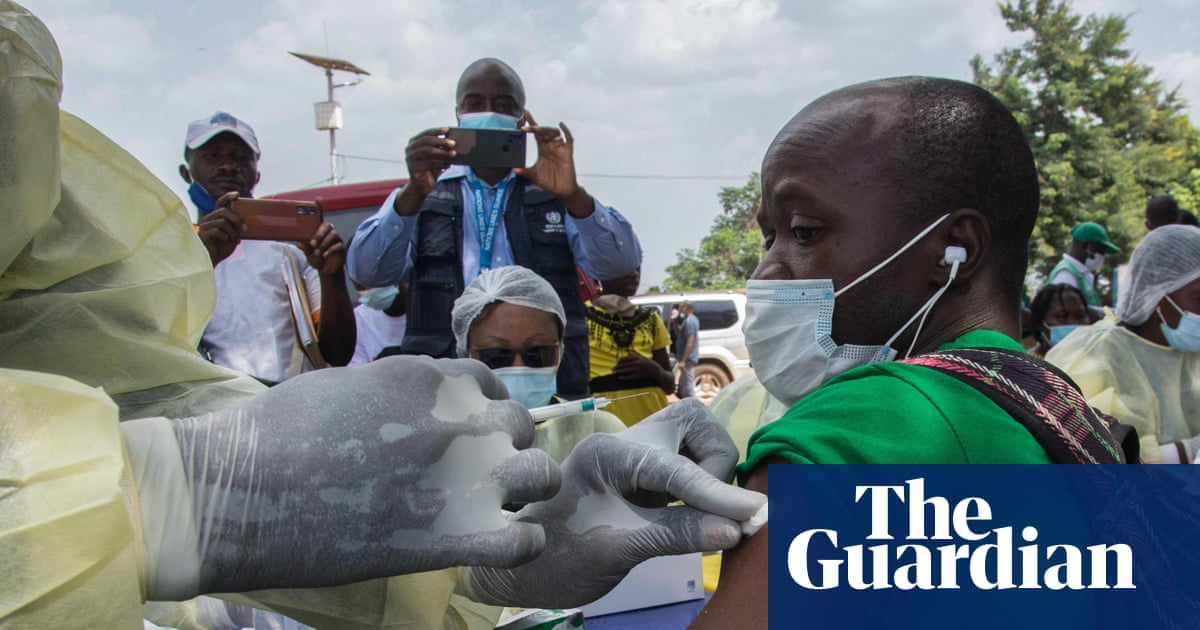

Amid the ongoing Ebola outbreak in the Democratic Republic of the Congo (DRC) and Uganda, where the Bundibugyo strain is causing concern, there is currently no available vaccine or treatment. However, the urgency to control the outbreak has led to three vaccine developers receiving $60 million (£45 million) in emergency funding this week.
The situation in the DRC is further complicated by security challenges. Ongoing conflicts have displaced countless individuals, making it difficult to conduct clinical trials for potential treatments. The region is plagued by militia activity, and even some Ebola treatment centers have been targeted in attacks.
Despite these hurdles, researchers are set to commence trials as soon as the environment becomes conducive.
“In the battle against this lethal virus, every day is crucial,” stated Dr. Richard Hatchett, CEO of the Coalition for Epidemic Preparedness Innovations (CEPI), following the funding announcement on Monday.
Globally, scientists are not just focusing on vaccines but are also working on treatments and preventive measures. Here are some of the potential solutions in the pipeline:
The IAVI vaccine
The World Health Organization (WHO) has highlighted the International Aids Vaccine Initiative (IAVI) as having the “most promising candidate vaccine.” This initiative leverages the same technology used in Ervebo, an existing vaccine developed for the more prevalent Zaire strain of Ebola.
The WHO expects it to take seven to nine months before doses of the rVSV Bundibugyo vaccine are ready for clinical trials. Mark Feinberg, IAVI’s president, said they were working to accelerate the timeline as much as possible.
The world should have been more prepared, Feinberg said. While there were suggestions after the 2014-16 Ebola outbreak in west Africa that vaccines should be prepared, tested and stockpiled against viruses of this kind, they did not result in comprehensive action.
“The technologies to make an efficacious Bundibugyo vaccine are available to us, but we need to do the work to demonstrate that they do work,” he said. “And we hopefully will do better in the future as a global health community.”
The Oxford vaccine
The ChAdOx1 Bundibugyo vaccine, being developed by Oxford University with the Serum Institute of India, could be available faster than IAVI’s candidate, with trials within two or three months.
WHO experts want to see more data from tests in animals to confirm its suitability.
It uses the same technology as the Oxford/AstraZeneca Covid-19 jab. Prof Teresa Lambe of the Oxford Vaccine Group and Pandemic Sciences Institute, said she hoped it would ultimately not be needed, but the team was moving quickly.
“We have started the animal studies and we are going to be progressing with partners around the world, both in the UK and the US, to get more animal studies initiated as rapidly as we can,” she told a press briefing. The Serum Institute said it could make as many doses as needed.
The Moderna vaccine
Moderna’s vaccine did not appear on the WHO’s candidate list – the company said it was still assessing its response when the WHO’s expert panel met to make recommendations.
The jab would use mRNA technology – a prominent vaccine platform during Covid – and the company hopes it could be ready for trials within months.
CEPI has committed up to $50m to support preclinical development and early clinical testing of Moderna’s vaccine.
Stéphane Bancel, chief executive of Moderna, said: “We will move with urgency and scientific rigour to support the response and help bring a potential vaccine closer to the communities that need it most.”
Three potential treatments
Three medicines already exist that scientists believe show promise as potential Bundibugyo treatments: MBP134 and Maftivimab, monoclonal antibodies that mimic the effects of the immune system, and the antiviral remdesivir.
Amanda Rojek, associate professor of health emergencies at the UK’s Pandemic Sciences Institute will be working on the Partners trial, designed to find the most effective treatment.
“We’re effectively close to ready to go,” Rojek said. The drugs exist, and investigators are seeking regulatory approval from authorities in the DRC and Uganda.
A key hurdle is “making sure that we can operationalise safely”, she said. “We will implement the trial at a point at which patients are receiving optimised supportive care and we can manage the safety of our teams in a challenging environment.”
Properly assessing that drugs are safe and effective is vital, she stressed. “It is important in any patients that we manage in our clinical practice all around the world that we have an evidence basis for the care.”
The prevention drug
For the first time in an Ebola outbreak, doctors will test a prevention drug – giving it to contacts of cases to see if it stops them developing the disease.
A pill of the antiviral drug obdeldesivir provided up to 100% protection in monkeys against two other strains of Ebola when given daily for 10 days, within 24 hours.
Prof Christophe Fraser of the UK’s Oxford University will be working on the trial. He said results will depend not only on the drugs’ effectiveness, but also on teams on the ground being able to identify the right people to take part.
“A trial goes quicker if the intervention is very effective. If it is less effective, then it takes longer,” he said. It also depends on the size of the outbreak and “the ability to follow up cases and find their contacts. At the moment, that’s incredibly operationally challenging […] because of the security situation.”


