
Researchers say they are making progress toward a possible treatment for a dangerous tick-borne allergy that can suddenly make red meat off-limits for those affected.
The condition, known as alpha-gal syndrome or AGS, occurs when the body develops an allergic response to alpha-gal, a sugar molecule found in the cells of mammals such as cows and pigs, but not in humans.
The allergy is typically set off by a tick bite. When a tick carrying alpha-gal in its saliva bites a person, it can prompt the immune system to recognize the molecule as a threat and mount an allergic reaction against it.
People with alpha-gal syndrome can react after eating foods including beef, pork, lamb, venison and products containing gelatin. Symptoms may include hives, nausea and intense abdominal pain, while more severe reactions can lead to anaphylaxis, a medical emergency that can be fatal. Some patients also report sensitivity to dairy products.
At present, there is no approved cure or targeted therapy for AGS. Doctors generally advise patients to prevent tick bites and, once diagnosed, steer clear of foods and other triggers that may cause a reaction.
Now, scientists at the National Institutes of Health believe they may have identified a promising path toward an alpha-gal syndrome treatment by using antibodies, specialized proteins capable of attaching to key parts of the immune system.
In laboratory research, the team found that engineered antibodies were able to latch onto immune-system components involved in sparking the allergy, raising the possibility that the reaction could one day be blocked before it takes hold.
Dr John Powers, a director at the NIH, said: ‘Tick bite-associated cases of AGS are increasing in the US and globally, and there is currently no specific treatment or prevention for it.

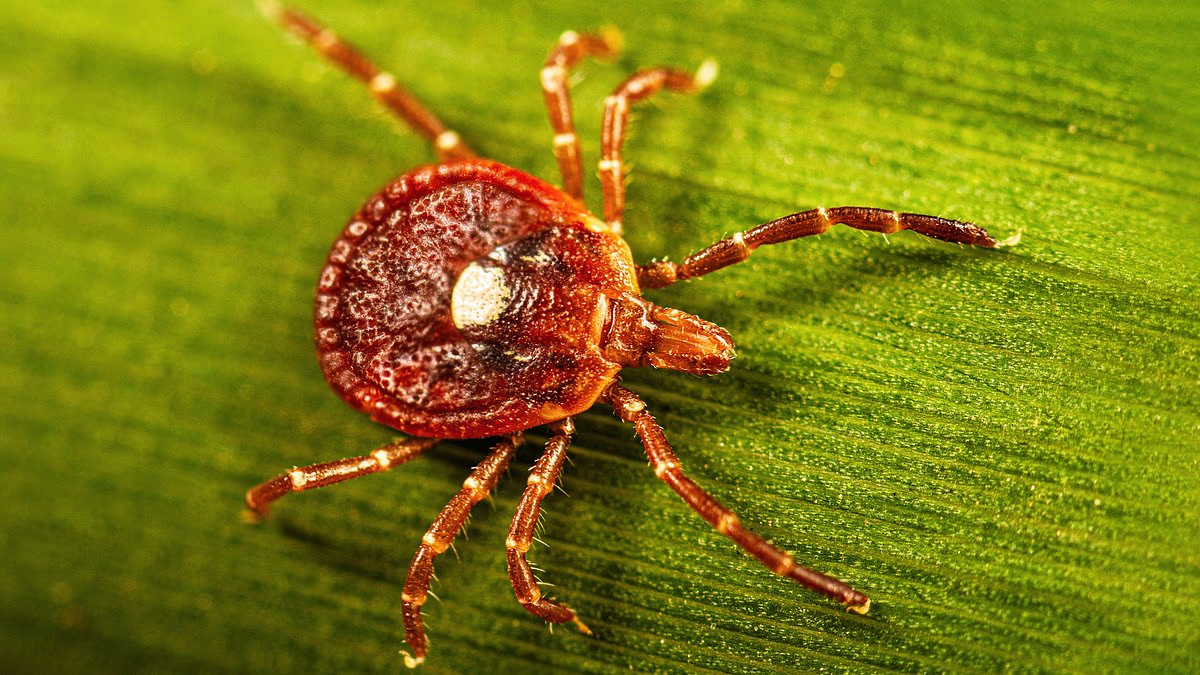
Shown above is the lone star tick, which researchers say is most likely to trigger alpha-gal syndrome
‘This is a first step in potentially identifying ways to prevent [the condition] and develop new targeted therapies for people before they are affected.’
Anyone who is bitten by any tick could develop AGS, but the lone star tick – marked by the white spot on its back – is most likely to cause the disease.
These ticks are most common in the Northeast, Midwest and South and their population has exploded in recent years, which has been linked to the rising deer population. Warming temperatures are also allowing them to advance further inland.
There has been a 100-fold increase in positive tests for the disease between 2013 and 2024, according to researchers at Virginia Commonwealth University, although experts say some of this may be due to growing awareness of the disease rather than an actual rise.
Overall, the CDC estimates there are nearly 450,000 cases nationwide. About 31 million people are bitten by ticks annually.
Researchers note that other allergies, including those to pollen, peanuts and cats, can already be treated using man-made antibodies, which they said suggested these may also be able to help to treat AGS.
In their study, the scientists were initially investigating whether alpha-gal-fighting antibodies could be used against malaria.
Malaria, spread by mosquitoes, also contains the alpha-gal molecule and researchers wanted to learn whether the antibodies could help to prevent an infection.
In the paper, the scientists exposed 42 alpha-gal-targeting antibodies to malaria but found that none bound well to the mosquito-borne disease.
When they found the alpha-gal fighting antibodies had no impact on malaria, they investigated whether they could impact the antibodies that cause AGS.

A map showing the geographic distribution of suspected alpha-gal syndrome cases per 1 million population per year in the US from 2017 to 2022
Overall, they found that 13 of the antibodies could bind to those that cause AGS. One of the antibodies was also able to bind to an immune system cell that triggers the allergy, which they said might help to reduce it effectively.
The research is still in the very early stages, but scientists hope it will help them to develop a potential treatment for the condition.
It is not clear whether this could cure the condition, but it may be able to prevent an allergic reaction if a sufferer consumes red meat.
Dr Peter Crompton, a senior investigator and lead author of the study, said: ‘We are thrilled that this research is helping to advance the development of alpha-gal-specific… antibodies as a potential intervention for AGS.
‘This discovery is also a remarkable example of how collaborative global health research can lead to breakthroughs that improve the health and well-being of Americans.’
For anyone suffering from AGS who has an allergic reaction, in cases of a mild reaction, doctors may use standard allergy medicines to manage their condition.
Many people with the allergy also carry an epinephrine auto injector, according to the Mayo Clinic, which can be used to instantly calm the immune system.
To avoid a reaction entirely, sufferers are advised not to consume beef, pork, lamb, organ meats such as kidneys, livers or intestines or gelatins or gelatin-coated medicines.
They are also urged to check the ingredients list for stock cubes, gravy packages and flavored ingredients before consuming them.


